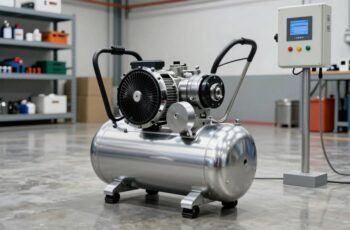
Understanding air compressor tank sizes is essential for selecting the right equipment to match your specific needs. The range from small to industrial-sized tanks influences performance, efficiency, and operational longevity. By examining the common sizes and their applications, we can better determine which tank best suits your tasks—whether for light-duty projects or continuous industrial use. Exploring these distinctions will help guarantee maximum performance and longevity of your compressor system.
Key Takeaways
- Air compressor tanks vary from 1 to 120 gallons, suited for portable, workshop, or industrial applications.
- Larger tanks store more air, reducing cycling and providing steady pressure during continuous use.
- Smaller tanks are portable and ideal for light-duty tasks but require more frequent compressor operation.
- Proper tank size depends on airflow needs, demand fluctuations, and intended application.
- Regular pressure regulation and monitoring extend tank lifespan and ensure safe, efficient operation.
What Are Common Air Compressor Tank Sizes and Their Uses
Common air compressor tank sizes typically range from 1 gallon to 120 gallons, each suited for specific applications. Smaller tanks, around 1 to 6 gallons, are ideal for portable or light-duty tasks, such as inflating tires or powering small pneumatic tools. Medium-sized tanks, between 20 and 60 gallons, are common in workshops and for automotive repairs, providing a balance of portability and capacity. Larger tanks, exceeding 60 gallons, are designed for industrial or heavy-duty use, including manufacturing processes and continuous operation scenarios. These tanks enable sustained air supply and reduce compressor cycling frequency. Precise selection depends on the application’s airflow requirements and operational duration, ensuring maximum performance and efficiency for the specific task.
How Tank Size Influences Air Delivery and Run Time
The size of an air compressor tank directly impacts both the volume of air delivered and the duration of continuous operation. Larger tanks store more compressed air, enabling longer run times without the compressor cycling on and off frequently. Smaller tanks produce a higher pressure drop during usage, causing the compressor to operate more often, which can reduce efficiency. The relationship between tank size, air delivery, and run time can be summarized as:
| Tank Size | Air Delivery Rate | Run Time (Approx.) |
|---|---|---|
| Small | Lower | Short |
| Medium | Moderate | Moderate |
| Large | Higher | Longer |
Understanding this relationship helps optimize compressor performance for specific applications.
Choosing the Right Tank Size for DIY Projects vs. Commercial Work
When selecting an air compressor tank size, it’s essential to take into account whether the application is for DIY projects or commercial work, as each demands different specifications. For DIY applications, smaller tanks—typically 20 to 60 gallons—are sufficient, providing adequate air volume for intermittent use and portability. These tanks offer quick startup times but may require more frequent cycling under heavy loads. Conversely, commercial work requires larger tanks—often exceeding 80 gallons—to sustain continuous operation and higher air demand. Larger tanks reduce compressor cycling frequency, improve efficiency, and ensure consistent pressure during prolonged tasks. Accurate assessment of airflow requirements and operational duration is critical; choosing an appropriately sized tank minimizes downtime and optimizes performance tailored to the specific scope of the project.
Pros and Cons of Small, Medium, and Large Air Compressor Tanks
The size of an air compressor tank directly impacts its capacity and suitability for specific tasks, affecting both operational limits and efficiency. Smaller tanks offer portability and require less space but may need frequent cycling, while larger tanks provide higher continuous airflow at the cost of increased size and weight. Understanding these trade-offs helps in selecting the most suitable tank based on space constraints and usage demands.
Capacity and Usage Limits
Choosing the appropriate tank size for an air compressor involves balancing capacity against application needs, as each size offers distinct advantages and limitations. Small tanks typically provide rapid pressure recovery but have limited volume, restricting continuous operation under high demand. Medium tanks offer a compromise, supporting moderate workloads with better pressure stability and shorter cycle times. Large tanks deliver substantial volume, reducing compressor cycling frequency and enabling sustained use in demanding tasks; however, they require more energy to fill and occupy more space. Capacity limits directly influence operational efficiency: undersized tanks risk frequent cycling and pressure drops, while oversized tanks may lead to unnecessary energy consumption and increased initial costs. Selecting the correct tank size guarantees ideal performance tailored to specific application demands.
Portability and Space Needs
Portability and space requirements vary considerably across different tank sizes, affecting their suitability for specific applications. Small tanks are highly portable, easily transported and stored in confined spaces, making them ideal for mobile or limited-area use. However, their limited volume necessitates more frequent cycling, which may impact compressor longevity and efficiency. Medium tanks strike a balance, offering moderate portability with manageable space needs, suitable for workshops or semi-permanent setups. Large tanks, while providing extensive storage capacity and reducing compressor cycling frequency, demand significant space and are less portable, restricting their use to fixed installations. The choice depends on operational constraints: portability favors smaller tanks, whereas space availability and continuous operation favor larger tanks. Understanding these trade-offs ensures the best compressor deployment tailored to specific needs.
Key Factors to Consider When Selecting Your Air Compressor Tank Size
Selecting the appropriate air compressor tank size requires careful consideration of several critical factors to guarantee ideal performance and efficiency. First, assess your demand fluctuations; larger tanks provide a buffer for short bursts of high demand, reducing compressor cycling frequency. Next, evaluate your system’s airflow requirements, ensuring the tank volume supports consistent pressure delivery without overtaxing the compressor. Additionally, consider the compressor’s duty cycle and operational pressure range, as these influence tank selection for optimal pressure stabilization. Space constraints and portability needs also impact tank size choices, but these are secondary to operational efficiency. Finally, identify whether your application demands continuous operation or intermittent use, since this determines if a larger tank will enhance performance or if a smaller tank suffices.
How to Calculate the Ideal Tank Size Based on Your Air Needs
To determine the ideal tank size for your air compressor system, we need to accurately assess your airflow requirements and usage patterns. This involves calculating your average and peak airflow demands, typically measured in CFM (cubic feet per minute).
Key steps include:
- Determine your continuous airflow needs based on tools and applications.
- Estimate peak airflow demands during maximum operational cycles.
- Calculate the storage volume needed to maintain consistent pressure and minimize compressor cycling.
Tips for Maintaining and Maximizing Your Air Compressor Tank Performance
Regularly draining moisture from the tank prevents corrosion and maintains ideal pressure levels. Ensuring the pressure settings are correctly calibrated avoids undue stress on the tank and prolongs its lifespan. Consistent adherence to these practices maximizes efficiency and reduces downtime.
Regular Drainage Practices
Proper drainage is essential for maintaining ideal performance and longevity of your air compressor tank. Regularly removing accumulated moisture prevents corrosion, internal rust, and potential failure. To enhance drainage practices, consider these key steps:
- Drain the tank daily after operation, especially in high-humidity environments, to remove condensed water.
- Use automatic drain valves for consistent, hands-free moisture removal, reducing the risk of corrosion.
- Inspect and clean the drain valve periodically to ensure proper function and prevent blockages.
Implementing these practices ensures the tank remains dry, extends its service life, and maintains optimal pressure stability. Consistent drainage is a critical component of effective compressor upkeep, directly influencing performance and safety.
Proper Pressure Settings
Have you calibrated your compressor’s pressure settings to guarantee peak performance? Proper pressure regulation is critical for efficiency and safety. We recommend setting the cut-in and cut-out pressures according to the manufacturer’s specifications, typically between 90 and 120 PSI for most applications. Maintain a consistent pressure differential to prevent unnecessary compressor cycling, which reduces wear and energy consumption. Check and adjust pressure regulators regularly using a calibrated gauge to ensure accuracy. Over-pressurizing can damage the tank and accessories, while under-pressurizing compromises performance. Always monitor pressure levels during operation, especially when handling different tools or tasks, to optimize airflow and prevent leaks or failures. Precise pressure control maximizes tank lifespan and guarantees safe, reliable performance.
Frequently Asked Questions
How Does Tank Shape Affect Compressor Performance?
Tank shape influences airflow dynamics and efficiency; elongated tanks promote steady pressure and reduce cycling, while spherical tanks minimize volume loss and withstand higher pressures, ultimately affecting compressor performance and operational stability.
Can Tank Size Impact Compressor Noise Levels?
Sure, larger tanks do muffle noise by reducing compressor cycling frequency, but don’t expect a silent operation. The tank size influences noise levels technically through pressure stability, yet ambient factors often drown out any acoustic benefits.
Are Larger Tanks More Prone to Safety Issues?
Larger tanks can pose increased safety risks due to higher stored pressure and volume, requiring rigorous maintenance and safety checks. We recommend proper installation, regular inspections, and adherence to safety standards to mitigate potential hazards effectively.
How Does Ambient Temperature Influence Tank Size Choice?
Ambient temperature considerably influences tank size selection; higher temperatures reduce pressure stability, prompting larger tanks for better thermal regulation. Conversely, cooler environments allow smaller tanks, as pressure variations are less pronounced, ensuring safe, efficient compressor operation under varying temperature conditions.
What Are the Environmental Considerations for Different Tank Sizes?
We consider environmental impacts like energy consumption, space, and emissions when selecting tank sizes. Smaller tanks save energy but require more frequent cycling, while larger tanks optimize for stability but demand more space and resources, balancing efficiency and ecological footprint.
Conclusion
In summary, choosing the right air compressor tank size isn’t rocket science—unless you’re launching a space shuttle, then maybe it is. Think of it like selecting the perfect shoe: too small, and you’ll be sorely disappointed; too large, and you’ll trip over excess capacity. By understanding your needs, you can avoid the pitfalls of under or over-sizing, ensuring your compressor runs smoothly—like a well-oiled machine, not a clumsy elephant.