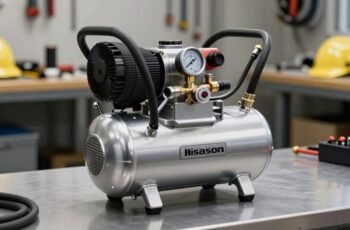
Did you know that the efficiency of an air compressor can vary markedly even among models with similar specifications? Understanding these differences is vital for optimizing operational costs and performance. Our guide offers a detailed comparison of compressor types, highlighting key efficiency factors that often go unnoticed. Recognizing these nuances can influence your choice and long-term savings, but uncovering the most effective solutions requires a closer look at the technical and technological aspects involved.
Key Takeaways
- Compare compressor types based on efficiency profiles, such as reciprocating, scroll, centrifugal, and axial, suited for specific applications.
- Evaluate key metrics like specific power consumption, free air delivery, and power factor for performance comparison.
- Consider operational factors such as maintenance practices, load management, and proper pressure settings that influence efficiency.
- Assess technological innovations like variable speed drives, heat recovery, and IoT integration for future efficiency gains.
- Identify common pitfalls like improper sizing and neglecting routine maintenance that can degrade compressor efficiency.
Understanding How Air Compressors Work and Their Efficiency Factors
Although air compressors are fundamental in many industrial and commercial applications, understanding their core operation is essential for evaluating efficiency. Air compressors function by converting electrical or mechanical energy into compressed air through a series of processes involving intake, compression, and discharge. The efficiency hinges on factors such as volumetric efficiency, which measures how effectively the compressor fills its cylinder, and is affected by inlet conditions, leakage, and internal losses. Compression ratio, which compares discharge and inlet pressures, influences power consumption and heat generation. Additionally, thermal management plays a critical role, as excessive heat reduces overall efficiency. Precise control of these variables, along with minimizing friction and leakage, directly impacts the compressor’s energy use, making a thorough understanding of these factors vital for optimizing performance.
Comparing Different Types of Air Compressors: Which Are Most Efficient?
When evaluating the efficiency of various air compressor types, it’s essential to take into account their fundamental operating principles, design features, and typical applications. Reciprocating compressors, with their positive displacement mechanism, often deliver high efficiency in intermittent use but face limitations in continuous operation due to mechanical complexity. Scroll compressors, utilizing orbiting scrolls, offer higher volumetric efficiency and reduced energy loss, making them ideal for precision applications. Centrifugal compressors operate on dynamic principles, providing high flow rates and better efficiency at large scales, but their efficiency drops at lower loads. Axial compressors excel in large-scale industrial settings with continuous high-volume output but involve complex, costly design. Each type’s efficiency depends on specific operational demands, load conditions, and maintenance regimes, influencing their suitability for different applications.
Key Metrics to Measure Air Compressor Efficiency
Evaluating air compressor efficiency requires a clear understanding of specific performance metrics that quantify operational effectiveness. Key metrics include:
- Specific Power Consumption (kW/100 CFM): Measures energy used per unit of compressed air, indicating energy efficiency.
- Free Air Delivery (CFM): Represents the actual airflow delivered, reflecting capacity performance.
- Power Factor and Efficiency: Assesses how effectively electrical power converts into compressed air, highlighting potential energy losses.
These metrics allow us to analyze compressor performance precisely, identify inefficiencies, and optimize operational parameters. Monitoring specific power consumption helps target energy savings, while free air delivery confirms capacity needs are met. Power factor analysis reveals electrical efficiency, guiding maintenance and selection decisions for improved overall performance.
How to Select the Most Energy-Efficient Compressor for Your Needs
Selecting the most energy-efficient compressor requires a systematic analysis of operational requirements and performance metrics. We begin by identifying your application’s specific airflow demand, pressure requirements, and duty cycle. Next, evaluate compressor types—reciprocating, rotary screw, or centrifugal—based on their efficiency profiles in relation to your workload. Consider the compressor’s energy consumption at varying loads, emphasizing models with variable speed drives that adapt output to demand, reducing idle power. Analyze the compressor’s thermodynamic efficiency, including motor efficiency and heat recovery capabilities. Finally, review technical specifications such as power input per unit of compressed air and standby energy use. By combining these detailed assessments, you guarantee selection of a compressor that balances operational needs with peak energy performance, minimizing long-term operational costs.
Maintenance Tips to Keep Your Air Compressor Running at Peak Efficiency
Maintaining ideal performance requires a disciplined inspection routine to identify wear and potential issues early. Proper lubrication and filter management are essential to reduce friction, prevent contamination, and guarantee consistent airflow. Implementing these precise maintenance practices helps sustain peak efficiency and prolong equipment lifespan.
Regular Inspection Routine
Regular inspections are essential for ensuring your air compressor operates at peak efficiency, as they allow us to identify and address potential issues before they escalate into costly repairs or downtime. Systematic checks enable early detection of anomalies, such as pressure drops, unusual vibrations, or temperature fluctuations, which could indicate component wear or malfunction. To maximize effectiveness, we focus on:
- Monitoring pressure and airflow metrics to verify system performance
- Inspecting belts, hoses, and couplings for signs of wear or leaks
- Verifying safety devices and gauges are calibrated and functioning correctly
Lubrication and Filter Care
Have you considered how proper lubrication and filter maintenance directly impact your air compressor’s efficiency? Adequate lubrication reduces friction, minimizes wear, and prevents overheating, ensuring ideal component performance. Regularly checking and replenishing lubricants with manufacturer-approved oils preserves viscosity and prevents contamination. Meanwhile, filters—intake, oil, and air filters—must be inspected and replaced according to a strict schedule; clogged filters restrict airflow, increase energy consumption, and strain system components. High-quality filters effectively prevent dust and debris from entering critical parts, reducing downtime and wear. Precise maintenance routines, including monitoring oil condition and filter integrity, help sustain compressor efficiency, extend equipment lifespan, and reduce operational costs. Consistent, analytical care of lubrication and filters is essential for maintaining peak performance and energy efficiency.
The Role of Compressors’ Design and Technology in Efficiency Gains
Advancements in compressor design and technology play a pivotal role in enhancing operational efficiency by optimizing airflow, reducing energy losses, and improving component durability. Modern innovations focus on minimizing pressure drops, streamlining airflow paths, and utilizing advanced materials for longer-lasting parts. These improvements lead to significant efficiency gains through:
- Variable speed drives that match output to demand, reducing energy waste
- Improved heat recovery systems that utilize waste heat for other processes
- Precision manufacturing techniques ensuring tighter tolerances, reducing leaks and losses
Cost Analysis: Balancing Upfront Investment and Long-Term Savings
While upfront costs for advanced air compressors can be substantial, a thorough cost analysis reveals that investing in higher-efficiency models often yields significant long-term savings through reduced energy consumption and maintenance expenses. To evaluate this, consider the following factors:
| Factor | Initial Cost | Long-Term Savings |
|---|---|---|
| Energy Efficiency | Higher | Reduced operational costs |
| Maintenance Frequency | Lower | Decreased downtime and parts replacement |
| Durability | Greater | Extended equipment lifespan |
| Technology Features | Advanced | Improved control and monitoring |
| Payback Period | Varies | Typically 2-5 years |
This snapshot emphasizes that a higher upfront investment, though initially costly, often results in optimized operational efficiency and financial benefits over time.
Common Mistakes That Reduce Air Compressor Efficiency
Optimizing air compressor efficiency requires more than just selecting high-quality equipment; it also involves avoiding common operational mistakes that can considerably impair performance. These errors often lead to increased energy consumption and decreased lifespan of components. For instance, running the compressor at incorrect pressure settings causes unnecessary energy expenditure. Failing to perform regular maintenance, such as filter replacements, results in airflow restrictions and system strain. Additionally, improper load management, like operating at partial loads unnecessarily, reduces overall efficiency. To mitigate these issues, it’s essential to:
- Maintain ideal pressure settings aligned with system requirements
- Schedule routine maintenance and filter inspections
- Implement load management strategies to prevent under- or over-utilization
Addressing these mistakes ensures peak efficiency and prolongs equipment lifespan.
Future Trends and Innovations in Air Compressor Efficiency
As technology continues to evolve, we are seeing significant innovations aimed at enhancing air compressor efficiency through smarter control systems, advanced materials, and integrated energy management solutions. Variable speed drives (VSDs) are increasingly optimizing power consumption by adjusting motor speed to match demand precisely. Additionally, the development of lighter, more durable materials enhances heat dissipation and reduces energy losses. Smart sensors and IoT integration enable real-time monitoring, predictive maintenance, and adaptive operation, minimizing downtime and waste. Furthermore, advanced compression technologies, such as oil-free and magnetic bearings, reduce friction and energy consumption. These innovations collectively drive toward higher efficiency, lower operational costs, and sustainability, marking a decisive shift in how air compressors are designed, controlled, and optimized for future industrial applications.
Frequently Asked Questions
How Does Ambient Temperature Affect Air Compressor Efficiency?
Ambient temperature considerably impacts compressor efficiency; higher temperatures reduce air density, causing increased power consumption and decreased performance, while cooler environments enhance air density, improving energy efficiency and overall compressor operation.
What Environmental Regulations Impact Air Compressor Energy Use?
Environmental regulations like the EPA’s Clean Air Act limit emissions, prompting us to adopt energy-efficient compressors. Just as a car’s emissions control improves air quality, regulations push us toward cleaner, more sustainable compressor technologies.
Can Variable Speed Drives Improve Compressor Efficiency?
Yes, variable speed drives enhance compressor efficiency by adjusting motor speed to match demand, reducing energy consumption during low-load periods, minimizing waste, and optimizing operational performance, ultimately leading to significant energy savings and improved system reliability.
How Does Humidity Influence Compressor Performance?
Humidity impacts compressor performance by causing moisture buildup, reducing efficiency, and increasing wear. It leads to corrosion, ice formation, and pressure drops, requiring effective moisture management to maintain ideal operation, reliability, and longevity of compressor systems.
What Is the Typical Lifespan of an Energy-Efficient Air Compressor?
Typically, energy-efficient air compressors last 10 to 15 years with proper maintenance. We emphasize regular inspections, lubrication, and part replacements to maximize lifespan, ensuring peak performance and cost-effectiveness over their operational life span.
Conclusion
In our journey through compressor efficiency, we’ve uncovered the intricate dance between design, technology, and operational practices. By selecting the right model and maintaining it meticulously, we turn energy into a well-orchestrated symphony of performance. Embracing innovations like variable speed drives, we can optimize efficiency and cut costs. Ultimately, understanding these factors helps us navigate the complex landscape of air compression, ensuring our systems operate with precision, reliability, and the finesse of a finely tuned engine.