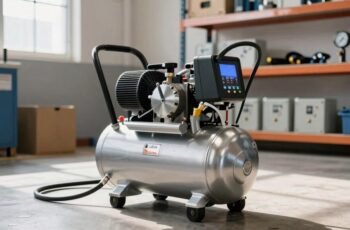
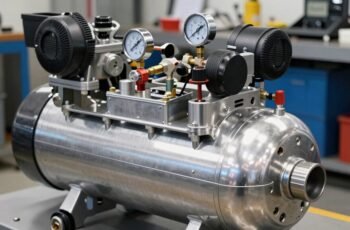
When selecting an electric air compressor, understanding key features like motor horsepower, tank capacity, and airflow ratings is essential for matching your tools and workload. Each aspect influences performance, durability, and overall value, yet choosing the right model requires careful analysis of your specific needs. To make an informed decision, it’s vital to evaluate how these variables align with your projects—details that can considerably impact long-term efficiency and safety.
Key Takeaways
- Determine the required CFM and PSI for your tools and select a compressor with at least 25-30% higher capacity.
- Choose the appropriate compressor type (portable, stationary, rotary screw) based on your project needs.
- Consider motor power, tank size, and additional features to ensure durability and value.
- Match the compressor’s airflow and pressure capabilities to your specific tasks for optimal performance.
- Regular maintenance, including filter cleaning and moisture drainage, extends compressor lifespan and ensures safety.
What Are the Key Features to Look for in an Electric Air Compressor?
When selecting an electric air compressor, understanding the key features that impact performance and usability is essential. Critical parameters include motor power, measured in horsepower (HP), which determines overall capacity and efficiency. Tank size influences operational runtime and air supply stability, with larger tanks reducing cycling frequency. CFM (cubic feet per minute) ratings are essential for evaluating airflow delivery, directly affecting tool compatibility. PSI (pounds per square inch) indicates maximum pressure capacity, important for specific applications. Additionally, the compressor’s duty cycle reflects operational duration before cooling is needed, impacting productivity. Portability features, such as weight and handle design, influence ease of movement. Finally, noise levels and energy efficiency are practical considerations that optimize long-term usage and compliance with workplace standards.
How Do You Determine the Right CFM and PSI for Your Projects?
Determining the appropriate CFM and PSI for your projects requires a detailed assessment of the tools and applications you plan to use. Start by identifying the maximum CFM and PSI ratings specified by each tool’s manufacturer, focusing on the highest requirements. For continuous operation, select an air compressor that provides at least 25-30% higher CFM than the highest tool demand to prevent pressure drops. Consider the peak PSI needed for specific tasks, ensuring the compressor can sustain that level without strain. Precise calculations involve matching the compressor’s CFM and PSI capabilities with the combined demands of multiple tools used simultaneously. This analytical approach guarantees sufficient airflow and pressure, optimizing performance, efficiency, and compressor longevity while avoiding under or over-specifying equipment.
Which Types of Electric Air Compressors Are Best for Different Uses?
Selecting the appropriate electric air compressor depends heavily on the specific use case and operational demands. For light-duty tasks like inflating tires or powering small air tools, portable pancake compressors offer compactness and sufficient CFM at lower PSI. Industrial applications requiring continuous operation and higher flow rates benefit from stationary reciprocating compressors, which deliver consistent performance for manufacturing or automotive repair. For spray painting or sandblasting, high-capacity rotary screw compressors provide stable, high-volume airflow with minimal pulsation. Compact scroll compressors suit applications needing quieter operation and lower maintenance, ideal for dental or laboratory environments. Understanding the airflow requirements and duty cycle of each compressor type ensures maximum performance, efficiency, and longevity for the intended use, avoiding over-specification or underperformance.
What Factors Affect the Cost and Value of an Electric Air Compressor?
The cost and value of an electric air compressor are primarily influenced by factors such as build quality, motor power, pressure capacity, airflow volume, and additional features. Higher build quality typically involves durable materials and precise manufacturing, reducing long-term maintenance costs and increasing reliability. Motor power, measured in horsepower, directly impacts performance, dictating how efficiently the compressor can operate under load. Pressure capacity, usually rated in PSI, determines the maximum operating pressure and suitability for specific tasks. Airflow volume, measured in CFM, influences the compressor’s ability to handle continuous or demanding applications. Additional features like adjustable regulators, noise reduction, and integrated storage tanks can elevate both initial costs and overall value, aligning the compressor’s capabilities with user needs and application complexity.
How Can You Maintain Your Air Compressor for Longevity and Safety?
Regular maintenance is essential to guarantee your air compressor operates reliably and safely over its lifespan. Consistent inspection of filters and replacing them when clogged prevents system inefficiencies and reduces wear on components. Draining moisture from the tank prevents corrosion and maintains ideal pressure levels. Lubrication of moving parts, following manufacturer specifications, minimizes friction and prevents overheating. Monitoring operating pressure and temperature ensures the system functions within safe limits, reducing the risk of failure. Tightening fittings and checking for leaks improves efficiency and safety. Regularly inspecting belts, hoses, and electrical connections identifies potential issues before failure occurs. Implementing these maintenance practices ensures longevity, reduces downtime, and maintains safety standards, ultimately enhancing your compressor’s performance over time.
Frequently Asked Questions
What Safety Precautions Should I Follow When Operating an Electric Air Compressor?
When operating an electric air compressor, we always wear eye and ear protection, guarantee proper grounding, check for leaks, and follow manufacturer instructions carefully. Regular maintenance and proper ventilation are essential to prevent accidents and ensure safe, efficient operation.
How Energy-Efficient Are Different Electric Air Compressor Models?
Different electric air compressor models vary considerably in energy efficiency, mainly based on motor design, load management, and insulation quality. We analyze these factors to optimize performance and reduce energy consumption, ensuring cost-effective and environmentally friendly operation.
Can Electric Air Compressors Be Used Outdoors in All Weather Conditions?
We believe electric air compressors can be used outdoors in most weather conditions if they’re properly protected; however, extreme elements like rain or snow can compromise their performance and longevity, so protective measures are essential.
What Are Common Troubleshooting Issues With Electric Air Compressors?
We find that common troubleshooting issues include pressure drops, motor overheating, and air leaks. Regularly inspecting components, ensuring proper maintenance, and addressing leaks promptly help maintain ideal compressor performance and prevent costly repairs.
Are There Environmentally Friendly or Low-Emission Electric Air Compressors Available?
Like wise engineers seeking efficiency, we find environmentally friendly, low-emission electric air compressors now available, utilizing advanced motor technology and eco-conscious materials, reducing carbon footprint while maintaining ideal performance, aligning sustainability with industrial productivity.
Conclusion
In summary, selecting the right electric air compressor hinges on understanding its key features, matching specifications to project demands, and considering long-term durability. While some believe higher horsepower guarantees better performance, efficiency depends more on appropriate CFM and PSI ratings relative to your tools. Regular maintenance is essential for safety and longevity. By applying a data-driven approach, we can optimize both compressor choice and operational efficiency, ensuring reliable performance tailored to specific tasks.