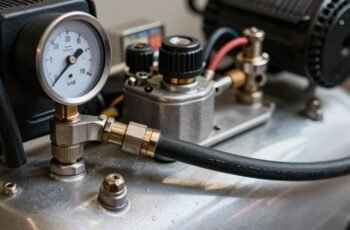
Maintaining an air compressor requires systematic inspections and precise upkeep of its components to guarantee efficiency and safety. We recognize that detecting leaks, managing filters, and monitoring oil levels are critical tasks, but the specifics can be nuanced. Proper maintenance not only prolongs the lifespan of your equipment but also prevents costly downtime. To achieve peak performance, it’s essential to follow a structured approach—starting with the fundamentals and progressing toward detailed procedures that keep your compressor operating reliably.
Key Takeaways
- Regularly check for and seal air leaks using soapy water or ultrasonic detection to improve efficiency.
- Change and clean filters monthly, replacing heavily contaminated ones to prevent airflow restrictions.
- Inspect hoses and fittings for damage or leaks, tightening or replacing as needed for safety.
- Monitor oil levels and quality, changing oil per manufacturer guidelines to ensure proper lubrication.
- Schedule routine maintenance tasks and keep detailed logs to prevent downtime and extend compressor lifespan.
How to Check and Prevent Air Leaks in Your Compressor
To guarantee peak performance and energy efficiency, we must regularly check for air leaks in our compressor system. Air leaks reduce overall efficiency by decreasing pressure and increasing energy consumption. To detect leaks, we utilize a soapy water solution applied to fittings, hoses, and connections; escaping bubbles signal leaks. We also perform ultrasonic leak detection for more precise pinpointing of small or hidden leaks. Once identified, we tighten fittings, replace damaged hoses, or reseal joints to eliminate leaks. It’s critical to maintain a consistent inspection schedule, especially in high-use environments, to prevent pressure drops. Properly sealing all connections ensures the compressor operates within optimal parameters, reducing unnecessary energy costs and wear on components. Regular leak prevention directly contributes to the compressor’s longevity and reliable performance.
How to Change and Clean Compressor Filters for Optimal Performance
Regularly changing and cleaning compressor filters is essential for maintaining peak system performance and preventing unnecessary strain on the compressor motor. Dirty filters restrict airflow, causing the compressor to work harder and increasing wear. To change the filter, turn off the compressor and disconnect power, then carefully remove the filter housing. Inspect the filter for debris, dust, and oil buildup; replace if heavily contaminated or damaged. When cleaning, use compressed air to blow dust from the filter element from the clean side outward, avoiding damage to the media. Confirm the filter is dry before reinstalling. Regular maintenance intervals depend on usage and environment, but a monthly check is recommended for ideal operation. Proper filter management prolongs component life and sustains compressor efficiency.
How to Inspect and Maintain Hoses and Fittings
Since hoses and fittings are critical for maintaining proper airflow and pressure, inspecting them regularly for signs of wear or damage is essential. We examine hoses for cracks, bulges, or abrasions that could compromise integrity. Fittings are checked for corrosion, leaks, or loose connections that might cause pressure drops or system failure. We make sure fittings are securely tightened without over-tightening, which could cause damage. Hoses should be flexible without kinks or restrictions, as these impair airflow. We also verify that clamps and couplings are properly secured to prevent disconnections under pressure. Any damaged hoses or fittings are replaced immediately to maintain system efficiency and safety. Routine inspections help identify potential issues early, reducing downtime and preventing costly repairs.
How to Monitor and Adjust Compressor Oil Levels and Quality
Maintaining proper oil levels and guaranteeing oil quality are essential for ideal compressor performance and longevity. Regularly check the oil level using the sight glass or dipstick, ensuring it remains within the manufacturer’s specified range. Low oil levels can cause increased wear and overheating, while overfilling may lead to foaming and reduced lubrication efficiency. Monitor oil quality by inspecting for contamination, such as dirt, water, or metal particles, and perform oil analysis if necessary. Change the oil according to the manufacturer’s recommended intervals, typically based on hours of operation. Always use the specified oil type and viscosity to ensure maximum lubrication. Consistent monitoring and timely adjustments prevent excessive wear, reduce downtime, and extend the lifespan of the compressor.
How to Schedule Routine Maintenance to Keep Your Compressor Running Smoothly
Scheduling routine maintenance for your compressor involves establishing a detailed plan based on operational hours and manufacturer recommendations. We recommend tracking compressor run time daily to determine maintenance intervals accurately. Develop a maintenance schedule that includes inspections, filter replacements, lubrication, and safety checks, aligned with the manufacturer’s guidelines. Use a maintenance log to document tasks performed and schedule upcoming service dates. Prioritize critical components such as belts, valves, and pressure relief devices, ensuring they receive timely attention. Incorporate predictive maintenance techniques, like vibration analysis or oil analysis, to identify potential issues early. Regularly review and adjust the schedule based on operational demand and equipment condition. This systematic approach minimizes downtime, extends compressor lifespan, and maintains ideal performance.
Frequently Asked Questions
What Are Signs That Indicate My Compressor Needs Professional Servicing?
We notice signs like unusual noises, decreased airflow, excessive vibrations, or overheating indicating your compressor needs professional servicing. Regularly monitoring pressure levels and checking for oil leaks also helps identify issues early before major failures occur.
How Do Temperature Fluctuations Affect Compressor Performance?
Temperature fluctuations can decrease compressor efficiency by up to 15%, causing thermal stress, increased wear, and potential component failure. We monitor and control temperature variations meticulously to guarantee peak performance and extend the compressor’s lifespan.
Can Using the Wrong Type of Oil Damage My Compressor?
Yes, using the wrong oil can cause significant damage. It can lead to improper lubrication, increased wear, overheating, and component failure. Always select oil specified by the manufacturer to guarantee ideal compressor performance and longevity.
How Often Should I Replace Compressor Valves?
We recommend replacing compressor valves every 1,000 to 2,000 hours of operation or annually, whichever comes first. Regular inspection for wear, corrosion, or damage helps prevent failure, ensuring peak compressor performance and longevity.
What Safety Precautions Should I Follow During Maintenance?
We prioritize safety by disconnecting power, releasing pressure, wearing protective gear, and consulting manuals before maintenance. Visualize each step clearly, ensuring a controlled environment to prevent injuries and equipment damage during air compressor upkeep.
Conclusion
Regular maintenance might seem time-consuming, but it’s crucial for reliable compressor operation and safety. Skipping inspections can lead to costly repairs or downtime. By following these steps—checking for leaks, cleaning filters, inspecting hoses, and monitoring oil—we guarantee peak performance and extend your compressor’s lifespan. Investing a little time now prevents major issues later, providing peace of mind and consistent productivity. Proper maintenance isn’t just recommended; it’s essential for your equipment’s long-term efficiency.