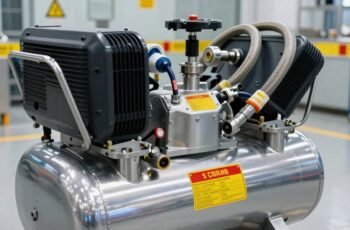
Maintaining an air compressor requires a systematic approach to guarantee it functions efficiently and lasts over time. We recognize that regular inspections of key components—such as filters, belts, hoses, and safety devices—are crucial, but knowing exactly when and how to perform each task can be complex. To optimize performance and prevent costly breakdowns, it’s essential to follow a detailed, tailored maintenance plan. The next steps will guide you through the critical elements to keep your compressor operating safely and reliably.
Key Takeaways
- Regularly inspect for leaks, corrosion, and damage, ensuring all components are in proper working condition.
- Check and replace air filters and oil according to manufacturer guidelines to prevent contamination and wear.
- Monitor pressure levels, belt tension, hoses, and connections for signs of wear or leaks.
- Follow safety protocols, including lockout/tagout, PPE, and proper ventilation during maintenance.
- Develop a tailored maintenance schedule based on operational hours, environment, and critical component needs.
What Are the Key Components of an Air Compressor Maintenance Checklist?
What are the key components we need to include in an air compressor maintenance checklist? First, we verify the compressor’s overall condition, inspecting for leaks, corrosion, and damage. Next, we check the belt tension and alignment, ensuring they’re within manufacturer specifications to prevent slippage or excessive wear. We then examine the air filters, looking for dirt buildup or damage that could restrict airflow. The lubrication system requires inspection of oil levels and quality, as well as the condition of oil filters and drains. We also test safety devices like pressure relief valves, confirming they operate correctly. Finally, we review the compressor’s gauges and control systems for proper functioning, recording any irregularities. This systematic approach guarantees reliable operation and prolongs equipment lifespan.
How Often Should You Check and Replace Filters and Oil?
Regularly checking and replacing filters and oil is essential to maintaining ideal compressor performance and preventing unexpected downtime. We recommend inspecting filters every 1 to 3 months, depending on usage intensity and environment. Oil should be checked weekly for level and clarity; replace it every 6 months or after 1,000 hours of operation. Proper maintenance guarantees maximum efficiency and longevity.
To emphasize the importance:
- Clogged filters reduce airflow, increasing energy consumption and wear.
- Contaminated oil impairs lubrication, risking component damage.
- Neglecting timely replacements leads to costly repairs and decreased productivity.
How to Inspect and Maintain Hoses, Fittings, and Safety Features
To guarantee safe and efficient compressor operation, we must systematically inspect and maintain hoses, fittings, and safety features. Begin by visually examining hoses for cracks, cuts, or signs of wear, ensuring there are no leaks or bulges. Check fittings for tightness and corrosion, tightening loose connections with the appropriate tools. Verify safety features like pressure relief valves and shutdown switches are functioning correctly; test pressure relief valves by gently pressing the test lever, ensuring they release excess pressure safely. Inspect safety guards and emergency stop mechanisms for damage or misalignment. Document any irregularities and replace damaged hoses or faulty fittings immediately. Regular, detailed inspections like these prevent failures, enhance safety, and prolong the lifespan of your compressor system.
What Signs Indicate Your Air Compressor Needs Repairs or Service?
Monitoring the operational soundness of your air compressor is essential, as certain signs can indicate it requires repairs or servicing. Recognizing these signs early prevents costly downtime and prolongs equipment lifespan. Look out for:
Regularly monitor your air compressor’s sounds to catch issues early and extend its lifespan.
- Unusual noises such as knocking, rattling, or hissing, which suggest internal component issues or air leaks.
- Fluctuating or reduced air pressure, indicating possible blockages or pressure regulator problems.
- Excessive heat or frequent cycling, signaling motor strain or insufficient lubrication.
These indicators point to underlying mechanical or operational faults that need prompt attention. Regularly inspecting for these signs ensures you catch problems before they escalate, maintaining peak compressor performance and safety. Accurate diagnosis allows for targeted repairs, minimizing unnecessary downtime.
How to Clean and Lubricate Your Air Compressor Properly
Proper cleaning and lubrication are essential steps in maintaining your air compressor’s efficiency and longevity. First, disconnect the power and drain any accumulated moisture from the tank. Use a soft brush or compressed air to remove dust and debris from vents, filters, and cooling fins. For lubrication, check the manufacturer’s guidelines to determine the correct oil type and level. Apply oil to moving parts such as the piston, crankshaft, and bearings, ensuring even coverage without over-lubricating. Use the following table for a clear overview:
| Step | Action |
|---|---|
| Clean filters | Remove and wash or replace filters regularly |
| Check oil levels | Ensure oil is at the recommended level |
| Lubricate moving parts | Apply oil precisely to designated components |
| Inspect for wear | Look for signs of damage or excessive wear |
Why Monitoring Operating Pressure and Temperature Matters
Keeping close watch on operating pressure and temperature guarantees that our air compressor runs efficiently and safely. Precise monitoring prevents system overloads, reduces wear, and minimizes downtime. When pressure exceeds recommended limits, components strain, risking damage or failure. Elevated temperatures can signal inadequate cooling or excessive load, leading to overheating and potential compressor breakdown.
Key reasons to monitor these parameters include:
- Detecting early signs of malfunction before costly repairs
- Ensuring ideal performance and energy efficiency
- Extending the lifespan of critical components
How to Store and Protect Your Air Compressor During Downtime
Proper storage environment and regular maintenance checks are essential to protect your air compressor during downtime. We should guarantee the unit is kept in a clean, dry, and temperature-controlled space to prevent corrosion and component damage. Additionally, conducting routine inspections helps identify potential issues before they escalate, ensuring the compressor remains in ideal condition.
Proper Storage Environment
Have you considered how environmental conditions can impact your air compressor during periods of inactivity? Proper storage involves controlling temperature, humidity, and exposure to contaminants. Extreme temperatures can cause condensation inside the tank, leading to corrosion, while high humidity promotes rust formation. It’s crucial to store the compressor in a clean, dry environment with stable temperature conditions. Additionally, make certain the area is free from dust, dirt, and corrosive agents that could damage internal components. To maximize protection, consider these measures:
- Maintain a temperature range of 40-95°F (4-35°C) to prevent condensation
- Use a dehumidifier or climate control to regulate humidity levels
- Store in a clean, dust-free area away from chemicals or corrosive substances
These steps guarantee your compressor remains in top condition during downtime.
Regular Maintenance Checks
How can we guarantee your air compressor remains reliable and ready for use after periods of inactivity? Regular maintenance checks are essential. During downtime, inspect for dust, moisture, and corrosion. Ensure the compressor is stored in a clean, dry environment, and disconnect power sources. Lubricate moving parts as recommended, and drain residual moisture from tanks. Also, check for any signs of wear or damage that could compromise operation. To simplify, follow this maintenance schedule:
| Task | Frequency |
|---|---|
| Inspect for dust/moisture | Before storage |
| Lubricate moving parts | Monthly or as needed |
| Drain tank moisture | Weekly during downtime |
| Check for corrosion | Monthly |
Adopting these detailed steps preserves your compressor’s integrity and extends its lifespan.
What Are the Common Mistakes to Avoid in Maintenance?
One common mistake we see is neglecting regular inspections, which can lead to overlooked issues that cause equipment failure. Additionally, failing to follow safety protocols increases the risk of accidents and damage to the compressor. To maintain ideal performance, it’s essential to be meticulous and consistent in both inspections and safety measures.
Ignoring Regular Inspections
Neglecting regular inspections is a critical mistake that can lead to costly equipment failures and safety hazards. Without routine checks, small issues may go unnoticed, escalating into major malfunctions. This oversight compromises compressor efficiency and lifespan. To avoid this, we emphasize the importance of detailed inspections, including:
- Monitoring pressure levels and checking for fluctuations
- Examining belts, hoses, and connections for wear or leaks
- Inspecting oil and filter conditions for contamination or clogging
Regular inspections ensure early detection of potential problems, enabling timely repairs. Skipping these steps can result in unexpected breakdowns, reduced productivity, and increased repair costs. Maintaining a strict inspection schedule is essential for reliable operation, safety, and longevity of the compressor system.
Overlooking Safety Protocols
Overlooking safety protocols during compressor maintenance can lead to serious accidents and equipment damage. It’s essential to follow strict procedures to protect both personnel and machinery. Common mistakes include neglecting lockout/tagout procedures, failing to wear proper personal protective equipment (PPE), and rushing the shutdown process. These oversights can result in unexpected startup injuries or equipment failure. To emphasize, consider the following:
| Safety Step | Potential Risk |
|---|---|
| Lockout/tagout procedures | Electrical shock or accidental startup |
| Wearing PPE | Burns, cuts, or eye injuries |
| Proper ventilation | Respiratory hazards |
Ensuring these steps are methodically followed minimizes risk and maintains safe, effective maintenance.
How to Develop a Custom Maintenance Schedule for Your Equipment
To develop an effective custom maintenance schedule for your air compressor, we must first thoroughly assess the specific operational demands, usage patterns, and environmental conditions it faces. Understanding these factors allows us to tailor maintenance tasks accurately, ensuring peak performance and longevity.
Key considerations include:
- Frequency of use and workload intensity
- Operating environment, such as dust levels or humidity
- Critical components that require regular inspection
Frequently Asked Questions
What Safety Precautions Should I Take During Compressor Maintenance?
We guarantee safety by disconnecting power, releasing pressure, wearing protective gear, verifying no residual energy, inspecting tools, following manufacturer instructions, and working in well-ventilated areas. Precise steps prevent accidents and ensure thorough, safe maintenance procedures.
How Can I Troubleshoot Common Compressor Problems?
We first examine pressure gauges for irregular readings, then inspect the belts and hoses for wear or leaks, and finally listen for unusual noises, ensuring all components operate smoothly and efficiently before identifying and addressing specific issues systematically.
Are There Specific Maintenance Tips for Different Compressor Brands?
We suggest consulting each brand’s specific manual for detailed maintenance tips, as they often have unique components. Regularly inspect, clean, and replace parts as needed, and follow manufacturer guidelines diligently to guarantee ideal performance and longevity of your compressor.
What Tools Are Necessary for Regular Compressor Maintenance?
We rely on essential tools like wrenches, screwdrivers, cleaning brushes, and pressure gauges to guarantee precise maintenance. These tools act as our trusted keys, opening up ideal compressor performance through careful, methodical inspections and adjustments.
How Can I Improve the Energy Efficiency of My Air Compressor?
We can improve your air compressor’s efficiency by regularly inspecting and cleaning filters, checking for leaks, optimizing pressure settings, scheduling preventive maintenance, and ensuring proper lubrication, all of which reduce energy consumption and enhance overall performance systematically.
Conclusion
Regular maintenance is essential for maximizing our air compressor’s lifespan and efficiency. Studies show that improper upkeep can lead to a 30% increase in energy consumption and costly repairs. By following a detailed checklist—inspecting components, monitoring pressure, and storing it properly—we guarantee safe, reliable operation. Staying diligent with scheduled checks and avoiding common mistakes helps us prevent unexpected breakdowns and extend equipment life, ultimately saving time and money in the long run.