Just as a finely tuned engine relies on precise calibration, an air compressor depends on diligent preventive maintenance to sustain ideal performance. Each component, from filters to hoses, plays a critical role in its overall health, and neglect can lead to costly failures. By systematically addressing key aspects, we can extend equipment lifespan and reduce downtime—yet understanding the specific steps involved remains essential to achieving these goals.
Key Takeaways
- Perform regular inspections of filters, hoses, and seals to detect leaks, dirt buildup, or wear early.
- Schedule routine lubricant changes and monitor oil quality to prevent internal component damage.
- Check and calibrate pressure gauges and temperature sensors for accurate system monitoring.
- Use moisture drains and automatic valves to eliminate water buildup and prevent corrosion.
- Keep detailed maintenance records to track component lifespan and plan proactive repairs.
Why Regular Maintenance Extends Your Air Compressor’s Lifespan
Regular maintenance is essential for maximizing the lifespan of your air compressor because it guarantees all crucial components operate efficiently and reduces the risk of unexpected failures. By routinely inspecting and servicing components such as valves, belts, and electrical connections, we prevent premature wear and mechanical breakdowns. Consistent lubrication minimizes friction and heat buildup, extending component life and maintaining peak performance. Additionally, regular maintenance allows early detection of potential issues, enabling timely corrective actions that prevent costly repairs or catastrophic failures. Keeping filters clean and ensuring proper alignment also sustain system efficiency, reducing unnecessary energy consumption. Overall, systematic maintenance practices create a stable operational environment, prolonging the compressor’s functional life and ensuring reliable performance over time.
How to Check and Replace Air Compressor Filters and Lubricants
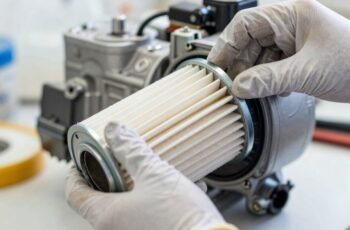
Ensuring the air compressor operates efficiently requires routine checks and timely replacements of filters and lubricants. Regular inspection guarantees ideal filtration, preventing contaminants from damaging internal components, and maintains proper lubrication to reduce wear. To check filters, inspect for visible dirt, dust, or clogging—replace if airflow is restricted or if filter media appears compromised. For lubricants, monitor oil levels and color; dark, thick oil indicates degradation needing replacement.
- Check filter condition visually and replace if clogged or damaged
- Confirm oil level matches manufacturer specifications
- Drain and replace lubricant periodically based on usage and manufacturer guidance
- Use recommended filter and oil types to guarantee compatibility and performance
The Importance of Draining Moisture From the Tank
Regularly draining moisture from the tank is crucial to prevent corrosion and structural deterioration, which can compromise compressor integrity. Removing accumulated water also guarantees the compressed air remains clean and suitable for sensitive applications, avoiding contamination issues. Ultimately, consistent moisture management extends the lifespan of the equipment and maintains peak performance.
Prevents Corrosion Build-Up
Moisture accumulation inside an air compressor tank accelerates corrosion, compromising the equipment’s integrity and lifespan. Regularly draining moisture prevents this build-up, reducing the risk of rust formation on internal surfaces. Corrosion weakens the tank structure, potentially leading to failures and costly repairs. To effectively prevent this, consider these actions:
- Establish a routine to drain the tank after each use or at scheduled intervals.
- Use automatic drain valves for continuous moisture removal.
- Inspect the drain valve regularly for proper operation.
- Maintain proper pressure settings to minimize condensation formation.
Maintains Air Quality
When moisture accumulates inside an air compressor tank, it can considerably compromise the quality of the compressed air produced. Moisture presence introduces water vapor that can carry impurities, leading to contaminated air that affects downstream tools and processes. Over time, this moisture fosters corrosion within the tank, increasing particulate matter and reducing overall air purity. Draining the tank regularly prevents water buildup, maintaining consistent air quality by minimizing moisture-related contamination. This process also guarantees that condensate does not compromise filtration systems or cause operational inconsistencies. Monitoring and promptly removing accumulated moisture is critical for maintaining the integrity of the compressed air, especially in applications demanding high purity standards. Proper drainage therefore plays an essential role in ensuring stable, clean airflow, safeguarding sensitive equipment and maintaining system performance.
Extends Equipment Life
By actively draining moisture from the tank, we prevent water accumulation that can cause corrosion and damage to the compressor’s internal components. Moisture buildup accelerates rust formation, weakening tank integrity and impairing performance. Regular drainage reduces the risk of internal corrosion, extending the equipment’s operational lifespan. It also minimizes the likelihood of component failure due to water-induced damage, which can lead to costly repairs or replacements. Proper moisture management enhances overall reliability and efficiency, ensuring consistent performance over time.
- Prevents rust and corrosion within the tank
- Protects internal compressor components
- Reduces the risk of pressure vessel failure
- Maintains ideal compressor efficiency
Inspecting and Tightening Hoses and Connections for Safety and Efficiency
Regularly inspecting and tightening hoses and connections is essential to maintaining the safety and efficiency of an air compressor system. Loose or damaged fittings can cause pressure drops, reduce airflow, and lead to leaks that compromise system performance. We recommend systematically checking all hoses for signs of wear, cracks, or swelling, especially at connection points. Tightening fittings with the appropriate tools ensures secure contact without over-tightening, which can damage threads or distort connections. Properly secured hoses prevent sudden disconnections under pressure, minimizing safety hazards. Additionally, inspecting for corrosion or debris helps maintain airtight seals. Consistent maintenance of hose connections not only optimizes airflow and pressure stability but also considerably reduces the risk of operational failures and safety incidents.
Monitoring Compressor Pressure and Temperature Settings
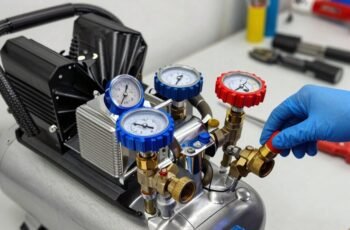
Monitoring compressor pressure and temperature settings is vital for maintaining ideal system performance and preventing equipment failures. Accurate readings ensure the compressor operates within specified parameters, reducing stress on components and extending lifespan. Regularly check pressure gauges to verify settings align with manufacturer recommendations, and monitor temperature sensors to detect overheating early. Deviations can indicate underlying issues like valve malfunctions or lubrication problems.
Monitoring compressor pressure and temperature ensures optimal performance and prevents costly equipment failures.
Key points to keep in mind include:
- Making sure pressure stays within the designated operating range
- Observing temperature trends for abnormal increases
- Calibrating gauges periodically for accuracy
- Implementing real-time monitoring systems for continuous oversight
Troubleshooting Common Air Compressor Problems Before They Escalate
Identifying early warning signs such as irregular pressure fluctuations or temperature spikes allows us to safeguard against issues before they worsen. Listening for unusual noises and inspecting for leaks or drips helps pinpoint potential failures rapidly. Proactive troubleshooting ensures continuous operation and reduces costly downtime.
Recognize Early Warning Signs
Early detection of warning signs is essential to maintaining ideal air compressor performance and preventing costly downtime. Recognizing subtle indicators allows for timely intervention, reducing the risk of component failure or efficiency loss. Key signs include fluctuating pressure levels, which may indicate leaks or control issues; increased energy consumption, signaling potential mechanical friction or airflow restrictions; excessive heat generation, often a precursor to bearing or motor problems; and abnormal vibration patterns, pointing to imbalance or misalignment. Monitoring these parameters through regular inspections and data analysis helps identify issues before they escalate. Implementing diagnostic protocols focused on these early indicators enables maintenance teams to address problems proactively, ensuring continuous operation and extending equipment lifespan.
Check for Unusual Noises
Unusual noises often serve as early indicators of underlying issues within an air compressor. These sounds can signal mechanical failures, misalignments, or component wear before more severe damage occurs. For instance, knocking or banging noises may suggest piston or valve problems, while high-pitched squeals could indicate belt slippage or bearing failure. By systematically monitoring sound patterns, we can identify abnormal vibrations or tonal changes that deviate from normal operation. Precise analysis helps isolate the source—whether it’s the motor, piston assembly, or airflow components—and allows targeted maintenance. Recognizing these auditory cues early enables us to prevent costly repairs and downtime. Regular checks for unusual noises should be integrated into routine maintenance schedules to guarantee the compressor’s peak performance and longevity.
Inspect for Leaks and Drips
Leaks and drips can considerably compromise an air compressor’s efficiency and operational integrity if left unchecked. Identifying these issues early prevents pressure loss, reduces energy consumption, and minimizes component wear. To do this effectively, we recommend:
- Inspect all fittings, hoses, and seals for visible signs of fluid escape or deterioration.
- Use soapy water on connections to detect small leaks through bubbling.
- Monitor pressure gauges for unexplained drops during operation.
- Listen for hissing sounds indicating escaping air, especially near joints and valves.
Developing a Preventive Maintenance Schedule for Consistent Performance
To guarantee consistent performance and minimize downtime, establishing a thorough preventive maintenance schedule for air compressors is essential. This involves identifying critical components—such as filters, belts, and bearings—and setting precise inspection and replacement intervals based on manufacturer guidelines and operational data. A structured schedule ensures tasks are performed systematically, reducing the risk of unexpected failures. We should incorporate condition monitoring tools, like vibration analysis and temperature sensors, to inform maintenance timing dynamically. Prioritizing tasks based on compressor usage intensity and environment helps optimize resource allocation. Regular documentation of maintenance activities enables trend analysis, facilitating proactive adjustments. Ultimately, a disciplined, data-driven schedule enhances reliability, extends equipment lifespan, and improves overall operational efficiency.
Frequently Asked Questions
How Often Should I Schedule Professional Inspections for My Air Compressor?
We recommend scheduling professional inspections every 3 to 6 months, depending on usage intensity and operating environment, to guarantee peak performance, identify potential issues early, and extend your compressor’s lifespan effectively.
What Are the Signs of Internal Component Wear That I Should Watch For?
We observe subtle vibrations, increased noise, and fluctuating pressure gauges as gentle indicators of internal wear, suggesting we should inspect components like pistons, valves, and bearings closely, ensuring ideal compressor performance before more significant issues arise.
Can I Perform Maintenance Tasks Myself, or Should I Hire a Technician?
We recommend hiring a qualified technician for maintenance tasks requiring technical expertise, as improper handling can cause damage or safety hazards. However, basic inspections and cleaning are manageable if you follow proper procedures and safety protocols.
What Safety Precautions Should I Follow During Compressor Maintenance?
We prioritize safety, knowing that 60% of compressor-related injuries stem from inadequate precautions. We always disconnect power, drain moisture, wear PPE, and follow manufacturer guidelines, ensuring a controlled environment and minimizing risks during maintenance.
How Do Environmental Conditions Affect Air Compressor Maintenance Needs?
Environmental conditions profoundly impact compressor maintenance; high humidity accelerates corrosion, dust accumulation hampers efficiency, and extreme temperatures strain components. We recommend regular inspections, proper filtration, and environmental control measures to optimize compressor lifespan and performance.
Conclusion
By adhering to these preventive maintenance practices, we can dramatically extend our air compressor’s lifespan, transforming it from a simple tool into an unstoppable powerhouse. Neglecting these tips risks catastrophic failures, costly downtime, and equipment obsolescence at an unprecedented rate. Regular, data-driven inspections and timely interventions aren’t just recommended—they’re essential for maintaining peak performance. In short, a rigorous maintenance schedule isn’t just good practice; it’s the difference between operational excellence and total system collapse.