When selecting a hot dog air compressor, it’s vital to understand how performance metrics like CFM and PSI align with your specific tool requirements. Making an informed choice involves analyzing various features, from power sources to portability, to guarantee maximum efficiency and durability. As we explore the key considerations in this guide, you’ll discover strategies to match equipment capabilities with your workflow, helping you avoid costly mistakes and maximize your investment.
Key Takeaways
- Determine the required CFM and PSI to match your tools’ specifications for optimal performance.
- Choose between portable and stationary models based on workspace size and mobility needs.
- Consider tank capacity and power source options—electric, gas, or hybrid—for your work environment.
- Evaluate compressor durability, maintenance needs, and energy efficiency for long-term reliability.
- Ensure compatibility of voltage, phase, and power supply with your operational setup.
What Is a Hot Dog Air Compressor and Why Do You Need One?
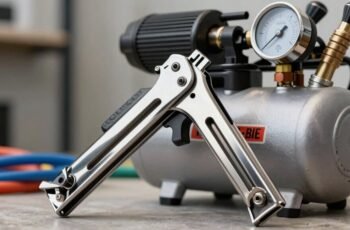
A hot dog air compressor is a compact, portable device designed to deliver compressed air efficiently for various small-scale applications. Its streamlined design emphasizes mobility and ease of use, making it ideal for tasks requiring quick, on-the-spot air power. These compressors typically feature smaller tanks and lower power outputs, optimized for precision and control rather than heavy-duty performance. They are essential in settings like automotive repairs, hobbyist projects, or maintenance tasks where portability and immediate air supply are critical. The device’s technical advantage lies in providing consistent airflow with minimal setup, reducing downtime and increasing operational efficiency. Understanding its capabilities helps determine when a hot dog air compressor offers a practical, cost-effective solution for targeted, small-scale pneumatic needs.
Key Features to Look for in a Hot Dog Air Compressor
When selecting a hot dog air compressor, understanding its key features guarantees you choose a model that meets your specific needs. Essential features include CFM (cubic feet per minute) output, which determines airflow capacity and impacts performance for various tasks. PSI (pounds per square inch) indicates maximum pressure, critical for applications requiring higher pressure levels. Motor horsepower influences efficiency and runtime; higher horsepower generally means more sustained power. Additionally, tank size affects air storage capacity, impacting continuous operation and recovery times. Portability features, like weight and handle design, are important if mobility is necessary. Finally, build quality and durability—such as corrosion-resistant components—ensure long-term reliability under demanding conditions. Prioritizing these features allows for a precise match between the compressor’s capabilities and your specific operational requirements.
How to Determine the Right Air Pressure and CFM for Your Projects
To select the appropriate air pressure and CFM for your projects, we need to analyze the specific requirements of the tools and tasks you’ll be performing. First, identify the operating pressure (PSI) recommended by your tools’ manufacturers, typically printed on their labels. Most pneumatic tools operate between 90-120 PSI. Next, determine the CFM (cubic feet per minute) needed at that pressure, which indicates airflow volume. For continuous operation, confirm your compressor’s CFM rating exceeds the cumulative demand of all tools in use simultaneously. Additionally, consider peak CFM requirements for short bursts. Precise matching of PSI and CFM ensures maximum performance, prevents tool damage, and improves efficiency. Accurate assessment of these parameters is essential for selecting a compressor that meets your workload without unnecessary oversizing.
Choosing Between Portable and Stationary Hot Dog Compressors
Choosing between portable and stationary hot dog compressors depends on your specific operational needs and workspace constraints. Portable units are designed for mobility, allowing quick relocation across job sites or different workstations. They typically feature compact designs, lighter weight, and integrated handles, making them suitable for intermittent use or environments requiring flexibility. Conversely, stationary compressors are built for continuous, high-demand applications, often housing larger tanks and more robust components that enhance durability and efficiency. They occupy fixed positions, usually in dedicated workshops or manufacturing facilities, providing consistent performance over extended periods. When evaluating options, consider factors such as available space, frequency of use, and the need for mobility. This analysis guarantees you select a compressor aligned with your operational scale and workflow requirements.
Understanding Different Power Sources and Their Benefits
Understanding the various power sources for hot dog compressors is essential because each offers distinct advantages that influence performance, efficiency, and suitability for specific applications. Electric compressors are prevalent, providing quiet operation, ease of use, and consistent power delivery, ideal for indoor or controlled environments. Gas-powered models deliver portability and high power output, suitable for remote or outdoor use where electrical access is limited. Diesel compressors combine durability with increased fuel efficiency, often used in industrial settings. Some compressors utilize compressed air from central systems, reducing noise and maintenance but limiting mobility. Finally, hybrid models integrate multiple sources, offering flexibility.
- Electric: quiet, low maintenance, suitable for indoor use
- Gas-powered: portable, high power, outdoor applications
- Diesel: durable, fuel-efficient, heavy-duty tasks
- Central systems: reduced noise, stationary setups
- Hybrid: versatile, adaptable to various environments
Budget-Friendly Options vs. Premium Models: Which Is Right for You?
When evaluating hot dog compressors, it’s essential to weigh the benefits and limitations of budget-friendly options against premium models to determine which best fits your specific needs. Budget models typically offer lower upfront costs, simplified components, and basic performance metrics, making them suitable for light, occasional use. However, they often have reduced durability, higher maintenance frequency, and limited airflow capacity, which can impact long-term efficiency. Premium models, on the other hand, feature advanced materials, higher CFM ratings, and enhanced reliability, supporting continuous operation and demanding applications. While they require a larger initial investment, their superior build quality and efficiency can lower operating costs over time. Ultimately, the decision hinges on balancing immediate budget constraints with the potential for higher performance and longevity.
Tips for Maintaining and Extending the Life of Your Compressor
Regular maintenance is essential to make certain your hot dog compressor operates efficiently and has a long service life. Proper upkeep minimizes wear and prevents costly failures. To optimize performance, regularly inspect and replace filters, ensuring contaminants don’t impair operation. Drain moisture from the tank to prevent corrosion, and lubricate moving parts according to manufacturer specifications. Monitoring pressure levels helps identify leaks or inefficiencies early. Additionally, scheduling professional inspections can detect underlying issues before they escalate. Key maintenance practices include:
- Routine filter and air intake cleaning
- Moisture drainage and tank inspection
- Lubrication of bearings and moving components
- Pressure calibration and leak detection
- Scheduled professional servicing
Adhering to these guidelines ensures longevity, consistent efficiency, and reliable operation of your compressor.
Common Mistakes to Avoid When Buying a Hot Dog Air Compressor
One common mistake is neglecting to match the compressor’s power requirements with your specific operational needs, which can lead to inefficiency or equipment failure. Additionally, overlooking the maintenance needs of the unit may result in premature breakdowns and increased long-term costs. Addressing these points guarantees peak performance and durability of your hot dog air compressor.
Overlooking Power Requirements
Overlooking the power requirements of a hot dog air compressor can lead to significant performance issues or even equipment failure. Proper assessment guarantees compatibility with your power source and prevents overloads. Key factors include:
- Voltage compatibility with your electrical system to avoid tripping breakers or damage.
- Starting current draw, which influences the capacity of your circuit.
- Motor horsepower, critical for determining the compressor’s ability to handle workload efficiently.
- Power supply phase and frequency, affecting motor performance and longevity.
- Energy efficiency ratings, impacting long-term operational costs and sustainability.
Neglecting these aspects can result in insufficient airflow, increased wear, or electrical hazards, ultimately compromising the compressor’s reliability and lifespan. Precise evaluation of power needs is essential for peak performance and safety.
Ignoring Maintenance Needs
Neglecting maintenance requirements when selecting a hot dog air compressor can lead to unexpected downtime, increased repair costs, and reduced equipment lifespan. It’s essential to take into account the ongoing upkeep, such as filter replacements, lubrication, and parts accessibility, during the purchase process. Failing to evaluate these factors may result in choosing a model with complex or costly maintenance, which can undermine operational efficiency. Additionally, inadequate maintenance planning can cause performance degradation over time, impacting productivity and energy consumption. We must analyze manufacturer recommendations for routine service intervals and assess the availability of spare parts. By prioritizing maintenance needs, we ensure long-term reliability, optimize operational costs, and extend the compressor’s service life, avoiding costly surprises and minimizing operational disruptions.
How to Match Your Compressor to Your Specific Hot Dog Air Tool Needs
To guarantee optimal performance, we need to match the compressor’s airflow capacity and power output to your hot dog air tool’s specifications. It’s also vital to take into account portability and space constraints to select a unit that fits your working environment efficiently. By analyzing these key points, we can identify the most compatible compressor for your specific needs.
Tool Airflow Requirements
Understanding the airflow requirements of your hot dog air tool is essential for selecting an appropriate compressor. Accurate matching guarantees peak performance and prevents damage caused by insufficient airflow. Critical parameters include airflow rate (CFM), pressure demands (PSI), and duty cycle, which influence compressor capacity. To analyze these factors:
- Confirm the tool’s minimum required CFM at maximum PSI
- Account for potential pressure drops during operation
- Evaluate if the compressor can sustain continuous airflow without overheating
- Consider the impact of accessory attachments on airflow demands
- Ensure the compressor’s rated duty cycle aligns with your workload intensity
Compressor Power Compatibility
Matching your compressor’s power output to the specific requirements of your hot dog air tool is essential for peak performance and durability. Proper power compatibility guarantees the compressor can deliver the necessary pressure and volume without overloading or stalling. Typically, hot dog air tools require a specific CFM (cubic feet per minute) at a given PSI (pounds per square inch). If the compressor’s maximum CFM exceeds the tool’s needs, it provides ample airflow, reducing strain and extending lifespan. Conversely, undersized compressors risk insufficient airflow, leading to overheating and inconsistent operation. We analyze both the power rating—measured in horsepower (HP)—and the compressor’s rated CFM and PSI. Matching these specifications precisely optimizes tool efficiency, minimizes wear, and ensures safe, reliable operation.
Portability and Space Needs
Choosing a compressor that aligns with your hot dog air tool’s portability and space requirements is essential for efficient operation and ease of use. Proper matching guarantees ideal workflow, minimizes clutter, and prevents over- or under-sizing equipment. To evaluate your needs, consider the following factors:
- Physical dimensions to fit available storage or workspace
- Weight for ease of transport, especially if mobility is necessary
- Power supply compatibility for portable or fixed installations
- Air delivery capacity to meet the demands of your specific tools
- Operational noise levels if working in noise-sensitive environments
Frequently Asked Questions
Are Hot Dog Air Compressors Suitable for Industrial Applications?
Hot dog air compressors are generally unsuitable for industrial applications because they lack the power, durability, and capacity required for large-scale or continuous tasks, making them better suited for small, personal, or hobbyist use rather than heavy-duty industrial environments.
How Loud Are Hot Dog Air Compressors During Operation?
Hot dog air compressors typically operate between 60-80 decibels, comparable to a normal conversation. We find their noise levels manageable, making them suitable for environments where moderate sound output doesn’t disrupt workflow or cause discomfort.
Can a Hot Dog Air Compressor Be Used for Painting Projects?
Yes, hot dog air compressors can be used for painting projects, but their small tank capacity and lower CFM output limit continuous operation, making them suitable mainly for small, detail-focused tasks rather than large-scale or professional painting jobs.
What Safety Features Should I Look for in a Hot Dog Air Compressor?
We prioritize safety features like automatic shut-off, thermal overload protection, and pressure relief valves, ensuring reliable operation and preventing accidents. These technical safeguards are essential, creating a safer work environment while maintaining compressor efficiency and longevity.
How Long Does a Typical Hot Dog Air Compressor Last?
A typical hot dog air compressor lasts around 5 to 10 years with proper maintenance. We recommend regular oil changes, filter checks, and proper usage to extend its lifespan and guarantee consistent performance over time.
Conclusion
Certainly! Here’s the modified text with alternative words replacing “In conclusion” and “ensure”:
—
Ultimately, selecting the right hot dog air compressor involves careful analysis of your specific tool requirements, workspace constraints, and budget. While some might hesitate due to initial costs, investing in a quality, well-matched compressor guarantees long-term efficiency and durability, reducing downtime and maintenance expenses. By understanding key features and avoiding common pitfalls, you can make an informed decision that optimizes performance, ultimately delivering reliable, cost-effective results tailored to your unique application needs.