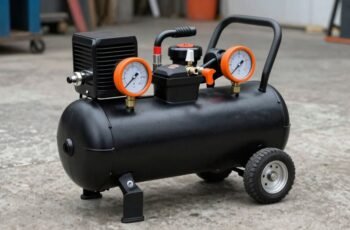
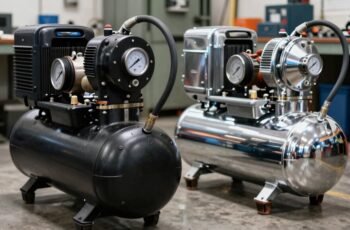
Imagine a precise spray pattern emerging from your gun, each droplet perfectly atomized, but only if the air compressor supplies consistent, ideal pressure. Choosing the right compressor requires analyzing technical specifications like CFM and PSI to match your spray gun’s demands, ensuring efficient operation and high-quality finishes. This decision impacts your workflow and results, making it essential to understand the nuances before making a selection that balances performance with practicality.
Key Takeaways
- Match the compressor’s CFM rating to your spray gun’s requirements for consistent, even spray application.
- Select an appropriate tank size to ensure stable pressure and accommodate project scope.
- Choose between portable or stationary models based on your work environment and mobility needs.
- Consider oil-free versus oil-lubricated compressors for maintenance preferences and contamination risks.
- Ensure the compressor’s PSI range aligns with your spray gun’s recommended operating pressure for optimal results.
Understanding Your Spray Gun’s Air Pressure Needs
Understanding your spray gun’s air pressure requirements is essential to achieving ideal performance and finish quality. Correct pressure ensures consistent atomization, best paint flow, and minimal overspray. Most spray guns specify a recommended operating pressure range, typically measured in pounds per square inch (PSI). Maintaining this range prevents issues such as uneven coating or runs. It’s important to recognize that air pressure alone doesn’t determine spray quality; the gun’s design, nozzle size, and material viscosity also influence the outcome. Precise adjustment of pressure settings allows for controlled paint delivery, reducing waste and improving finish smoothness. By understanding these specifications, we can select an appropriate compressor that supplies adequate, stable pressure, guaranteeing reliable operation and high-quality results.
How CFM and PSI Impact Spray Gun Performance
Understanding how CFM and PSI influence spray gun performance is vital for optimizing results. Consistent airflow and pressure stability directly affect spray quality, atomization, and finish smoothness. Analyzing these parameters helps guarantee the compressor meets the specific demands of your application.
Airflow Rate Significance
Ever wonder how airflow rate influences the performance of a spray gun? It’s primarily about delivering consistent, adequate pneumatic power for *essential* atomization. A higher airflow rate, measured in CFM, *assures* the gun receives enough air to produce a fine, uniform spray. If airflow is insufficient, spray quality deteriorates, resulting in uneven coverage and increased overspray. PSI also plays a role, as it affects how effectively air is delivered at a given flow rate. An imbalance between CFM and PSI can cause pressure drops, reducing spray consistency. *Hence*, selecting an air compressor with the appropriate airflow capacity is *vital*. It *guarantees* the spray gun operates within its designed parameters, maintaining efficient atomization and minimizing defects. Precise airflow management directly impacts the quality and finish of the application.
Pressure Consistency Importance
How does pressure consistency influence spray gun performance? Consistent pressure guarantees an even, uniform spray pattern, critical for high-quality finishes. Fluctuations in PSI cause irregular atomization, leading to uneven coating thickness and surface imperfections. Precise control over PSI maintains ideal fluid flow, preventing over- or under-application of material. Additionally, stable pressure minimizes pulsations that can cause overspray and waste, directly affecting efficiency. CFM capacity must match the spray gun’s demands to sustain this consistency under operational load. Variability in pressure or inadequate airflow results in inconsistent spray patterns and compromised finish quality. Consequently, selecting an air compressor with stable PSI and appropriate CFM is essential for predictable, precise spray performance and achieving professional-quality results.
Spray Quality Factors
The performance of a spray gun hinges considerably on the interplay between CFM (cubic feet per minute) and PSI (pounds per square inch), as these factors directly influence spray quality. Adequate CFM ensures a consistent airflow, preventing sputtering or uneven paint distribution, while proper PSI determines the atomization and finish quality. Insufficient CFM leads to inadequate paint flow, causing dry spots or inconsistent coverage. Excessive PSI, however, may cause overspray and paint bounce-back, reducing efficiency. Ideal spray quality requires balancing these specifications according to the paint type and application. Precise control over CFM and PSI ensures smooth, even coats, minimizes waste, and enhances finish durability. Understanding these factors allows us to select an air compressor that maintains consistent, high-quality spray performance.
Choosing the Right Tank Size for Your Projects
What factors should we consider when selecting an air compressor tank size for different projects? Primarily, we evaluate the required airflow rate and operational duration. Larger tanks provide a buffer for consistent pressure, reducing compressor cycling frequency, which minimizes wear and guarantees steady spray quality. For small-scale tasks like hobby painting, a tank between 1 to 6 gallons suffices, while industrial applications demand 20 gallons or more for sustained use. We also assess the peak demand of the spray gun, ensuring the tank capacity can meet short bursts of high airflow without pressure drops. Additionally, space constraints and portability influence our choice, as larger tanks are less mobile. Ultimately, selecting the appropriate tank size balances project scope, compressor capacity, and operational efficiency.
Portable vs. Stationary Air Compressors: Which Is Better?
When comparing portable and stationary air compressors, we must consider how mobility and convenience influence their suitability for specific tasks. Power and capacity are also critical factors, as they determine the compressor’s ability to meet operational demands. Analyzing these points helps identify which type offers the best balance for different applications.
Mobility and Convenience
Have you ever considered how mobility impacts the choice between portable and stationary air compressors? Portability offers flexibility for on-site or varied tasks, while stationary units excel in stable environments requiring continuous operation. To evaluate convenience, consider this comparison:
| Feature | Portable Compressors | Stationary Compressors |
|---|---|---|
| Mobility | High, easily moved | Low, fixed installation |
| Setup & Storage | Quick setup, minimal space | Requires dedicated space |
| Usage Flexibility | Suitable for multiple locations | Best for fixed, long-term use |
| Maintenance Access | Easier due to accessibility | May require disassembly |
Choosing depends on task scope: portability favors versatility, while stationary units prioritize stability and operational efficiency.
Power and Capacity
Power and capacity are critical factors when selecting between portable and stationary air compressors, as they directly influence operational effectiveness. Portable units typically offer lower horsepower and tank capacity, making them suitable for light to moderate spray tasks and applications requiring mobility. Stationary compressors, however, deliver higher power outputs and larger tanks, enabling continuous operation and higher airflow rates necessary for demanding spray jobs. The choice hinges on the scale of the project: portable models excel in versatility and convenience but may struggle with sustained, high-volume use. Conversely, stationary compressors provide consistent performance for large-scale or industrial applications, reducing downtime and increasing efficiency. Evaluating your specific spray gun requirements and anticipated workload will determine the most suitable power and capacity configuration.
Oil-Free vs. Oil-Lubricated Compressors: Pros and Cons
Choosing between oil-free and oil-lubricated compressors hinges on understanding their distinct advantages and limitations. Oil-free compressors are typically more maintenance-friendly, with fewer parts prone to wear, making them ideal for clean, low-contamination environments. However, they generally have a shorter lifespan and lower durability under continuous use. Oil-lubricated compressors offer superior longevity, better heat dissipation, and higher efficiency over time, but require regular oil changes and more maintenance. They excel in heavy-duty applications where long-term reliability is critical.
Choosing between oil-free and oil-lubricated compressors depends on maintenance needs and application demands.
- Reduced maintenance with oil-free models
- Higher risk of contamination in oil-free units
- Longer lifespan of oil-lubricated models
- Better heat management in lubricated compressors
- Cost considerations for initial purchase and upkeep
Determining Your Budget and Long-Term Maintenance Costs
Evaluating your budget and estimating long-term maintenance costs are essential steps in selecting the appropriate air compressor. Initial purchase price should be balanced against ongoing expenses, such as energy consumption and routine servicing. High-efficiency models may have higher upfront costs but offer lower operational expenses over time. Maintenance costs include parts replacement, oil changes (for lubricated units), and potential repairs—these can substantially influence total cost of ownership. It’s important to contemplate the durability and reliability of the compressor, as frequent breakdowns or replacements increase expenses. Establishing a clear budget helps narrow options and prioritize features aligned with your financial capacity. By analyzing both upfront investment and projected maintenance, you guarantee the compressor selected remains cost-effective and operationally sustainable in the long run.
Features to Look for in a Reliable Air Compressor
When selecting a reliable air compressor, it’s essential to focus on key features that guarantee consistent performance and durability. Critical aspects include power capacity, measured in horsepower (HP), which determines airflow volume, and tank size, influencing pressure stability and duty cycle. Additionally, consider the compressor’s CFM (cubic feet per minute) rating, ensuring it matches spray gun requirements for continuous operation. Noise levels, expressed in decibels, impact usability in enclosed spaces. Finally, features like oil lubrication versus oil-free mechanisms affect maintenance and longevity.
- Adequate CFM rating aligned with spray gun demands
- Sufficient tank size for pressure stability
- Low noise output for user comfort
- Durable construction materials
- Reliable pressure regulation components
Common Mistakes to Avoid When Selecting an Air Compressor
Selecting the right air compressor involves more than just matching specifications; it requires awareness of common pitfalls that can compromise performance and longevity. One key mistake is focusing solely on CFM and PSI ratings without considering the compressor’s duty cycle and airflow consistency. Overlooking tank size can also lead to inadequate airflow during extended spray sessions, causing pressure drops and uneven finishes. Additionally, choosing a unit based solely on price without evaluating build quality or noise levels can result in premature failure or operational issues. Failing to verify compatibility with existing tools or neglecting future expansion needs can restrict functionality. Finally, ignoring maintenance requirements and operational efficiency can shorten the compressor’s lifespan, undermining your investment and productivity. Avoiding these errors ensures more reliable, efficient performance.
Tips for Setting Up and Maintaining Your Air Compressor
Proper setup and ongoing maintenance are essential for guaranteeing your air compressor operates at peak efficiency and has a long service life. Correct setup involves verifying proper ventilation, securing connections, and ensuring correct pressure settings. Regular maintenance includes:
- Checking and replacing air filters to prevent contaminants
- Draining moisture from tanks to avoid corrosion
- Inspecting hoses and fittings for leaks or wear
- Lubricating moving parts according to manufacturer specifications
- Monitoring pressure gauges for consistent operation
These steps help prevent unexpected failures and optimize performance. Consistent maintenance reduces downtime, enhances safety, and prolongs equipment lifespan. A systematic approach to setup and upkeep ensures your compressor delivers stable, clean airflow critical for spray gun applications, ultimately improving finish quality and operational efficiency.
Frequently Asked Questions
How Do I Determine the Best Compressor Brand for Spray Painting?
We determine the best compressor brand for spray painting by analyzing reliability, customer reviews, technical specifications, and warranty support. We prioritize brands with proven durability, consistent performance, and excellent after-sales service to guarantee ideal spray painting results.
What Safety Precautions Should I Follow With My Air Compressor?
We recommend always wearing eye and ear protection, ensuring proper ventilation, inspecting hoses regularly, and following manufacturer safety guidelines. Proper maintenance and cautious operation minimize risks, ensuring safe, efficient use of your air compressor during spray painting tasks.
Can I Use a Car Tire Compressor for Spray Gun Applications?
Using a car tire compressor for spray gun applications isn’t recommended due to its limited airflow and pressure stability. We advise investing in a dedicated, higher-capacity compressor to guarantee consistent spray quality and prevent equipment damage.
How Often Should I Perform Maintenance on My Air Compressor?
We suggest performing maintenance on our air compressors every 50-100 hours of operation or monthly, whichever occurs first. Regularly check and replace filters, drain moisture, and inspect belts to guarantee peak performance and longevity of the equipment.
What Accessories Are Essential for Optimal Spray Gun Performance?
Think of accessories as the orchestra’s conductor—essential for harmony. We recommend a moisture filter, pressure regulator, and quick-connect fittings to guarantee consistent spray quality, optimize airflow, and prevent equipment damage during painting projects.
Conclusion
In the end, choosing the perfect air compressor is less about the latest tech and more about understanding your specific needs—yet, we often chase features we don’t truly require. It’s ironic how a device designed for precision can become a source of frustration if mismatched. By carefully analyzing CFM, PSI, and project scope, we can avoid costly mistakes. After all, the best compressor isn’t the most advanced but the one that seamlessly supports your craftsmanship.