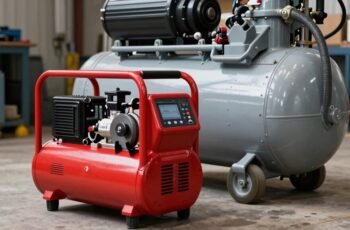
We recognize the importance of optimizing compressed air systems for efficiency and sustainability. Modern energy-saving air compressor systems leverage advanced controls and real-time monitoring to adapt to varying demand, substantially reducing energy waste. However, selecting, implementing, and maintaining these systems involves complex considerations that directly impact operational costs and environmental impact. Examining the underlying technologies and practical challenges can help us make informed decisions—but how do we guarantee these systems deliver the promised benefits over their lifespan?
Key Takeaways
- Modern systems utilize Variable Frequency Drives (VFDs) to adjust motor speed based on real-time demand.
- Advanced controls and sensors optimize compressor operation, reducing energy waste during low demand periods.
- Benefits include lower energy costs, extended equipment lifespan, and reduced environmental impact.
- Proper selection involves assessing demand, pressure needs, and compatibility with existing infrastructure.
- Regular maintenance and staff training are essential to ensure efficient operation and longevity of energy-saving compressors.
What Are Energy-Saving Air Compressor Systems and How Do They Work?
While traditional air compressor systems often operate at a constant capacity regardless of demand, energy-saving air compressor systems are designed to optimize power consumption based on real-time needs. These systems utilize advanced controls, such as variable frequency drives (VFDs), to adjust motor speed dynamically, matching output precisely to operational requirements. They incorporate sensors and intelligent algorithms that monitor system pressure, flow rates, and demand fluctuations, enabling rapid response to load changes. By modulating compressor activity, these systems reduce unnecessary energy expenditure during low demand periods. Additionally, they often include features like load/unload controls and adaptive algorithms that fine-tune compressor operation. This precise regulation guarantees waste, enhances efficiency, and ensures consistent performance aligned with specific application demands.
Key Benefits of Using Energy-Efficient Air Compressors
Implementing energy-efficient air compressors offers several compelling advantages, primarily through significant reductions in energy consumption and operational costs. These systems incorporate advanced controls, variable speed drives, and optimized components that adapt to demand fluctuations, minimizing unnecessary energy use. As a result, they deliver higher efficiency levels compared to traditional models, directly translating to lower electricity bills. Additionally, their design reduces thermal and mechanical losses, improving overall system reliability and lifespan. The decreased energy demand also lessens environmental impact by reducing greenhouse gas emissions. From a maintenance perspective, these compressors often feature smarter diagnostics and longer-lasting parts, leading to reduced downtime and servicing costs. Overall, investing in energy-efficient compressor technology enhances operational productivity while supporting sustainability goals.
How to Choose the Right Energy-Saving Air Compressor for Your Business
To select the most suitable energy-saving air compressor, we must first accurately assess your specific air demand, including flow rates and pressure requirements. Considering energy efficiency involves analyzing compressor performance metrics and operational costs to guarantee long-term savings. By systematically evaluating these factors, you can identify a system that balances capacity with energy conservation.
Assess Your Air Needs
Understanding your business’s air demand is essential for selecting an energy-efficient compressor, as overestimating or underestimating needs can lead to unnecessary energy consumption or inadequate performance. To accurately assess demand, we analyze peak and average airflow requirements, considering equipment specifications and operational cycles. This involves reviewing historical usage data and identifying load variations throughout the day and week. We also account for future growth, ensuring scalability without oversizing. Precise measurement of pressure requirements and duty cycles informs compressor sizing, preventing excess capacity that wastes energy. Additionally, understanding process-specific demands helps avoid undersizing, which can cause operational inefficiencies. A thorough assessment guarantees we select a system optimized for actual needs, minimizing energy consumption while maintaining reliable performance.
Consider Energy Efficiency
Selecting an energy-efficient air compressor begins with evaluating its operational performance relative to your business’s specific demands. This involves analyzing the compressor’s rated power, efficiency curves, and load profiles to guarantee ideal energy use during varying operational conditions. We must consider the compressor’s ability to modulate output based on demand, avoiding unnecessary energy consumption during low load periods. Additionally, selecting models with advanced control systems—such as variable frequency drives—can greatly enhance efficiency by adjusting motor speed to match required airflow. It’s crucial to compare energy consumption metrics, like power usage per CFM (cubic feet per minute), across different units. Ultimately, choosing a compressor with proven energy-saving features and compatibility with your existing infrastructure ensures long-term operational cost reductions while maintaining performance standards.
Innovative Technologies Powering Modern Energy-Efficient Compressors
We recognize that variable speed drive technology and advanced control systems are critical for optimizing compressor efficiency. These innovations enable dynamic adjustments to operating parameters, reducing energy consumption during variable load conditions. Analyzing their integration helps us understand how modern compressors achieve higher performance with lower operational costs.
Variable Speed Drive Technology
Have you ever wondered how modern air compressors achieve significant energy savings? Variable Speed Drive (VSD) technology plays a essential role by adjusting motor speed to match demand precisely. Unlike traditional fixed-speed compressors that cycle on and off, VSD units modulate power output continuously, reducing unnecessary energy consumption. This dynamic control minimizes waste during low-demand periods, maximizing efficiency across varying load conditions.
- Energy efficiency is improved through real-time speed adjustments.
- Reduced wear on components due to fewer start-stop cycles.
- Lower operational costs from decreased power consumption.
- Enhanced process control by maintaining stable pressure levels.
VSD technology’s ability to fine-tune compressor operation makes it a critical component for energy-conscious systems, ensuring prime performance with minimized energy expenditure.
Advanced Control Systems
Advanced control systems are revolutionizing modern air compressors by integrating sophisticated algorithms and real-time data analytics to enhance performance. These systems continuously monitor variables like pressure, temperature, and flow rates, enabling precise adjustments to operational parameters. This dynamic regulation reduces energy consumption and boosts efficiency, especially under fluctuating load conditions. By employing predictive analytics, advanced control systems anticipate demand shifts, maintaining ideal compressor operation. They also facilitate seamless integration with plant automation, enabling centralized management. The following table illustrates key features and benefits of these systems:
| Feature | Benefit |
|---|---|
| Real-time data monitoring | Immediate response to changing conditions |
| Predictive analytics | Preemptive adjustments for efficiency |
| Automated control algorithms | Reduced manual intervention |
| Integration with automation | Streamlined plant operations |
| Energy consumption reduction | Significant operational cost savings |
Common Challenges and How to Overcome Them When Implementing Energy-Saving Systems
Implementing energy-saving air compressor systems often presents technical and operational challenges that can hinder deployment and efficiency gains. These obstacles typically involve system integration issues, sensor calibration, and maintaining ideal performance during variable demand. Addressing these challenges requires careful planning and precise adjustments.
- Ensuring compatibility between new control systems and existing infrastructure
- Accurate sensor calibration to monitor real-time data effectively
- Training staff to manage and troubleshoot advanced control features
- Adjusting operational parameters to prevent performance drops during demand fluctuations
Cost Savings and Environmental Impact of Upgrading to Energy-Efficient Compressors
Upgrading to energy-efficient air compressors offers significant opportunities for both cost reduction and environmental benefits. By incorporating advanced technologies like variable speed drives and optimized control systems, these compressors reduce energy consumption by precisely matching output to demand. This leads to lower operational costs, often resulting in a rapid return on investment through decreased electricity bills. Environmentally, these systems considerably cut greenhouse gas emissions and reduce overall carbon footprint by minimizing wasted energy. Moreover, improved component efficiency extends equipment lifespan, decreasing disposal and replacement costs. The cumulative effect of such upgrades not only enhances economic performance but also aligns operations with sustainability goals, demonstrating that technological advancements in compressor design can deliver tangible financial and ecological advantages simultaneously.
Maintenance Tips to Maximize Efficiency and Longevity
Regular maintenance is essential to guarantee that air compressors operate at peak efficiency and have a prolonged service life. Consistent inspections and component checks prevent unexpected failures and optimize performance. Key practices include:
Regular maintenance ensures optimal performance and extends the lifespan of air compressors.
- Regularly draining moisture from tanks to prevent corrosion and pressure drops
- Replacing filters and separators to maintain airflow quality and reduce energy consumption
- Lubricating moving parts according to manufacturer specifications to minimize wear
- Monitoring pressure and temperature levels to identify inefficiencies early
What to Consider When Comparing Different Energy-Saving Air Compressor Systems
When comparing different energy-saving air compressor systems, it’s essential to evaluate their technical specifications and operational efficiencies carefully. Key factors include power consumption, control strategies, and load management capabilities. To facilitate comparison, consider the following aspects:
| Feature | Importance |
|---|---|
| Power Rating | Determines energy requirements |
| Variable Speed Drive | Enhances efficiency during variable loads |
| Control System | Optimizes compressor operation |
| Heat Recovery | Improves overall energy use |
| Maintenance Needs | Affects long-term operational costs |
Analyzing these parameters helps identify systems that deliver ideal energy savings and operational reliability. Focusing on the integration of control strategies and load adaptability ensures we select systems that maximize efficiency while minimizing energy waste.
Frequently Asked Questions
What Are the Initial Costs of Installing Energy-Saving Air Compressor Systems?
The initial costs of installing energy-saving air compressor systems typically range from $10,000 to $50,000, depending on system size, technology complexity, and installation requirements. We analyze these factors to guarantee cost-effective, energy-efficient solutions tailored to your operations.
How Long Is the Typical Return on Investment for These Systems?
The typical ROI for energy-saving air compressor systems ranges from six months to two years, depending on usage, system size, and efficiency improvements. We analyze these variables to optimize payback periods and maximize long-term operational savings.
Can Existing Compressors Be Upgraded to Energy-Efficient Models?
Upgrading existing compressors is akin to replacing an old engine with a modern, fuel-efficient one; we analyze system compatibility and performance metrics, ensuring upgrades optimize energy use while minimizing downtime and capital investment.
What Maintenance Is Required for Optimal Energy Savings?
We perform regular inspections, clean filters, and check for leaks to maintain ideal energy savings. Additionally, we calibrate controls and monitor system performance, ensuring efficiency and preventing energy waste, which maximizes compressor lifespan and operational cost-effectiveness.
Are There Industry-Specific Energy-Efficient Compressor Solutions Available?
Absolutely, we leverage industry-specific solutions like variable speed drives for manufacturing, oil-free compressors for food processing, and high-efficiency units for healthcare, ensuring peak operation through tailored, technical, and targeted compressor configurations that maximize energy efficiency.
Conclusion
In summary, upgrading to energy-saving air compressor systems can reduce energy consumption by up to 35%, markedly lowering operational costs. By leveraging advanced controls and real-time data, we enhance efficiency and extend equipment lifespan. These technological improvements not only deliver substantial cost savings but also reduce environmental impact, aligning with sustainability goals. As we’ve seen, careful selection, integration, and maintenance are essential to maximizing these benefits and ensuring reliable, cost-effective operation over the long term.