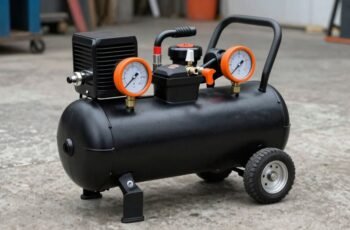
Choosing the right portable air compressor requires understanding key features, evaluating your workload, and balancing cost against durability. We need to take into account airflow capacity, maximum pressure, and material quality, while also examining size, weight, and type for specific tasks. With so many options available, it’s essential to make an informed decision that aligns with your needs and ensures safety and longevity. Let’s explore the critical factors that will help you select a compressor that performs reliably in your applications.
Key Takeaways
- Assess your workload needs by matching CFM and PSI specifications to avoid overloading the compressor.
- Choose the compressor type (piston, reciprocating, diaphragm) based on your specific application and portability requirements.
- Compare price, build quality, and features like horsepower and tank capacity to ensure good value and durability.
- Consider portability factors such as size, weight, and handle design for easier transportation and storage.
- Follow maintenance best practices, including regular inspection, moisture drainage, and proper safety procedures.
What Features Should You Look for in a Portable Air Compressor?
When selecting a portable air compressor, understanding the key features that influence performance and usability is essential. Critical parameters include CFM (cubic feet per minute), which determines airflow capacity, and PSI (pounds per square inch), indicating maximum pressure. A higher CFM is necessary for demanding tasks, while PSI ensures the compressor can meet specific tool requirements. Durability features, such as a robust motor and corrosion-resistant components, extend lifespan and reliability. Portability factors—like size, weight, and handle design—affect ease of transport. Additionally, noise level metrics help assess user comfort during operation. Safety features, including pressure relief valves and thermal overload protection, prevent accidents and equipment damage. Prioritizing these features guarantees peak performance tailored to your specific application needs.
How to Determine the Right Size and Power for Your Needs
Determining the appropriate size and power of a portable air compressor hinges on accurately evaluating your specific workload requirements. We analyze airflow needs (CFM) and pressure demands (PSI) to match compressor capabilities with tasks. For example:
| Task Type | Required CFM & PSI |
|---|---|
| Inflating tires and small tools | 2-4 CFM at 90 PSI |
| Heavy-duty industrial tasks | 10+ CFM at 150 PSI |
| Light home use | 1-2 CFM at 80 PSI |
Matching these specifications guarantees efficiency and prevents equipment overload. Consider your typical workload, frequency, and portability preferences. A precise assessment guides you to select a compressor with the suitable balance of power and size, avoiding underperformance or unnecessary bulk.
Which Types of Portable Air Compressors Are Best for Different Tasks?
Choosing the right type of portable air compressor depends on the specific tasks you intend to perform, as different designs are optimized for distinct applications. For light inflating tasks or tire pressure adjustments, piston or pancake compressors offer portability and quick response times. Framing or construction work benefits from larger, wheel-mounted reciprocating compressors, providing sustained airflow for pneumatic tools. For high-demand applications like spray painting or industrial maintenance, oil-free diaphragm compressors deliver consistent, clean airflow with minimal maintenance.
- Piston/Pancake Compressors: Ideal for small-scale, intermittent tasks.
- Reciprocating Compressors: Suitable for continuous use in construction environments.
- Diaphragm Compressors: Best for clean, oil-free airflow in sensitive applications.
Tips for Comparing Prices and Getting the Best Value
To guarantee you’re getting the best value, it’s essential to compare prices across different retailers and models systematically. We recommend analyzing the unit’s specifications—such as horsepower, tank capacity, and PSI—to verify consistency in comparisons. Price variations often reflect differences in build quality, brand reputation, and included features, so evaluating these factors objectively helps identify true value. Consider whether discounts or bundled offers include accessories or warranties, which can impact overall cost-effectiveness. Additionally, check for seasonal sales or promotions that might reduce the purchase price. Cross-referencing online reviews and expert opinions can also reveal hidden costs or potential durability issues. By adopting a data-driven approach, we can avoid impulsive decisions and select a portable air compressor that balances performance, longevity, and affordability.
How to Maintain and Use Your Portable Air Compressor Safely
Proper maintenance and safe operation are essential to maximizing the lifespan and performance of your portable air compressor. Regular inspections help identify issues before they escalate, ensuring consistent operation. To maintain safety and efficiency, focus on these key practices:
- Drain moisture from the tank daily to prevent corrosion and maintain air quality.
- Check and replace filters periodically to guarantee ideal airflow and prevent internal damage.
- Follow manufacturer guidelines for pressure settings and operational limits to avoid overloading or damage.
Additionally, always operate the compressor in well-ventilated areas, wear appropriate safety gear, and disconnect power before performing maintenance. Adhering to these protocols ensures safe use and extends the device’s service life, ultimately maximizing your investment’s value.
Frequently Asked Questions
Can Portable Air Compressors Run on Battery Power?
Yes, portable air compressors can run on battery power, especially models with built-in rechargeable batteries or compatible with external power sources. We analyze their capacity, runtime, and recharge cycles to guarantee reliable, efficient performance for various on-the-go inflation and pneumatic tasks.
How Noisy Are Different Portable Air Compressors?
Different portable air compressors vary widely in noise levels, from whisper-quiet models around 60 decibels—akin to a library—to louder units exceeding 100 decibels, comparable to a motorcycle. We analyze these specs for informed choices.
Are Portable Air Compressors Suitable for Outdoor Use?
Yes, portable air compressors are suitable for outdoor use due to their compact design, durability, and power sources like batteries or gasoline. We analyze noise levels, airflow capacity, and weather resistance to guarantee ideal outdoor performance and reliability.
What Accessories Are Essential for Portable Air Compressors?
We find that essential accessories include high-quality hoses, various nozzle attachments for versatility, pressure gauges for accuracy, and moisture filters to prevent damage, ensuring ideal performance and longevity of portable air compressors during diverse tasks.
How Long Can a Portable Air Compressor Operate Continuously?
A portable air compressor typically operates continuously for 15-30 minutes before overheating risks arise. We analyze its duty cycle, cooling system, and power source, emphasizing the importance of manufacturer guidelines to optimize performance and prevent damage.
Conclusion
In essence, selecting the right portable air compressor is akin to steering through a complex labyrinth, where each feature and specification guides us toward ideal performance. By meticulously analyzing your needs and comparing options with precision, we guarantee durability, efficiency, and safety—fundamental pillars of a reliable tool. As with any technical endeavor, informed decisions today pave the way for sustained productivity tomorrow, echoing the timeless wisdom that knowledge is the key to mastery.