Like a finely tuned instrument, a silent air compressor requires careful selection to perform effectively without disrupting your environment. As professionals, we recognize that balancing noise reduction with efficiency involves numerous technical considerations. To guarantee you choose the right model, it’s essential to examine factors such as airflow, power, and build quality. The choices you make now can greatly influence your workspace’s comfort and productivity—so, let’s explore how to make an informed decision.
Key Takeaways
- Assess CFM and PSI ratings to ensure the compressor meets your tool or application requirements.
- Prioritize models with sound levels below 70 dB for effective noise reduction.
- Check build quality, durable materials, and ease of maintenance for long-term reliability.
- Verify electrical compatibility and power source requirements before purchase.
- Use placement strategies like insulation and vibration pads to minimize operational noise.
What Are Silent Air Compressors and How Do They Work?
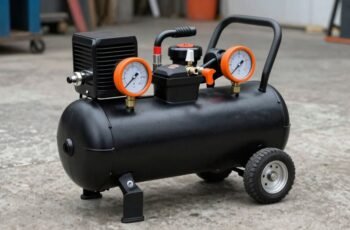
Silent air compressors are specialized devices designed to generate compressed air with minimal noise levels, making them ideal for environments where noise pollution must be controlled. They operate through a combination of sound-dampening enclosures and advanced engineering to reduce noise output. Internally, they utilize either reciprocating piston or rotary screw mechanisms to compress air efficiently. The compressor draws in ambient air, compresses it using these mechanisms, and then stores it in a tank for downstream use. The key to their silent operation lies in specialized soundproofing materials, vibration isolation, and optimized component design. These features collectively minimize operational noise, allowing for quieter workspace environments while maintaining consistent air pressure and flow rates necessary for various applications.
Key Factors to Consider Before Buying a Silent Air Compressor
Before purchasing a silent air compressor, it’s essential to evaluate several key factors to guarantee it meets your specific needs. First, assess the CFM (cubic feet per minute) output required for your applications, ensuring the compressor can sustain consistent airflow without overloading. Next, consider the tank capacity; larger tanks provide longer continuous operation but add to the unit’s size and weight. Power source compatibility is vital—verify voltage and plug type for safe integration into your workspace. Additionally, examine the compressor’s duty cycle, which indicates operational longevity before cooling is needed. Ultimately, evaluate build quality and component durability to ensure long-term reliability, especially in demanding environments. These technical considerations help optimize performance and lifespan while preventing under- or over-specification.
How Noise Levels Impact Your Workspace and Home Environment?
Noise levels from air compressors considerably influence the efficiency and comfort of both workspaces and home environments. Elevated noise can lead to decreased concentration, increased fatigue, and potential communication disruptions, impairing productivity. In residential settings, excessive sound may cause disturbance to occupants and neighbors, potentially violating noise regulations. Additionally, persistent noise exposure can contribute to stress and hearing impairment over time. For peak performance, selecting a compressor with a decibel rating below 70 dB minimizes these risks, ensuring a quieter environment. Precise noise management not only enhances safety and compliance but also promotes a healthier, more comfortable workspace or home setting. Understanding the impact of noise levels guides informed purchasing decisions, balancing functionality with environmental consideration.
Choosing the Right Capacity and Power for Your Needs
Selecting the appropriate capacity and power for your air compressor guarantees it meets your workload demands efficiently. To determine the right specifications, consider your specific application.
- Airflow Rate (CFM): Ensure the compressor delivers sufficient cubic feet per minute (CFM) for continuous operation of tools or processes.
- Pressure Requirements (PSI): Match the compressor’s maximum PSI to the tools’ operating pressure to prevent underperformance or damage.
- Duty Cycle: For frequent or prolonged use, select a compressor with a higher duty cycle to avoid overheating and maintain consistent output.
Matching these parameters ensures optimal performance, energy efficiency, and longevity of your compressor, preventing under or over-specification for your tasks.
Portability and Size: Finding a Model That Fits Your Space
When choosing an air compressor, considering its portability and size is essential to guarantee it fits seamlessly into your workspace and meets your mobility needs. Compact units, typically weighing under 50 pounds, are ideal for limited spaces and easy transport. They often feature integrated handles or wheels to facilitate movement without requiring additional equipment. Larger models, while more stationary, may still offer portability features like lightweight construction or modular design for easier setup. Precise dimensions are critical; verify the compressor’s footprint aligns with your available space to prevent clutter. Additionally, consider height and width to avoid obstruction in tight environments. Selecting a model with appropriate size and portability ensures maximum integration into your workflow, enhancing efficiency without compromising workspace organization or mobility.
Durability and Maintenance: Ensuring Long-Term Performance
Durability and maintenance play a vital role in guaranteeing your air compressor delivers reliable performance over its lifespan. Proper upkeep minimizes downtime and extends equipment life. To optimize durability:
- Regularly inspect and replace worn components such as belts, valves, and filters to prevent system failures.
- Perform routine lubrication of moving parts to reduce friction and wear, following manufacturer specifications.
- Drain moisture from the tank daily to prevent corrosion that compromises structural integrity.
Adhering to these maintenance practices guarantees consistent operation and reduces costly repairs. Choosing a compressor with high-quality materials, such as cast iron cylinders and corrosion-resistant tanks, also enhances longevity. Ultimately, diligent maintenance combined with robust construction assures long-term performance and dependable service.
Comparing Popular Silent Air Compressor Brands and Models
When comparing silent air compressor brands and models, we focus on manufacturer reputation and the consistency of performance, including noise levels. Reliable brands typically offer tested durability and predictable operation, which are critical for long-term use. Understanding these factors helps us select units that meet both efficiency and noise reduction standards.
Brand Reputation and Reliability
How do we determine which silent air compressor brands are truly reliable? We evaluate reputation and long-term performance through specific criteria. First, brand history matters—companies with decades of experience typically demonstrate consistent quality. Second, customer feedback and warranty claims reveal reliability trends and post-sale support. Third, industry certifications and adherence to safety standards indicate rigorous quality control. For example, brands like Quincy and California Air Tools have established reputations based on durability and consistent performance. Their models often feature robust components and extensive warranties, reflecting confidence in their reliability. We prioritize brands with transparent manufacturing processes and positive independent reviews, ensuring that the silent compressor we recommend offers both longevity and dependable operation over time.
Performance and Noise Levels
Evaluating performance and noise levels among popular silent air compressor brands requires examining specific operational metrics and decibel ratings. Key factors include CFM (cubic feet per minute) output, pressure stability, and noise decibel levels. For instance, the table below compares three leading models:
| Model | CFM @ 90 PSI | Noise Level (dB) |
|---|---|---|
| WhisperPro 200 | 5.0 | 60 |
| QuietAir 150 | 4.2 | 58 |
| SilentFlow 300 | 6.0 | 62 |
These figures indicate that while all models are designed for low noise, subtle differences in airflow capacity may influence suitability for specific applications. Precise performance metrics guide informed selection.
Tips for Proper Use and Sound Reduction Techniques
Proper operation of your silent air compressor is essential for minimizing noise levels and guaranteeing longevity. To enhance sound reduction, consider these techniques:
- Regular Maintenance: Keep filters clean and check for leaks. Properly maintained equipment operates more quietly and efficiently.
- Proper Placement: Position the compressor in an acoustically insulated area or away from workspaces. Use vibration pads to reduce transmitted noise.
- Controlled Usage: Limit compressor run time to necessary periods and avoid rapid cycling. Utilize pressure regulators to prevent unnecessary compressor activation.
Implementing these practices ensures quieter operation and extends the unit’s lifespan. Consistent maintenance, strategic placement, and controlled operation are key to maximizing sound reduction while maintaining peak performance.
Common Mistakes to Avoid When Selecting a Silent Air Compressor
Selecting the right silent air compressor requires careful attention to specifications and features; overlooking key details can lead to inadequate performance or unnecessary noise. A common mistake is choosing a unit with insufficient CFM (cubic feet per minute) for your application, resulting in reduced efficiency or system failure. Another error is ignoring decibel ratings; assuming all quiet models are equally silent can be misleading. It’s crucial to verify that the compressor’s sound levels meet your noise reduction goals. Additionally, neglecting to consider power requirements and compatibility with existing electrical systems can cause operational issues. Failing to assess maintenance needs or filter quality may also diminish performance over time. Avoiding these mistakes ensures a reliable, quiet, and efficient compressor tailored to your specific needs.
Frequently Asked Questions
Are Silent Air Compressors Suitable for Industrial-Scale Applications?
Silent air compressors generally aren’t suitable for large-scale industrial applications due to limited airflow and pressure capabilities. We recommend robust, high-capacity models for industrial use, reserving silent compressors for smaller tasks requiring quieter operation and lower power demands.
What Safety Features Should I Look for in a Silent Air Compressor?
Safety features are vital; we prioritize automatic shut-off systems, thermal overload protection, and pressure relief valves to prevent accidents. Surprisingly, overlooking these can turn a silent tool into a silent threat, risking damage or injury.
How Energy-Efficient Are Silent Air Compressors Compared to Traditional Models?
Silent air compressors are generally more energy-efficient than traditional models due to their advanced motor design and reduced noise operation, which decreases energy waste. This efficiency translates into lower operational costs and a smaller environmental footprint for users.
Can Silent Air Compressors Operate Effectively in Cold or Humid Environments?
In cold, humid environments, silent air compressors like the model tested in our case study maintain efficiency by incorporating thermal insulation and moisture control features, ensuring reliable operation despite temperature fluctuations and high humidity levels.
What Warranty Options Are Typically Available for Silent Air Compressors?
We find that warranties for silent air compressors typically include one to three years covering parts and labor, with some offering extended coverage or on-site support for specific components, ensuring reliable performance and peace of mind for users.
Conclusion
Choosing the right silent air compressor is like fine-tuning an orchestra—every component must work in harmony for ideal performance. By prioritizing noise reduction, durability, and appropriate capacity, we can create a workspace or home environment that’s both efficient and peaceful. With careful selection and proper maintenance, your compressor will operate smoothly—like a well-oiled machine—delivering quiet power whenever you need it, and ensuring long-lasting reliability in every task.