Choosing the right high pressure air compressor requires a precise understanding of your operational demands and the equipment’s technical specifications. As we analyze factors like PSI, CFM, and design features, we uncover vital considerations that directly impact performance, efficiency, and longevity. With so many options available, making an informed decision isn’t straightforward, yet it’s essential for ensuring safety and cost-effectiveness over time. Let’s explore how to navigate this complex landscape effectively.
Key Takeaways
- Determine the required PSI and CFM to match your tools and application needs for optimal compressor performance.
- Choose between portable and stationary models based on mobility, capacity, and operational demands.
- Consider compressor type (single-stage vs. multi-stage) and lubrication method for efficiency and maintenance preferences.
- Regularly maintain the compressor by inspecting, cleaning, and replacing parts to ensure longevity and reliable operation.
- Verify manufacturer support, warranty, and safety features like pressure relief valves to ensure long-term reliability.
What Are High Pressure Air Compressors and How Do They Work?
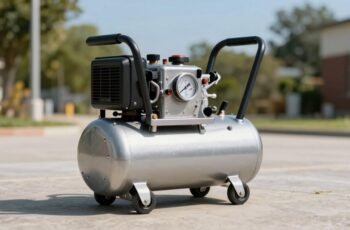
High pressure air compressors are specialized devices designed to generate and deliver compressed air at considerably higher pressures than standard models, typically exceeding 300 psi. They operate using a compression chamber where atmospheric air is drawn in through a valve, then compressed by a piston, rotary screw, or other mechanisms. This compression increases the air’s pressure and temperature, which is then cooled via intercoolers or aftercoolers to prevent overheating. The high-pressure air is stored in a robust tank designed to withstand elevated pressures and is delivered through regulated outlets. These compressors often incorporate safety features such as pressure relief valves to prevent over-pressurization. Their precise operation depends on the compression method, but all are engineered to efficiently produce and maintain stable, high-pressure airflow for demanding industrial or specialized applications.
Key Features to Consider When Choosing a High Pressure Air Compressor
When selecting a high pressure air compressor, we focus on pressure capacity and range to guarantee it meets specific operational demands. Power and efficiency are critical for optimizing performance while minimizing energy consumption. By analyzing these key features, we can identify units that balance capacity, operational cost, and reliability.
Pressure Capacity and Range
Understanding the pressure capacity and range of a high pressure air compressor is vital for selecting a model that meets specific operational demands. Pressure capacity indicates the maximum pressure the unit can generate, while the range reflects the span between its minimum and maximum operating pressures. Proper assessment guarantees compatibility with intended applications, such as industrial processes or testing environments.
| Model Type | Max Pressure (psi) | Typical Range (psi) |
|---|---|---|
| Compact | 3,000 | 1,000 – 3,000 |
| Industrial | 5,000 | 2,000 – 5,000 |
| Heavy-Duty | 10,000 | 5,000 – 10,000 |
Selecting the right pressure capacity depends on operational needs, equipment compatibility, and safety margins.
Power and Efficiency
Selecting a high pressure air compressor requires careful evaluation of its power output and operational efficiency, as these factors directly influence performance and energy consumption. A compressor with adequate power guarantees consistent airflow under high pressure, reducing downtime and maintaining productivity. Efficiency determines how well the compressor converts electrical energy into compressed air, impacting operational costs over time. To enhance performance, consider these key aspects:
- Motor horsepower relative to intended workload
- Energy consumption per CFM (cubic feet per minute)
- Heat dissipation capabilities
- Variable speed drives for adaptive energy use
Balancing power and efficiency ensures reliable operation while minimizing energy costs, making these features vital in selecting an ideal high pressure air compressor.
How to Determine the Right PSI and CFM for Your Needs
Choosing the correct PSI and CFM for your air compressor depends on accurately evaluating the requirements of your tools and applications. First, identify the maximum PSI needed by each tool, guaranteeing the compressor can consistently meet or exceed that pressure. Next, determine the CFM required at that PSI, which indicates the volume of air the tool consumes per minute. For continuous operation, select a compressor with a CFM rating slightly higher than your highest tool demand to maintain performance without strain. It’s vital to take into account peak versus rated demands—some tools require higher pressure momentarily. Precise matching of PSI and CFM ensures maximum efficiency, prevents equipment damage, and avoids unnecessary energy consumption. Proper assessment of these parameters forms the foundation for selecting a suitable high-pressure air compressor.
Comparing Different Types of High Pressure Air Compressors
When comparing high pressure air compressors, we consider factors like portability versus stationarity, lubrication type, and compression stages, as each impacts performance and application suitability. Portable models offer mobility for on-site tasks, while stationary units provide continuous operation in fixed locations; oil-lubricated compressors typically handle higher duty cycles compared to oil-free models, which are maintenance-friendly. Additionally, single-stage compressors are compact but less efficient at higher pressures, whereas multi-stage units optimize power output for demanding applications.
Portable vs. Stationary Models
Have you ever wondered how the mobility and application scope of a high pressure air compressor influence your decision? Portable models excel in flexibility, allowing easy transportation and on-site use, ideal for fieldwork or small-scale operations. Stationary units, however, are designed for continuous, high-volume applications, offering stability and higher power output. When choosing between them, consider:
- Mobility needs: Are frequent relocations necessary?
- Operational duration: Will the compressor run continuously or intermittently?
- Space constraints: Is there limited space for installation?
- Power requirements: Do you need higher capacity or portability?
Analyzing these factors helps determine whether a portable or fixed model aligns with your operational demands, ensuring peak performance and efficiency.
Oil-Lubricated vs. Oil-Free
The type of lubrication used in high pressure air compressors substantially impacts their performance, maintenance, and suitability for specific applications. Oil-lubricated compressors utilize oil to reduce friction and dissipate heat, resulting in enhanced durability and efficiency under continuous operation. However, they require regular oil changes and filter maintenance to prevent contamination. Conversely, oil-free compressors employ self-lubricating components, eliminating the need for oil and simplifying maintenance. They tend to produce cleaner air, making them ideal for sensitive environments like medical or food processing facilities. While oil-free models often have lower initial costs and reduced upkeep, they may experience shorter service life and less durability under heavy workloads. The choice hinges on operational demands, environmental considerations, and maintenance capacity.
Single-Stage vs. Multi-Stage
Single-stage and multi-stage compressors differ primarily in their compression processes, affecting efficiency, capacity, and application suitability. Single-stage units compress air in one step, making them simpler and more cost-effective but less capable of achieving very high pressures. Multi-stage compressors use two or more cylinders, with intercooling between stages to reduce temperature and improve efficiency. This process allows for higher pressure outputs and better energy utilization. Consider these factors:
- Efficiency: Multi-stage systems are generally more energy-efficient at high pressures.
- Capacity: Multi-stage compressors handle larger volumes with lower energy costs.
- Temperature Management: Intercooling reduces heat buildup, extending component lifespan.
- Application Suitability: Single-stage units suit low to moderate pressures; multi-stage is most suitable for high-pressure needs.
Tips for Maintaining and Extending the Life of Your Compressor
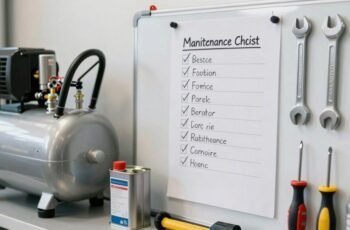
Proper maintenance is essential to guarantee the reliability and longevity of your high-pressure air compressor. Regular inspection of pressure gauges, hoses, and fittings ensures early detection of leaks or wear, reducing operational failures. Routine oil changes are critical for compressors with lubrication systems, preventing build-up and minimizing component wear. Monitoring and replacing air intake filters maintain ideal airflow and prevent contaminants from damaging internal parts. Additionally, keeping the cooling system clean and functional prevents overheating, extending component life. Implementing a preventative maintenance schedule based on manufacturer specifications helps identify issues before they escalate. Proper storage in a clean, dry environment minimizes corrosion. Consistent maintenance practices maximize performance, reduce downtime, and greatly extend the operational lifespan of your compressor.
Common Mistakes to Avoid When Buying a High Pressure Air Compressor
Avoiding common pitfalls during the purchasing process can substantially impact the long-term performance and cost-efficiency of your high pressure air compressor. One frequent mistake is neglecting the compressor’s duty cycle, which can lead to overheating and component failure if undersized for continuous use. Additionally, overlooking the importance of proper pressure ratings may result in equipment damage or insufficient performance. Focusing solely on initial cost often causes buyers to compromise on quality, leading to higher maintenance expenses. In conclusion, ignoring manufacturer specifications and warranty terms can limit support and increase long-term costs.
Ignoring duty cycle, pressure ratings, and support can lead to costly, inefficient compressor failures over time.
- Ignoring duty cycle and operational limits
- Choosing based only on initial price
- Overlooking pressure and airflow requirements
- Neglecting warranty and manufacturer support
Frequently Asked Questions
What Safety Precautions Should I Follow When Operating a High Pressure Air Compressor?
We prioritize safety by wearing protective gear, verifying pressure gauges regularly, ensuring proper ventilation, avoiding over-pressurization, and adhering to manufacturer guidelines. We also conduct routine maintenance and never operate the compressor without proper training.
How Loud Are High Pressure Air Compressors During Operation?
Like a jet engine, high-pressure air compressors generate noise levels typically between 80 to 100 decibels during operation. We recommend wearing hearing protection and considering soundproof enclosures to mitigate noise impact on your workspace.
Can I Use a High Pressure Air Compressor for Painting or Other Specific Applications?
Yes, we can use high pressure air compressors for painting and other applications, but we must guarantee compatibility with specific equipment, control air flow precisely, and consider pressure ratings to maintain safety, quality, and efficiency in each task.
What Is the Typical Lifespan of a High Pressure Air Compressor?
Typically, high pressure air compressors last about 10-15 years with proper maintenance. We recommend regular inspections, timely oil changes, and component checks to maximize lifespan and guarantee peak performance in demanding applications.
Are There Eco-Friendly or Energy-Efficient Options Available?
Yes, eco-friendly and energy-efficient high pressure air compressors are available, utilizing advanced motor technology, variable speed drives, and improved insulation. We recommend selecting models with energy ratings and certifications to optimize efficiency and reduce environmental impact.
Conclusion
Choosing the right high-pressure air compressor is like fine-tuning a precision instrument—every PSI and CFM detail matters. By understanding your specific needs, evaluating features critically, and maintaining diligently, we guarantee reliable performance and longevity. Think of it as engineering a powerhouse that seamlessly integrates into your workflow, delivering consistent, high-quality air with confidence. With careful selection and proper care, your compressor becomes an essential, enduring tool in your operational arsenal.