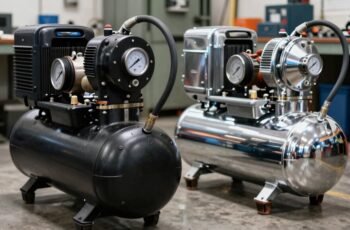
When selecting a portable air compressor tank, we recognize that size, capacity, and features directly impact performance and suitability for specific tasks. Understanding the distinctions between small, medium, and large tanks helps us optimize efficiency, safety, and mobility. By analyzing these variables, we can identify the ideal compressor for varied applications, but making the right choice requires careful evaluation of your unique needs and operational conditions—an assessment that becomes essential as we explore further options.
Key Takeaways
- Consider tank size (gallons) to match your mobility needs and application demands.
- Choose material (steel or aluminum) for durability, weight, and corrosion resistance.
- Check pressure ratings to ensure compatibility with your tools and safety standards.
- Look for features like drain valves, pressure regulation, and reinforced seams for longevity.
- Match the compressor’s duty cycle and airflow requirements to the tank size for optimal performance.
How to Choose the Right Portable Air Compressor Tank for Your Needs
When selecting a portable air compressor tank, understanding your specific application requirements is essential to making an informed decision. We analyze factors such as required airflow, pressure levels, and duty cycles to determine the most suitable tank size and capacity. For tasks demanding consistent, high-volume airflow, larger tanks provide better pressure stabilization and reduce compressor cycling, increasing efficiency and lifespan. Conversely, for intermittent use or mobile applications, smaller tanks enhance portability and ease of transportation. We also evaluate the compressor’s pressure ratings, ensuring compatibility with the tank’s maximum pressure to prevent safety hazards. Material construction, such as steel or aluminum, influences durability and weight, affecting portability. By systematically assessing these parameters, we can select a tank that balances performance, safety, and convenience, tailored precisely to your operational needs.
Comparing Different Sizes and Capacities of Air Compressor Tanks
Choosing the appropriate size and capacity of an air compressor tank directly impacts the system’s performance, efficiency, and suitability for specific tasks. Smaller tanks (1-6 gallons) provide portability and rapid cycling for light-duty tasks but lack sustained airflow. Medium tanks (10-20 gallons) balance portability with higher volume, suitable for intermittent use. Large tanks (30+ gallons) deliver continuous airflow for demanding applications but reduce mobility.
| Tank Size | Ideal Use Case | Pros | Cons |
|---|---|---|---|
| 1-6 gallons | Light-duty, portable jobs | Lightweight, quick startup | Limited volume, frequent cycling |
| 10-20 gallons | DIY projects, intermittent use | Moderate size, good airflow | Heavier, less portable |
| 30+ gallons | Industrial, continuous use | High capacity, stable airflow | Heavy, less mobile |
This comparison guides best selection based on task demands and portability needs.
Key Features to Look for in Portable Air Compressor Tanks
Selecting the right portable air compressor tank involves evaluating specific features that influence performance, durability, and ease of use. Key considerations include tank material, which impacts corrosion resistance and weight; a robust construction with reinforced seams enhances longevity under frequent use. We also look for tanks with efficient pressure regulation systems, such as automatic shut-off valves, to maintain consistent airflow and prevent over-pressurization. Portability features like integrated handles and compact dimensions are essential for mobility without sacrificing capacity. Additionally, the presence of drain valves facilitates moisture management, protecting internal components from rust. Finally, compatibility with various accessories and ease of connection points streamline operation. Prioritizing these technical features ensures peak functionality, safety, and durability for diverse portable air compression needs.
Best Uses for Small, Medium, and Large Air Compressor Tanks
Small, medium, and large air compressor tanks each serve distinct applications based on their capacity and performance characteristics. Small tanks, typically under 20 gallons, are ideal for lightweight, portable tasks such as inflating tires, powering pneumatic tools, or small-scale spray painting. Medium tanks, ranging from 20 to 60 gallons, provide a balance suited for automotive repairs, carpentry, and moderate industrial applications, offering increased air reserve and reduced cycle frequency. Large tanks, over 60 gallons, excel in continuous operation environments like manufacturing, heavy-duty construction, or large-scale painting, where sustained air flow is critical.
- Portability vs. capacity trade-offs
- Cycle frequency and compressor wear
- Continuous operation needs
- Specific tool or task requirements
Tips for Maintaining and Extending the Lifespan of Your Compressor Tank
Proper maintenance is key to guaranteeing your compressor tank remains operational and safe over time. Regularly draining moisture buildup prevents corrosion, which can compromise structural integrity. Inspect pressure relief valves and safety mechanisms for proper function, replacing faulty components immediately. Maintaining consistent operating pressures within manufacturer specifications minimizes stress on the tank walls, reducing fatigue and extending lifespan. Applying rust inhibitors or protective coatings on external surfaces guards against environmental corrosion. Additionally, monitoring and recording pressure and temperature levels can identify early signs of system degradation. Implementing scheduled inspections and adhering to manufacturer maintenance guidelines ensures early detection of potential issues. By following these practices, we can optimize the lifespan and reliability of our compressor tanks, safeguarding both equipment and user safety.
Frequently Asked Questions
What Safety Precautions Should I Follow When Using a Portable Air Compressor Tank?
We recommend inspecting the tank regularly for corrosion or damage, guaranteeing pressure relief valves function properly, wearing protective gear, and following manufacturer guidelines strictly. Always depressurize and disconnect before maintenance to prevent accidents and ensure safe operation.
How Noise Levels Vary Between Different Portable Air Compressor Tanks?
We find noise levels vary considerably, with some models reaching up to 90 decibels—comparable to a lawnmower—while quieter units operate around 70 decibels, making them more suitable for noise-sensitive environments and prolonged use.
Are There Eco-Friendly or Low-Emission Portable Air Compressor Tanks Available?
Yes, eco-friendly portable air compressor tanks exist, featuring electric motors with reduced emissions and energy-efficient designs. We evaluate their environmental impact based on energy consumption, materials, and manufacturing processes, ensuring sustainable choices without compromising performance.
Can Portable Air Compressor Tanks Be Used for Industrial or Heavy-Duty Tasks?
Yes, portable air compressor tanks can support industrial or heavy-duty tasks when designed with high capacity, durable materials, and appropriate pressure ratings, ensuring reliable performance under demanding conditions, though selecting the right model is essential for safety and efficiency.
What Are the Typical Warranty Options for Portable Air Compressor Tanks?
We find that warranty options for portable air compressor tanks typically include limited coverage ranging from one to three years, often covering manufacturing defects, with some brands offering extended warranties for additional protection, ensuring reliability and peace of mind for users.
Conclusion
Choosing the right portable air compressor tank isn’t just about capacity—it’s about anticipating your future needs and potential challenges. As we’ve explored, each size and feature offers distinct advantages, but the true test lies in durability and safety under demanding conditions. Will your current choice withstand the test of time, or will it limit your productivity? The decision you make now could considerably impact your efficiency and safety—are you prepared to make the right call?