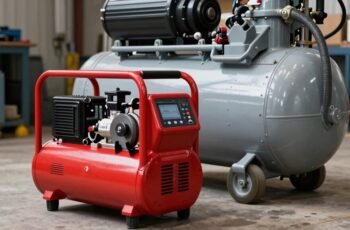
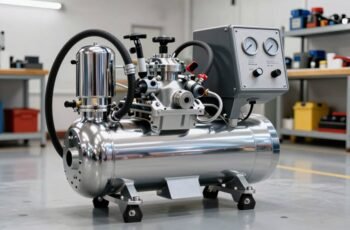
Regular maintenance of an air compressor is critical to ensuring reliable operation and preventing costly failures, especially in industrial settings. Properly scheduled inspections and upkeep can identify potential issues before they escalate, safeguarding both personnel and equipment. Understanding the key components that require routine checks—like filters, belts, and safety devices—can markedly extend the compressor’s lifespan. To implement an effective maintenance program, it’s essential to take into account the specific needs of your equipment and operational demands.
Key Takeaways
- Regularly inspect and replace air filters to ensure optimal airflow and prevent contamination.
- Check and secure belts, hoses, and oil levels to maintain mechanical integrity.
- Test safety devices like relief valves and gauges for proper operation and calibration.
- Drain moisture and condensate to prevent internal corrosion and extend equipment lifespan.
- Maintain detailed records of maintenance activities and analyze data to optimize scheduling and performance.
Why Regular Maintenance Matters for Your Air Compressor
Why does regular maintenance matter for your air compressor? It’s essential because consistent upkeep guarantees peak performance, reliability, and longevity. Without routine inspections and servicing, components can deteriorate or become misaligned, leading to decreased efficiency and increased energy consumption. Regular maintenance helps identify wear and tear early, preventing costly breakdowns and minimizing downtime. It also maintains proper lubrication, which reduces friction and heat buildup, extending component lifespan. Additionally, systematic checks support the compressor’s ability to meet operational demands with consistent air quality and pressure levels. Neglecting maintenance accelerates mechanical failure, compromises safety, and inflates operational costs. Thus, a disciplined maintenance schedule isn’t just about preserving equipment; it’s a critical factor in sustaining overall productivity and reducing long-term expenses.
Check and Replace Air Filters for Optimal Performance
Regularly checking and replacing air filters is essential for maintaining the most effective compressor performance because clogged or dirty filters restrict airflow, causing the system to work harder and reducing efficiency. Restricted airflow increases pressure drop across the filter, leading to higher energy consumption and potential overheating of internal components. Accumulated debris also risks contaminating internal parts, accelerating wear and corrosion. Analyzing filter condition through visual inspection and pressure drop readings allows us to determine ideal replacement timing, preventing performance degradation. Using high-quality filters compatible with the compressor’s specifications ensures consistent airflow and filtration accuracy. Timely filter replacement minimizes operational costs, enhances equipment lifespan, and ensures peak air quality, all critical factors for maintaining system reliability and efficiency over the long term.
Drain Moisture and Condensate to Prevent Corrosion
Effective maintenance of the compressor extends beyond filter replacement; managing moisture and condensate buildup is crucial for preventing corrosion. Condensate forms as humid air cools within the system, creating a corrosive environment on internal components. Regularly draining moisture from tanks and separators prevents water accumulation, which can accelerate rust and degrade critical parts. Automated drain valves offer efficiency, but manual drainage remains necessary for thorough removal. Monitoring condensate levels with moisture indicators helps identify when drainage is needed. Proper drainage practices ensure that residual water doesn’t settle or circulate, minimizing corrosion risk and extending equipment lifespan. Consistent moisture management is a key component of preventative maintenance, safeguarding compressor integrity and operational reliability over time.
Inspect and Tighten Belts and Hoses for Safety
Since worn or loose belts and hoses can compromise both safety and equipment performance, it’s essential we routinely inspect these components for signs of deterioration. We examine belts for cracks, fraying, or glazing, which indicate material fatigue and potential failure. Tightening is critical to prevent slippage that reduces efficiency and increases wear. Hoses should be checked for cracks, leaks, or soft spots, which suggest degradation of the material and risk of burst. Proper tension ensures peak power transfer and prevents sudden failures. We verify all connections are secure and free from corrosion, as loose or damaged fittings can cause leaks or sudden pressure drops. Regular inspection and tightening uphold safety standards, minimize unplanned downtime, and extend the lifespan of the compressor system.
Monitor and Manage Compressor Oil Levels
Maintaining proper oil levels is critical to guaranteeing the compressor operates efficiently and reliably. Consistent monitoring prevents excessive wear, overheating, and potential component failure. To manage this effectively:
Regular oil level checks ensure reliable compressor performance and prevent costly damage.
- Regularly check oil levels with the dipstick or sight glass, preferably daily during operation.
- Ensure oil is clean; contaminated oil can impair lubrication and cause damage.
- Top off oil with manufacturer-recommended types, avoiding overfilling which can cause pressure issues.
- Schedule oil analysis periodically to assess viscosity, contamination, and additive depletion.
Clean and Lubricate Moving Parts to Reduce Wear
Selecting the appropriate lubricant is critical to guarantee ideal protection of moving parts, reducing friction and wear. Regular cleaning removes debris that can accelerate component degradation, while consistent monitoring for signs of wear helps prevent unexpected failures. By systematically addressing these points, we can maintain compressor efficiency and extend service life.
Proper Lubricant Selection
How do we guarantee the longevity and efficiency of an air compressor? Proper lubricant selection is critical. Using the correct lubricant minimizes friction, reduces wear, and prevents overheating. It’s essential to match the lubricant’s viscosity and additive package to the compressor’s operating conditions.
Key considerations include:
- Choosing synthetic oils for high-temperature environments to improve stability
- Ensuring the lubricant meets manufacturer specifications and standards
- Avoiding contaminants by selecting oils with appropriate filtration properties
- Regularly monitoring oil condition to detect degradation or contamination early
Inaccurate lubricant choice can lead to increased wear, energy loss, and component failure. Precision in selecting the right lubricant ensures maximum performance and extends the compressor’s operational lifespan.
Regular Cleaning Procedures
Regular cleaning and lubrication of moving parts are essential to minimize friction and prevent premature wear in an air compressor. Effective removal of dirt, dust, and debris from components such as pistons, cylinders, and valves reduces abrasive wear and maintains peak operation. Using appropriate cleaning agents ensures no residue remains that could compromise lubrication effectiveness. Lubricating moving parts with the correct type and amount of oil or grease reduces metal-to-metal contact, decreasing wear rates and heat buildup. Regular inspection of lubrication points allows us to identify potential deficiencies early. Adhering to a strict cleaning schedule ensures contaminants do not accumulate, which could impair seals or cause blockages. These procedures collectively extend component lifespan and maintain compressor efficiency, supporting reliable operation and reducing long-term maintenance costs.
Monitoring Wear Signs
Have you ever noticed that subtle changes in a compressor’s performance can signal underlying wear? Monitoring these signs allows us to prevent costly failures. We look for unusual vibrations, increased noise levels, or drops in pressure, which can indicate internal component degradation. Regular inspection of moving parts is essential, including checking for signs of scoring, corrosion, or excessive buildup. Proper cleaning and lubrication are critical to reduce friction and wear, ensuring smooth operation. Additionally, tracking temperature fluctuations in bearings or pistons helps identify early deterioration.
- Unusual vibrations or sounds
- Decreased pressure output
- Heat buildup in moving parts
- Visible signs of wear or corrosion
Inspect Pressure Relief Valves and Safety Devices
Since pressure relief valves and safety devices are critical for preventing overpressure conditions, their proper inspection is essential for maintaining safe compressor operation. We systematically verify that relief valves operate freely and respond promptly at designated set points. This involves physically inspecting the valves for corrosion, debris, or damage that could impair function. We also perform functional testing by manually relieving pressure to confirm proper activation and reseating. Safety devices, including gauges and alarms, are checked for calibration accuracy and operational integrity. Any signs of wear, sticking, or corrosion prompt immediate replacement or repair. Regular, precise inspection guarantees these devices will reliably activate during overpressure events, protecting personnel and equipment from potential failure or catastrophic failure, thereby maintaining system safety and compliance.
Create a Maintenance Schedule and Keep Detailed Records
Establishing a thorough maintenance schedule is fundamental to guaranteeing the ongoing reliability and safety of your air compressor system. A well-structured schedule helps anticipate service needs, minimize downtime, and prevent costly repairs. To optimize efficiency, we recommend:
- Defining specific tasks for daily, weekly, and monthly intervals based on manufacturer guidelines and operational demands
- Utilizing digital or physical logs to document each maintenance activity, including dates, parts replaced, and observations
- Setting automated reminders for routine inspections and part replacements to ensure consistency
- Regularly reviewing records to identify patterns or recurring issues that might indicate systemic problems
Maintaining precise records enables data-driven decisions, enhances troubleshooting, and supports compliance with safety standards. Both proactive scheduling and detailed documentation are essential for maximizing system uptime and longevity.
Frequently Asked Questions
How Often Should I Calibrate My Air Compressor’s Pressure Gauges?
We recommend calibrating your air compressor’s pressure gauges at least once a year to guarantee accuracy, especially if you notice inconsistent readings or after repairs. Regular calibration maintains peak performance and prevents potential system malfunctions or safety hazards.
What Are Signs of Worn or Damaged Compressor Belts?
Worn or damaged compressor belts often show cracks, fraying, or glazing, and may slip or produce unusual noises. We monitor for these signs regularly, as they indicate the need for timely replacement to prevent equipment failure.
How Can I Prevent Rust on Compressor Components?
We prevent rust on compressor components by applying protective coatings, ensuring proper drainage, controlling humidity, and scheduling regular inspections. Additionally, we keep parts dry, use rust inhibitors, and promptly address any moisture buildup to maintain ideal performance.
What Are the Best Practices for Storing Spare Parts?
When storing spare parts, we guarantee they’re organized, labeled, and kept in a climate-controlled environment to prevent corrosion and damage. We also rotate stock regularly, verifying part compatibility, and document storage locations for quick, efficient retrieval.
How Do Temperature Fluctuations Affect Compressor Maintenance?
Temperature fluctuations cause expansion and contraction of compressor components, leading to potential material stress and wear. We monitor environmental conditions closely, ensuring proper insulation and ventilation to prevent damage and maintain ideal compressor performance and longevity.
Conclusion
Regular maintenance is vital to prevent unexpected failures and extend your compressor’s lifespan. For instance, a manufacturing plant that neglected moisture drainage faced costly downtime due to corrosion. By implementing a disciplined checklist, they reduced breakdowns by 30%. Our systematic approach guarantees reliability and safety, saving money in the long run. Staying proactive with maintenance isn’t just best practice—it’s indispensable for operational efficiency and equipment longevity.