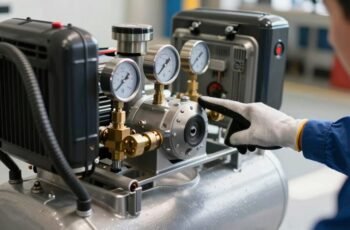
Maintaining an industrial air compressor requires a structured schedule to guarantee peak performance and minimize downtime. Regular inspections of key components—such as filters, belts, lubricants, and cooling systems—are essential for preventing unexpected failures. Developing a detailed maintenance plan tailored to your operational needs can considerably extend equipment lifespan and improve efficiency. Understanding the specific intervals and procedures involved is critical; let’s explore what it takes to establish an effective maintenance routine.
Key Takeaways
- Regularly inspect and replace filters, belts, and lubricants based on daily, weekly, monthly, and annual schedules.
- Monitor system parameters like pressure, temperature, and airflow to detect early signs of wear or malfunction.
- Conduct comprehensive maintenance, including cleaning cooling fins and checking for leaks, every 3 to 6 months.
- Keep detailed logs of maintenance activities and use condition monitoring tools for proactive issue detection.
- Adjust maintenance frequency according to operational demands, environmental conditions, and manufacturer recommendations.
Why Regular Maintenance Is Critical for Your Industrial Air Compressor
Regular maintenance is essential to guarantee the peak performance and longevity of your industrial air compressor. Without routine checks, components like filters, belts, and lubricants can deteriorate, leading to decreased efficiency and increased energy consumption. Regular inspections help identify wear and tear early, preventing costly breakdowns and unplanned downtime. Proper maintenance ensures that critical parameters—such as pressure, temperature, and airflow—remain within specified tolerances, which optimizes compressor operation. Additionally, consistent maintenance mitigates corrosion, contamination, and mechanical fatigue, extending the lifespan of key parts like cylinders and pistons. By adhering to a scheduled maintenance routine, you minimize operational risks, improve energy efficiency, and sustain reliable airflow supply essential for your industrial processes.
Key Components to Inspect During Routine Checks
During routine checks, we focus on evaluating the condition of the air filter to guarantee ideal airflow and prevent contaminants from entering the system. We also verify the drain valve’s functionality to prevent moisture buildup, which can cause corrosion and reduce compressor efficiency. Regular inspection of these key components helps maintain reliable operation and extends equipment lifespan.
Air Filter Condition
Ensuring the air filter is in excellent condition is essential for maintaining compressor efficiency and preventing damage. During routine checks, we inspect the filter element for visible dirt, debris, and oil contamination. We look for signs of excessive clogging or discoloration, which indicate reduced airflow and increased pressure drop. We also verify the integrity of the filter housing, ensuring there are no cracks or loose fittings that could allow unfiltered air to bypass the filter. Additionally, we check for proper sealing between the filter and the compressor intake to prevent dust ingress. When filters are clogged or damaged beyond cleaning, we replace them promptly to maintain maximum airflow, minimize strain on the motor, and prevent internal component contamination that could lead to costly repairs.
Drain Valve Functionality
Inspecting the drain valve’s functionality is a vital step in routine compressor maintenance, as it prevents moisture buildup that can cause corrosion and component failure. Proper operation guarantees moisture is expelled effectively, maintaining system integrity. During checks, we focus on:
- Valve Operation: Verify the valve opens and closes smoothly without sticking or leaks, indicating the mechanism functions correctly.
- Drainage Effectiveness: Confirm moisture exits completely when the valve is opened, preventing residual buildup.
- Seal Integrity: Inspect seals and gaskets for signs of wear, cracking, or damage, which could lead to air leaks or incomplete drainage.
Regular testing and maintenance of the drain valve prevent moisture-related issues, prolonging compressor lifespan and guaranteeing reliable operation.
How Often Should You Service Your Air Compressor?
Typically, a well-maintained air compressor requires servicing at regular intervals to guarantee peak performance and longevity. For most units, a thorough inspection and maintenance should occur every 3 to 6 months, depending on operating hours and workload intensity. Critical components like filters, oil levels, and belts must be checked and replaced as needed, often every 500 to 1,000 hours of operation. Additionally, routine lubrication of moving parts and inspection of pressure relief valves are essential to prevent system failures. For continuous or heavy-duty use, more frequent servicing—monthly or even bi-weekly—is advisable. Monitoring system performance, vibration levels, and temperature during operation helps identify early signs of wear. Adhering to manufacturer guidelines and logging maintenance activities ensures peak compressor efficiency and minimizes unexpected downtime.
Step-by-Step Guide to Daily Maintenance Tasks
To maintain ideal performance, we should perform specific daily maintenance tasks that address the compressor’s critical components before each shift. First, visually inspect the unit for leaks, unusual vibrations, or abnormal noise, ensuring all fittings and hoses are secure. Second, check and record the oil level, topping up if necessary, and verify the oil’s appearance for contamination or degradation. Third, examine the air intake filters for dirt and debris; clean or replace filters if clogged to prevent reduced airflow and pressure drops. These steps help prevent component wear, overheating, and efficiency loss. Consistent daily checks enable early detection of issues, ensuring reliable operation and extending the compressor’s lifespan. Proper routine maintenance keeps the system running smoothly and reduces downtime.
Weekly Maintenance: What Checks and Adjustments Are Needed?
During weekly maintenance, we focus on inspecting air filters for clogging or damage, ensuring ideal airflow and compressor efficiency. We also verify oil levels, topping up or changing oil as necessary to prevent overheating and wear, while checking all connections for tightness to avoid leaks. These targeted checks help maintain reliable operation and extend the lifespan of the compressor.
Inspect Air Filters Regularly
Regular inspection of air filters is crucial to guarantee peak compressor performance and prevent system failures. Properly maintained filters ensure ideal airflow, reduce pressure drops, and prevent contaminants from entering the system. During inspection, we focus on:
- Checking for visible dirt, dust, or debris accumulation, which indicates a need for cleaning or replacement.
- Evaluating filter integrity for tears, holes, or other damage that could compromise filtration efficiency.
- Measuring differential pressure across the filter to determine if it exceeds manufacturer specifications, signaling the need for service.
Check for Oil Levels
How often should we verify oil levels in the compressor? Ideally, this check should be performed weekly to prevent operating conditions from causing damage or inefficient performance. We begin by shutting down the compressor and locating the oil sight glass or dipstick, depending on the model. We ensure the compressor is level to get an accurate reading. The oil level should be between the minimum and maximum marks; if it’s below the minimum, we add the recommended oil type until it reaches the proper level. We also inspect the oil’s clarity and consistency, noting any signs of contamination or degradation. Regularly monitoring these parameters helps maintain optimal lubrication, reduce wear, and extend component lifespan, ensuring reliable compressor operation.
Tighten All Connections
To guarantee peak performance and prevent leaks or equipment failure, we need to tighten all connections during weekly maintenance. Properly secured fittings maintain system integrity and maximum efficiency. First, inspect all threaded pipe joints, ensuring they are snug without over-tightening, which can damage threads or cause leaks. Second, check hose clamps and fittings, tightening them to manufacturer specifications to prevent air leaks. Third, verify flange bolts and fasteners, applying torque according to the compressor’s technical manual. Use a calibrated torque wrench for precision, avoiding under- or over-tightening, which could compromise seals or cause damage. Regularly maintaining connection integrity minimizes pressure drops, reduces energy consumption, and extends component lifespan, ensuring reliable operation of the compressor system.
Monthly Maintenance Procedures for Optimal Performance
Have you checked your air compressor’s filters and cooling system this month? Regular inspection of filters guarantees unobstructed airflow, preventing pressure drops and overheating. Remove and inspect the intake filters for dirt, dust, and debris; replace if they show signs of clogging or damage. Simultaneously, verify that the cooling system—such as radiators and fans—is free of dust and obstructions. Clean the cooling fins thoroughly, ensuring proper heat dissipation. Check for refrigerant or coolant leaks, if applicable, and top up or replace as necessary. Confirm that all cooling fans operate correctly, and consider lubricating moving parts if recommended by the manufacturer. These procedures maintain peak thermal regulation, reduce wear, and extend compressor lifespan. Proper monthly maintenance is essential for reliable, efficient operation.
Annual Inspections and Major Maintenance Activities
Annual inspections and major maintenance activities are vital components of a thorough compressor upkeep plan, ensuring long-term reliability and peak performance. During these inspections, we systematically evaluate key components and perform critical tasks such as:
- Replacing or refurbishing the air/oil filters to prevent contamination and maintain ideal airflow.
- Inspecting and tightening belts, couplings, and fasteners to avoid mechanical failures caused by wear or loosening.
- Checking and calibrating control systems and safety devices, ensuring accurate operation and compliance with safety standards.
These activities help identify potential issues early, reduce unplanned downtime, and extend the compressor’s service life. Precise execution of annual inspections is essential for maintaining system efficiency and ensuring operational safety.
Troubleshooting Common Compressor Issues Through Scheduled Maintenance
Regularly scheduled maintenance provides a proactive approach to identifying and resolving common compressor issues before they escalate into major failures. During routine inspections, we check critical components such as air filters, pressure relief valves, and cooling systems for signs of wear, leaks, or blockages. We verify proper lubrication levels and examine belts and pulleys for alignment and tension, preventing mechanical stress. By monitoring operational parameters like temperature, pressure fluctuations, and vibration levels, we can detect early signs of component imbalance or degradation. Addressing issues promptly—such as replacing clogged filters, tightening loose connections, or adjusting control settings—minimizes downtime and extends equipment life. This systematic troubleshooting guarantees efficient compressor performance, reduces unexpected failures, and maintains consistent air supply effectiveness.
Keeping Maintenance Records to Extend Compressor Lifespan
Maintaining detailed records of maintenance activities allows us to identify patterns in component wear and service intervals, enabling proactive replacements before failures occur. By systematically monitoring these records, we can optimize maintenance schedules and extend compressor lifespan effectively. Analyzing service history provides critical insights for diagnosing recurring issues and improving overall operational reliability.
Track Maintenance Activities
How can we guarantee that maintenance activities effectively prolong the lifespan of an industrial air compressor? The key is meticulous tracking of all maintenance activities. First, we establish an all-encompassing log that documents every service, including date, technician, and tasks performed—this creates a detailed history for future reference. Second, we implement digital tracking systems that generate alerts for scheduled activities and record compliance, ensuring no task is overlooked. Third, we analyze maintenance data periodically to identify trends or recurring issues, enabling proactive adjustments. Accurate records facilitate timely interventions, reduce downtime, and optimize resource allocation. By maintaining precise, accessible documentation, we ensure maintenance remains systematic, consistent, and effective, ultimately extending compressor operational life and preventing costly failures.
Monitor Component Wear
Monitoring component wear is essential for extending the lifespan of an industrial air compressor, as it provides real-time insights into the condition of critical parts. By regularly inspecting key components—such as bearings, pistons, valves, and seals—we can identify early signs of deterioration, including increased vibration, temperature fluctuations, and abnormal noise. Utilizing condition monitoring tools like vibration analyzers, thermography, and oil analysis allows us to quantify wear levels accurately. Documenting these observations in detailed maintenance records helps track wear patterns over time, enabling proactive scheduling of repairs or replacements before failures occur. This targeted approach minimizes unplanned downtime, reduces repair costs, and optimizes compressor performance, ensuring longevity and reliable operation through precise, data-driven maintenance decisions.
Analyze Service History
Analyzing service history involves systematically recording and reviewing maintenance activities to identify patterns that impact compressor longevity. This process enables us to detect recurring issues and optimize maintenance schedules. Key steps include:
- Data Collection: Record detailed information on repairs, part replacements, and inspection outcomes to establish a thorough history.
- Pattern Recognition: Analyze trends such as frequent component failures or performance drops correlated with specific operational conditions.
- Preventive Action: Use insights to adjust maintenance intervals, replace vulnerable components proactively, and improve operational procedures.
Tips for Developing a Customized Maintenance Schedule
Developing a customized maintenance schedule for your industrial air compressor begins with a thorough assessment of its operational demands, usage patterns, and environmental conditions. We recommend tracking runtime hours, load cycles, and operating temperatures to identify critical components subject to wear. Incorporate manufacturer specifications and historical service data to determine appropriate inspection intervals. Consider environmental factors such as dust, humidity, and temperature fluctuations, which can accelerate component degradation. Establish a baseline by performing initial diagnostics, then tailor routine checks—like oil analysis, filter replacements, and belt inspections—to your specific conditions. Regularly review and adjust your schedule based on compressor performance and maintenance outcomes. This proactive approach minimizes downtime, extends equipment life, and guarantees best efficiency tailored to your operational environment.
Frequently Asked Questions
How Can I Detect Early Signs of Compressor Wear and Tear?
We monitor vibration levels, check for increased noise, inspect for oil leaks, and track pressure fluctuations regularly. These signs indicate early wear, allowing us to schedule timely maintenance, prevent unexpected breakdowns, and extend compressor lifespan effectively.
What Are the Safety Precautions During Maintenance Procedures?
We prioritize safety by disconnecting power, releasing pressure, wearing appropriate PPE, and following lockout/tagout protocols during maintenance. We guarantee proper ventilation, use insulated tools, and verify system de-energization to prevent accidents or injuries.
Are There Industry-Specific Maintenance Requirements for Different Compressor Types?
Different compressor types demand specific maintenance routines, like rotary screw units requiring oil analysis and reciprocating models needing valve inspections, ensuring ideal performance while adhering to manufacturer guidelines, industry standards, and safety protocols for each unique system.
How Does Operating Environment Affect Maintenance Schedules?
Environmental conditions considerably influence maintenance schedules; we monitor ambient temperature, humidity, and dust levels, adjusting routine inspections and component replacements accordingly to prevent corrosion, overheating, and contamination, ensuring ideal compressor performance and longevity in diverse operating environments.
What Are the Latest Advancements in Compressor Maintenance Technology?
We leverage IoT sensors and predictive analytics to monitor compressor health in real-time, enabling us to anticipate failures and optimize maintenance intervals, which reduces downtime and extends equipment lifespan through precise, data-driven decision-making.
Conclusion
In conclusion, adhering to a structured maintenance schedule is crucial for maximizing your compressor’s efficiency and lifespan. Regular inspections and timely interventions help detect issues early, reducing costly downtime. As the saying goes, “An ounce of prevention is worth a pound of cure.” By staying diligent and documenting every step, we guarantee ideal performance, safety, and cost savings, reinforcing that proactive care is the foundation of reliable industrial operations.