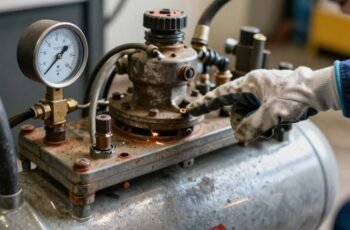
Did you know that proper maintenance can extend a two-stage air compressor’s lifespan by up to 50%? Regular inspections of oil levels, filters, and cooling systems are critical to maintaining ideal performance and avoiding costly downtime. Ignoring these steps can lead to overheating, wear, and efficiency loss, which underscores the importance of a systematic approach. Understanding these maintenance essentials is essential for reliable operation—something every operator should prioritize.
Key Takeaways
- Regularly check and replace compressor oil to prevent wear and ensure optimal lubrication.
- Inspect and clean or replace air intake filters to maintain efficient airflow.
- Monitor cooling system components and coolant levels to prevent overheating.
- Drain condensate regularly and verify pressure settings for efficient operation.
- Conduct routine inspections for leaks, unusual noises, and vibrations to identify issues early.
Understanding the Basics of Two-Stage Air Compressors
While single-stage air compressors compress air in one continuous process, two-stage compressors operate through a more efficient, two-step compression cycle. This design involves two separate cylinders: the first compresses air to an intermediate pressure, then directs it into a second cylinder for further compression to the final pressure level. This separation reduces thermal load and improves efficiency, as each stage is optimized for its specific pressure range. The intercooling process, occurring between stages, lowers the air temperature, minimizing thermal expansion and wear on components. This setup allows for higher pressure outputs with less energy consumption and lower heat generation. Understanding this fundamental difference helps in selecting, maintaining, and troubleshooting compressors, ultimately extending equipment lifespan and optimizing performance.
Checking and Replacing Compressor Oil Effectively
Monitoring oil levels accurately guarantees ideal compressor performance and prevents damage. We follow a precise replacement procedure to maintain oil quality and system efficiency. Consistent checks and proper procedures are essential for reliable operation and extended equipment lifespan.
Oil Level Monitoring
Maintaining proper oil levels is essential for ideal compressor performance and longevity, as insufficient lubrication can lead to increased wear and potential system failure. To accurately monitor oil levels, we recommend using the built-in sight glass or dipstick, guaranteeing the oil is within the specified operating range. Regular checks should be scheduled, especially after initial startup and during routine maintenance. Precise level measurement prevents under-lubrication, which can cause overheating and component damage, or overfilling, leading to aeration and reduced oil effectiveness. During monitoring, look for any signs of contamination or discoloration, indicating oil degradation. Promptly addressing deviations from the best levels ensures the compressor operates efficiently, reduces downtime, and extends equipment lifespan. Consistent oil level management is a critical component of proactive maintenance.
Oil Replacement Procedure
Regularly checking and replacing compressor oil is essential to sustain ideal performance and prevent premature equipment failure. We start by draining the used oil through a designated drain valve, ensuring the compressor is cooled and depressurized beforehand. Next, we clean the drain pan and surrounding area to prevent contamination. We then inspect the oil for viscosity, color, and contaminants, noting any signs of degradation. When refilling, we use the manufacturer-recommended oil type and quantity, filling gradually while monitoring the oil level gauge. It’s vital to avoid overfilling, as excess oil can lead to foaming and reduced lubrication efficiency. Afterward, we run the compressor briefly to circulate the new oil, then recheck the level, topping up if necessary. This procedure maintains peak lubrication, extending equipment longevity and efficiency.
Inspecting and Cleaning Air Intake Filters
When inspecting and cleaning air intake filters, it’s essential to assess their condition for dirt, debris, and signs of wear that could impede airflow. A clogged or damaged filter reduces compressor efficiency and increases strain on components. We recommend checking filter elements regularly and replacing them if visual inspection reveals excessive dirt, tears, or deformation. Consider the table below to evaluate filter status:
| Condition | Recommended Action |
|---|---|
| Light dirt, minor debris | Clean with compressed air |
| Heavy dirt or debris | Replace filter |
| Tears or damage | Replace immediately |
| Deformation or warping | Replace to ensure seal integrity |
Consistent inspection improves airflow, prevents operational issues, and prolongs filter life, guaranteeing peak compressor performance.
Managing Compressor Cooling and Preventing Overheating
Effective cooling system inspection is essential to guarantee ideal heat dissipation and prevent component failure. Implementing targeted overheating prevention tips can extend compressor lifespan and maintain operational efficiency. By systematically monitoring cooling performance, we can identify potential issues before they lead to costly overheating events.
Cooling System Inspection
How can we guarantee the compressor’s cooling system functions at its best to prevent overheating? Regular, detailed inspections are essential. We start by checking coolant levels and flow rates to ensure maximum heat dissipation. Inspecting cooling fins, radiators, and heat exchangers for debris, corrosion, or blockages enables us to identify potential obstructions that impair heat transfer. We examine hoses and fittings for leaks, cracks, or deterioration, which can compromise coolant circulation. Monitoring temperature sensors and gauges provides real-time data on system performance. We also verify the operation of cooling fans and pumps, ensuring they activate properly. This systematic inspection allows us to detect early signs of malfunction, maintain effective heat exchange, and uphold the compressor’s thermal stability, thereby preventing overheating and prolonging equipment lifespan.
Overheating Prevention Tips
Maintaining ideal cooling performance requires proactive strategies to prevent compressor overheating. We recommend regularly monitoring operating temperatures with calibrated sensors to identify early signs of thermal stress. Ensuring proper airflow around the compressor by clearing obstructions and maintaining clean cooling fins is essential for effective heat dissipation. Additionally, verifying that cooling fans and liquid cooling systems are functioning at their best prevents heat buildup. Implementing operational controls, such as automatic shutdowns during excessive temperature conditions, minimizes thermal damage. Proper lubricant levels also play a critical role, as inadequate lubrication can increase friction and heat. Regular maintenance of cooling components and adherence to manufacturer specifications are crucial to sustain optimal thermal performance, reduce downtime, and prolong compressor lifespan.
Draining and Flushing Condensate From the System
Regularly draining and flushing condensate from the air compressor system is vital to prevent moisture buildup that can impair performance and cause corrosion. Moisture accumulates in the system during operation, especially in cooler conditions, leading to potential damage of internal components and reduced efficiency. Proper drainage involves opening drain valves at designated points to release accumulated condensate, guaranteeing no residual moisture remains. Flushing involves introducing clean, dry air or water to dislodge remaining deposits and contaminants, promoting system purity. This maintenance task minimizes the risk of rust formation, contamination of compressed air, and component failure. Implementing a systematic schedule for draining and flushing ensures the compressor operates reliably, extends its lifespan, and maintains ideal air quality, which is critical for downstream processes.
Monitoring and Adjusting Pressure Settings for Efficiency
Monitoring and adjusting pressure settings is a key step in maximizing compressor performance and energy efficiency. Accurate pressure regulation ensures the system operates within ideal parameters, reducing unnecessary energy consumption. To achieve this, we focus on:
- Regularly verifying the system’s pressure gauges against manufacturer specifications.
- Adjusting the pressure switch settings to maintain consistent operation.
- Ensuring that the cut-in and cut-out pressures align with process requirements.
- Monitoring for pressure fluctuations that could indicate leaks or control issues.
Troubleshooting Common Maintenance Issues
Identifying and resolving common maintenance issues is essential for ensuring the continued efficiency and reliability of air compressors. We analyze symptoms such as unusual noise, excessive vibration, or pressure drops to pinpoint underlying problems. For instance, persistent pressure fluctuations often indicate inlet valve obstructions or leaks, while abnormal noise may suggest worn bearings or misaligned components. Regular inspection of filters, valves, and connections helps detect leaks or blockages early. Troubleshooting also involves verifying oil levels and quality, as contamination can impair compressor performance. Addressing these issues promptly prevents component failure and minimizes downtime. A systematic approach—combining visual checks, pressure analysis, and component testing—enables us to maintain ideal operation, reduce wear, and extend the compressor’s service life efficiently.
Creating a Regular Maintenance Schedule to Extend Compressor Life
Establishing a structured maintenance schedule is critical for maximizing the lifespan and operational efficiency of air compressors. A systematic approach ensures timely inspections, reduces unexpected failures, and maintains peak performance. To develop an effective schedule, consider these key actions:
- Daily checks: Monitor oil levels, air filters, and drain moisture from tanks.
- Weekly inspections: Examine belts, hoses, and connections for signs of wear or leaks.
- Monthly maintenance: Replace filters, inspect safety devices, and lubricate moving parts.
- Annual servicing: Conduct thorough inspections, clean internal components, and calibrate controls.
Implementing these steps with precision minimizes downtime, extends component life, and sustains compressor efficiency. A disciplined maintenance schedule is vital for reliable, long-term operation.
Frequently Asked Questions
How Often Should I Replace Compressor Belts or Pulleys?
We recommend inspecting compressor belts and pulleys monthly, replacing belts every 6 to 12 months depending on wear, and checking pulleys for alignment or damage during routine maintenance to prevent operational failures and guarantee efficiency.
What Are the Signs of a Failing Intercooler?
We observe that 60% of intercooler failures are due to corrosion or clogging. Signs include increased temperature, reduced efficiency, and pressure drops. Regular inspection and cleaning help prevent costly breakdowns and maintain ideal compressor performance.
Can I Perform Maintenance Without Shutting Down the Compressor?
Performing maintenance without shutting down the compressor risks safety hazards and damage; we strongly advise always powering down and depressurizing the system before inspection or repairs to guarantee safe, effective maintenance and prevent equipment failure.
How Do Environmental Factors Affect Compressor Longevity?
Environmental factors profoundly influence compressor longevity; studies show improper conditions can reduce lifespan by up to 30%. We analyze temperature, humidity, and dust levels, emphasizing their critical roles in maintaining ideal compressor performance and extending operational life.
What Safety Precautions Are Essential During Maintenance?
We prioritize safety by disconnecting power, releasing pressure, wearing protective gear, and following manufacturer guidelines. These steps guarantee safe maintenance, prevent accidents, and maintain compressor integrity, ultimately extending its operational lifespan and ensuring reliable performance.
Conclusion
Regular maintenance is essential for maximizing the lifespan and efficiency of two-stage air compressors. Studies show that properly maintained compressors can operate up to 30% longer and reduce energy costs by up to 15%. By adhering to a structured schedule, we minimize downtime, prevent costly repairs, and guarantee peak performance over time. Implementing these best practices isn’t just about routine; it’s a strategic investment in operational reliability and cost savings.