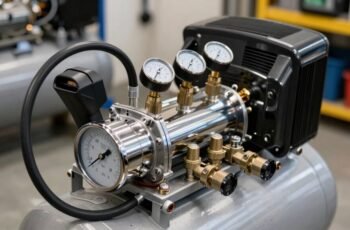
Maintaining an oil-free air compressor requires meticulous attention to routine procedures that ensure consistent performance and durability. We recognize the importance of proper inspections, timely filter replacements, and safety checks to prevent operational issues. Neglecting these aspects can lead to costly downtime or compromised air quality. As we explore the key maintenance practices, you’ll see how systematic care directly impacts the reliability and lifespan of your equipment—an essential consideration for sensitive applications.
Key Takeaways
- Regularly inspect and replace air filters to ensure air purity and efficiency.
- Drain condensate traps daily to prevent corrosion and system issues.
- Clean vents, cooling fins, and internal parts with compressed air to prevent dust buildup.
- Check and calibrate pressure gauges and safety valves for safe operation.
- Schedule professional inspections for unusual noises, pressure drops, or system malfunctions.
Understanding the Basics of Oil-Free Air Compressors
Although oil-free air compressors operate without the use of lubricating oil in their compression chamber, they still rely on specific design features to guarantee efficient performance and air purity. These compressors utilize advanced sealing technologies, such as piston or diaphragm seals, to prevent contamination and maintain air quality. They typically employ direct-drive systems to reduce mechanical losses and enhance reliability. The compression mechanism often involves a reciprocating or rotary design, optimized for minimal friction and energy efficiency. Additionally, oil-free units incorporate high-precision components made from corrosion-resistant materials, ensuring durability and consistent operation. Understanding these fundamental design principles helps in recognizing how oil-free compressors deliver clean, dry air suitable for sensitive applications, while also highlighting the importance of proper maintenance for sustained performance.
Common Maintenance Tasks for Oil-Free Models
Regular maintenance is crucial to guarantee the peak performance and longevity of oil-free air compressors. Key tasks include inspecting and replacing air filters regularly to prevent contamination and ensure airflow efficiency. Monitoring pressure levels and guaranteeing they remain within manufacturer specifications helps maintain ideal operation. Drain the moisture from the condensate traps daily to prevent corrosion and system inefficiencies. Lubrication of moving parts is generally unnecessary for oil-free models, but checking for unusual vibrations or noise can alert us to mechanical issues. Tightening fittings and fasteners periodically reduces the risk of leaks and component failure. Finally, inspecting belts and pulleys for wear or misalignment ensures smooth power transmission. These routine checks minimize downtime and extend the system’s service life, maintaining consistent output and energy efficiency.
How to Keep Your Compressor Clean and Dust-Free?
To maintain ideal performance, it’s essential to keep your compressor clean and free of dust buildup, as contaminants can impair airflow and cause overheating. Regular cleaning prevents debris from obstructing crucial components and ensures efficient operation.
Here are four critical steps:
- Power down and unplug the unit before cleaning to ensure safety.
- Use compressed air to blow dust from vents, cooling fins, and internal components, maintaining optimal airflow.
- Wipe external surfaces with a damp, lint-free cloth to remove surface dust without penetrating internal parts.
- Inspect and clean the intake grille regularly, removing any accumulated dust or debris to prevent airflow restrictions.
Implementing these steps keeps your compressor functioning reliably and prolongs its lifespan.
Checking and Replacing Air Filters Effectively
Properly identifying when to replace air filters is essential to maintain ideal compressor performance, as increased pressure drops or reduced airflow indicate filter saturation. We must guarantee filters are installed correctly, with a tight seal to prevent unfiltered air bypassing the filter media. Accurate replacement and installation techniques are critical to avoid contamination and ensure the compressor operates efficiently.
Identifying When to Replace
Understanding the signs of when to replace air filters is essential for maintaining ideal compressor performance. Monitoring filter condition prevents airflow restriction and guarantees maximum efficiency. Key indicators include:
- Increased pressure drop: A significant rise in system pressure indicates clogging.
- Visible dirt accumulation: Dust, debris, or discoloration signals the filter is saturated.
- Decreased airflow: Reduced output volume suggests restricted filter passage.
- Operational noise increase: Unusual noise levels may result from airflow obstruction.
Regular inspection is critical; filters should be replaced when these signs appear. Relying solely on time intervals can lead to performance issues, so precise evaluation of filter condition is necessary to determine replacement timing accurately.
Proper Filter Installation Techniques
Ensuring filters are checked and replaced correctly is essential for maintaining ideal compressor performance. We begin by turning off the compressor and disconnecting power before removing the housing cover. Carefully inspect the filter for dirt buildup, tears, or damage. When installing a new filter, ensure it fits snugly within the designated housing, aligning it properly with airflow direction indicated by the arrow on the filter. Avoid forcing the filter into place, as misalignment can compromise filtration efficiency. Once installed, reattach the cover securely, verifying it is sealed to prevent unfiltered air entry. Regularly check for proper seating and signs of wear during routine maintenance. Precise installation ensures optimal airflow, reduces strain on the compressor, and prolongs component lifespan.
Maintaining Pressure Settings and Safety Valves
To maintain ideal performance and safety, regularly inspecting and adjusting pressure settings and safety valves is essential. Proper calibration ensures the compressor operates within designed parameters, preventing over-pressurization and equipment failure. We recommend these key steps:
- Verify the pressure gauge accuracy with a calibrated reference device.
- Adjust the pressure regulator to match manufacturer specifications.
- Test safety valves by manually lifting the valve stem to confirm it releases at the set pressure.
- Replace or service safety valves showing signs of corrosion, leakage, or inconsistent operation.
Consistent checks prevent pressure deviations and safeguard against potential hazards. Proper maintenance of these components ensures peak compressor function, prolongs lifespan, and maintains compliance with safety standards.
Troubleshooting Common Issues in Oil-Free Compressors
We need to identify common issues such as abnormal noises and overheating, which can indicate underlying mechanical or operational faults. Proper diagnosis allows us to determine whether unusual sounds result from component wear or misalignment, and if overheating stems from inadequate cooling or excessive load. Addressing these issues promptly guarantees ideal compressor performance and prevents further damage.
Identifying Compressor Noises
Understanding the different noises produced by an oil-free air compressor is essential for effective troubleshooting. Recognizing specific sounds helps identify underlying issues quickly.
- High-pitched squealing indicates belt slippage or bearing failure, requiring immediate inspection.
- Grinding or metal-on-metal noise suggests bearing or gear damage, necessitating component replacement.
- Hissing or air leaks point to loose fittings, damaged valves, or seal failures, which should be tightened or repaired.
- Vibrations accompanied by knocking often indicate piston or valve assembly problems, demanding detailed component inspection.
Accurately identifying these noises allows for targeted maintenance, reducing downtime and preventing further damage. Proper diagnosis ensures the compressor operates efficiently and reliably.
Managing Overheating Problems
Overheating is a common issue in oil-free compressors that can lead to reduced efficiency and potential component failure. To manage this, we first ensure proper ventilation around the unit, preventing heat buildup. Regularly inspecting and cleaning cooling fans, heat exchangers, and air filters helps maintain ideal airflow. Monitoring operating temperatures via gauges or control systems alerts us to abnormal heat levels, prompting immediate action. If overheating persists, we check for excessive load conditions or mechanical obstructions that hinder heat dissipation. Using temperature sensors and automatic shutdown features can prevent damage. Additionally, scheduling routine maintenance to replace worn filters and clean internal components ensures consistent cooling performance. Effective heat management minimizes downtime, extends compressor lifespan, and maintains consistent air quality.
Extending Your Compressor’s Lifespan With Regular Checks
Regularly inspecting your oil-free air compressor is vital to prevent premature component wear and guarantee peak performance. Consistent checks enable early detection of issues that could lead to costly repairs or downtime. To optimize lifespan, focus on these key areas:
- Air filters: Ensure they are clean and free of debris to maintain airflow efficiency.
- Vibration and noise levels: Monitor for abnormal sounds or vibrations that indicate component imbalance or wear.
- Hose and connection integrity: Inspect for leaks, cracks, or loose fittings that could compromise system pressure.
- Cooling system: Verify that cooling fins and fans are unobstructed and functioning properly to prevent overheating.
Implementing these routine inspections maintains system reliability and extends your compressor’s operational life.
When to Seek Professional Maintenance Assistance
Despite diligent routine inspections, there are moments when issues arise that require specialized expertise. Recognizing these signs guarantees peak performance and prevents costly damage. Seek professional assistance if you encounter persistent abnormal noises, inconsistent pressure levels, or frequent system shutdowns. Additionally, if performance declines despite regular maintenance, a diagnostic by qualified technicians is necessary. Regularly monitor your compressor’s operational parameters to identify anomalies early.
| Issue | Recommended Action |
|---|---|
| Unusual or loud noises | Consult a professional for inspection |
| Drop in output pressure | Seek expert diagnosis |
| Frequent system shutdowns | Schedule professional maintenance |
Frequently Asked Questions
How Often Should I Perform Routine Maintenance on My Oil-Free Compressor?
We suggest performing routine maintenance on your oil-free compressor weekly, including inspecting filters, draining moisture, and checking belts. Regular inspections guarantee ideal performance, prevent breakdowns, and extend your compressor’s lifespan, maintaining consistent, efficient operation.
What Are the Signs Indicating My Compressor Needs Professional Repairs?
We notice our compressor needs professional repairs if it exhibits decreased airflow, unusual noises, excessive vibration, inconsistent pressure, or persistent overheating, indicating potential component failures. Regular inspections help catch these signs early and guarantee peak performance.
Can I Use Aftermarket Parts for Repairs and Replacements?
Yes, we can use aftermarket parts for repairs and replacements, but we verify they meet OEM specifications for quality and durability. Properly vetted aftermarket components can be cost-effective, yet reliability and warranty considerations remain essential for ideal compressor performance.
How Do Temperature Fluctuations Affect Compressor Performance?
Temperature fluctuations can decrease compressor efficiency by up to 15%, causing thermal expansion or contraction. We monitor ambient conditions closely, ensuring consistent performance and preventing potential overheating or component stress, ultimately maintaining ideal operation and longevity.
Are There Specific Storage Tips to Prevent Compressor Damage During Off-Use Periods?
Storing the compressor in a dry, temperature-controlled environment prevents moisture buildup and temperature-related stress. We recommend draining residual moisture, disconnecting power, and covering equipment with breathable materials to avoid corrosion and mechanical damage during off-use periods.
Conclusion
By following these maintenance practices, we can guarantee our oil-free air compressors operate at peak efficiency and durability. However, hidden issues may still lurk beneath routine checks, potentially compromising performance. Staying vigilant is essential—regular inspections might reveal more than meets the eye. So, are you prepared to uncover the secrets your compressor might be hiding? The next step could be the difference between smooth operation and unexpected failure. Stay proactive—your compressor’s longevity depends on it.