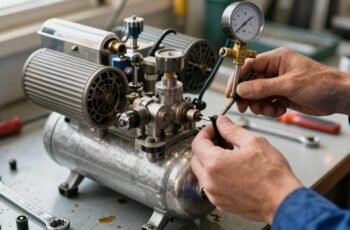
Maintaining an air compressor requires a systematic approach to guarantee peak performance and prevent costly downtime. We recognize that establishing a clear schedule for inspections, part replacements, and safety tests is vital, but the specifics can vary based on equipment and usage. Proper planning and adherence to manufacturer guidelines are essential. To maximize your compressor’s lifespan and efficiency, it’s important to focus on these key tasks and know when and how to perform them effectively.
Key Takeaways
- Regularly inspect and replace filters, belts, and safety devices based on recommended intervals to ensure optimal performance.
- Perform daily, weekly, and monthly checks such as oil levels, pressure gauges, and condensate drainage.
- Follow manufacturer guidelines for maintenance intervals like oil changes and filter replacements, adjusting for workload conditions.
- Use appropriate tools and troubleshoot common issues such as pressure drops, leaks, or overheating proactively.
- Keep detailed records of maintenance activities to track component lifespan, optimize scheduling, and prevent unexpected failures.
What Are the Key Components of an Air Compressor Maintenance Schedule
Understanding the key components of an air compressor maintenance schedule is essential for guaranteeing peak performance and longevity. Central to this is regular inspection of critical parts, such as filters, lubricants, and belts. Filters must be checked and replaced to prevent contamination and ensure airflow efficiency. Lubrication levels require monitoring to minimize wear and prevent overheating. Belts should be inspected for tension and signs of wear to maintain proper drive function. Additionally, pressure relief valves and safety devices need testing to guarantee safe operation. Record-keeping of maintenance activities is crucial for tracking component lifespan and scheduling future tasks. By focusing on these core elements, we can maintain ideal compressor performance, reduce downtime, and extend equipment lifespan through precise, scheduled maintenance.
How Often Should You Perform Routine Maintenance Tasks?
Establishing a clear schedule for routine maintenance tasks guarantees peak performance and minimizes unexpected breakdowns. Typically, daily checks include inspecting for leaks, verifying oil levels, and ensuring proper belt tension. Weekly inspections should focus on draining moisture from condensate traps, cleaning air filters, and checking for unusual vibrations or noises. Monthly maintenance involves lubricating moving parts, inspecting belts for wear, and testing safety shutdown systems. Quarterly tasks include replacing air/oil filters, inspecting hoses and fittings for deterioration, and checking pressure relief valves. Semi-annual or annual schedules demand detailed oil changes, detailed inspection of internal components, and calibration of pressure regulators. Adhering to these intervals ensures optimal compressor efficiency, prolongs equipment lifespan, and prevents costly failures.
Step-by-Step Guide to Daily Air Compressor Checks
To maintain ideal performance, it’s essential to perform daily checks on your air compressor with consistency and accuracy. Daily inspections help identify potential issues before they escalate, ensuring reliable operation. Begin by examining the compressor’s oil levels and topping up if necessary, ensuring they meet manufacturer specifications. Next, inspect the air filters for dirt or blockages, replacing them if clogged. Check for any visible leaks in the hoses and fittings, tightening connections as needed. Finally, verify the pressure gauges and safety valves are functioning within operational limits to prevent over-pressurization.
- Monitor oil levels and top up accordingly
- Inspect and replace air filters if dirty
- Examine hoses and fittings for leaks
- Verify pressure gauges and safety valves
Weekly and Monthly Maintenance Activities to Extend Your Compressor’s Life
Weekly and monthly maintenance tasks are critical for maximizing your air compressor’s lifespan and ensuring ideal performance. Regular inspection of air filters is essential; clean or replace filters to prevent dust and debris buildup that can impair efficiency. Drain condensate from moisture traps and tanks to avoid corrosion and maintain peak operation. Examine belts for wear and proper tension, replacing or adjusting as needed to prevent slippage or failure. Check oil levels and top up or change oil according to manufacturer specifications to reduce friction and wear on moving parts. Inspect safety devices, such as pressure relief valves, to ensure proper function. Conduct a thorough visual inspection of hoses and connections for leaks or damage. These scheduled activities help maintain system reliability and extend the compressor’s service life.
Troubleshooting Common Air Compressor Problems During Maintenance
When performing maintenance on an air compressor, identifying and resolving common problems promptly is essential to prevent system downtime and costly repairs. Troubleshooting involves diagnosing issues efficiently to guarantee ideal performance. Common problems include pressure drops, overheating, excessive noise, and moisture buildup.
Prompt maintenance prevents downtime and costly repairs by quickly diagnosing and resolving common compressor issues.
To address these issues:
- Check for air leaks in hoses and fittings, which can cause pressure drops.
- Inspect cooling systems and cleanliness to prevent overheating.
- Examine belts and bearings for wear to reduce noise.
- Drain moisture from tanks regularly to prevent corrosion and water contamination.
Accurate diagnosis and timely intervention help maintain compressor efficiency, extend lifespan, and avoid unplanned outages. Regular troubleshooting ensures your system runs reliably and at peak performance.
Essential Tools and Supplies for Effective Maintenance
Effective maintenance of an air compressor relies on having the right tools and supplies readily available. Essential tools include a set of high-quality screwdrivers, wrenches, and pliers for component disassembly and adjustments. A digital multimeter is necessary for electrical diagnostics, while a pressure gauge helps monitor system performance during maintenance. Replacement consumables such as lubricants, filters, and sealing compounds are critical to guarantee peak operation and prevent leaks. A set of cleaning brushes and compressed air nozzles facilitates removal of debris and dust from critical parts. Additionally, torque wrenches ensure fasteners are correctly tightened, preventing over-tightening or loosening. Having these tools and supplies organized and within reach improves efficiency, accuracy, and safety during maintenance procedures.
Best Practices for Maintaining Air Quality and Filtration
Regular filter inspections are essential to guarantee ideal air quality and prevent contamination. We recommend using high-quality air filters to maximize filtration efficiency and extend equipment lifespan. Consistent maintenance of filters guarantees reliable compressor performance and reduces downtime.
Regular Filter Inspections
How often should we inspect air filters to guarantee ideal system performance? Regular inspections are essential to maintain optimal airflow and prevent contamination. We recommend inspecting filters at least every 250 hours of operation or monthly, whichever comes first. Key practices include:
- Checking for visible dirt, dust, or damage
- Measuring differential pressure across the filter
- Replacing filters when pressure exceeds manufacturer specifications
- Confirming proper sealing and installation
Consistent inspection ensures filters are functioning correctly, reduces strain on the compressor, and preserves air quality. Neglecting routine checks can lead to increased energy consumption, system inefficiencies, and potential component failures. By adhering to a strict inspection schedule, we maintain system reliability and extend equipment lifespan, ensuring the compressor operates at peak performance.
Use Quality Air Filters
Using high-quality air filters is fundamental to maintaining ideal air purity and system efficiency. Superior filters effectively trap airborne contaminants, reducing the risk of fouling and corrosion within the compressor. They also minimize pressure drops, ensuring maximum airflow and reducing energy consumption. When selecting filters, we prioritize materials with high filtration efficiency and durability, tailored to the specific operating environment. Regularly inspecting and replacing these filters prevents clogging and maintains consistent filtration performance. By investing in premium filters, we extend the lifespan of critical components and improve overall system reliability. Proper filtration not only safeguards the compressor but also guarantees consistent air quality for downstream processes. Adhering to manufacturer specifications for filter quality and replacement intervals is essential for efficient operation and long-term maintenance.
How to Create a Customized Maintenance Schedule for Your Equipment
To create an effective maintenance schedule, we first assess the specific needs of your equipment, including operating conditions and manufacturer recommendations. Next, we establish appropriate maintenance intervals based on usage patterns and critical components. Finally, we implement a tracking system to monitor performed activities, ensuring timely interventions and peak compressor performance.
Assess Equipment Needs
Determining the specific maintenance needs of your air compressor requires a thorough assessment of its operational requirements and usage patterns. This process involves analyzing workload intensity, duty cycles, and environmental conditions to identify critical maintenance points. Key considerations include:
- Operational hours: Track usage to determine workload fluctuations and identify periods of increased wear.
- Application type: Different applications impose varying demands, affecting component longevity.
- Operating environment: Harsh conditions like dust, humidity, or temperature extremes accelerate wear and corrosion.
- Component condition: Regular inspections of filters, belts, and valves help pinpoint parts needing proactive maintenance or replacement.
This detailed evaluation enables the development of a maintenance plan tailored to your equipment’s unique operational profile, optimizing efficiency and minimizing downtime.
Set Maintenance Intervals
Once you’ve assessed your equipment’s operational needs, establishing appropriate maintenance intervals becomes the next critical step. We base these intervals on manufacturer recommendations, operational hours, and environmental conditions. For example, routine inspections and filter replacements might be scheduled every 250 hours of operation, while more complex tasks like oil changes could be set at 500-hour intervals. It’s essential to consider the compressor’s workload, usage frequency, and ambient conditions to customize these timelines effectively. Precise scheduling minimizes downtime and prevents component failures. We document these intervals clearly within a maintenance plan, ensuring consistency across shifts and personnel. Regularly reviewing and adjusting the intervals based on equipment performance data maintains ideal compressor efficiency and longevity.
Track Maintenance Activities
How can we effectively track maintenance activities to guarantee a customized schedule that meets our equipment’s specific needs? We must implement a systematic approach to record all maintenance tasks, ensuring data accuracy and traceability. This enables us to identify patterns, predict failures, and optimize intervals.
Key methods include:
- Using digital maintenance logs or CMMS software for real-time updates
- Documenting routine inspections, repairs, and replacements precisely
- Monitoring equipment performance metrics to inform scheduling adjustments
- Conducting regular review sessions to analyze activity history and refine maintenance plans
Frequently Asked Questions
What Are Signs Indicating My Air Compressor Needs Urgent Repairs?
We notice signs like unusual noises, excessive vibration, overheating, pressure drops, or oil leaks, indicating urgent repairs are needed. Addressing these issues promptly prevents damage, maintains efficiency, and guarantees reliable operation of the compressor.
How Can I Optimize Energy Efficiency During Maintenance?
We enhance energy efficiency during maintenance by regularly inspecting and cleaning filters, ensuring proper lubrication, adjusting pressure settings to ideal levels, checking for leaks, and verifying motor alignment, ultimately reducing energy consumption and prolonging compressor lifespan.
What Safety Precautions Should I Follow During Maintenance?
Safety is our compass during maintenance; we shut off power, relieve pressure, wear protective gear, and follow lockout/tagout procedures. These steps act as our shield, ensuring we navigate maintenance tasks without harm or accident.
How Does Ambient Temperature Affect Maintenance Routines?
Ambient temperature impacts maintenance routines by influencing component lubrication, cooling efficiency, and condensation levels. We adjust inspection frequency and cooling system checks accordingly to prevent overheating, corrosion, and guarantee ideal compressor performance under varying environmental conditions.
Are There Industry Standards for Air Compressor Maintenance Schedules?
Industry standards recommend maintenance intervals every 3,000 to 8,000 hours of operation, depending on compressor type and usage intensity. We follow these guidelines to optimize efficiency, prevent breakdowns, and guarantee compliance with safety regulations.
Conclusion
In summary, a well-structured maintenance schedule guarantees peak performance, extends equipment lifespan, and enhances safety. By inspecting, cleaning, lubricating, and replacing components regularly, we prevent costly breakdowns, reduce downtime, and improve efficiency. Consistency, documentation, and adherence to manufacturer guidelines are vital. Ultimately, proactive maintenance fosters reliability, minimizes risks, and maximizes the value of our air compressors, enabling us to operate smoothly, confidently, and sustainably in our daily tasks.