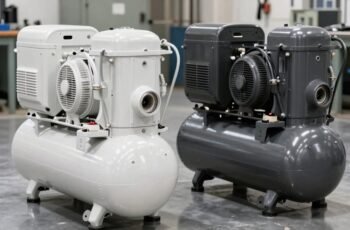
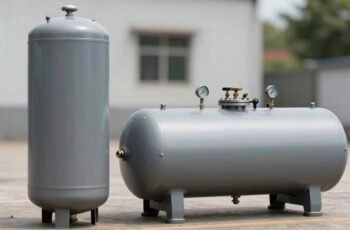
Like the choice between a sword and a scalpel, selecting the right air dryer involves weighing precision against practicality. Refrigerated and desiccant dryers each serve critical roles in moisture control but differ markedly in operation and suitability for specific applications. Understanding these distinctions is essential for optimizing your compressed air system’s performance and costs. As we explore the technical nuances, you’ll see why this decision can profoundly impact your operations.
Key Takeaways
- Refrigerated dryers are more cost-effective and easier to maintain, suitable for general moisture removal needs.
- Desiccant dryers achieve ultra-low dew points, ideal for moisture-sensitive applications like electronics and pharmaceuticals.
- Refrigerated dryers are less effective at very low temperatures and cannot reach dew points below 35-50°F.
- Desiccant dryers have higher initial costs and continuous energy use for regeneration but provide near-zero moisture levels.
- Choice depends on application requirements: refrigerated for budget-friendly drying, desiccant for critical, ultra-dry environments.
What Are Refrigerated and Desiccant Air Dryer Technologies?
Refrigerated and desiccant air dryer technologies are two primary methods used to remove moisture from compressed air systems. Refrigerated dryers operate by cooling compressed air to below its dew point, causing moisture to condense into liquid water that can be separated and drained. They rely on refrigeration cycles involving compressible refrigerants and heat exchangers. Desiccant dryers, on the other hand, utilize solid desiccant materials, such as silica gel or activated alumina, which adsorb moisture directly from the compressed air. These dryers typically involve a regeneration process, where the desiccant is dried and prepared for continued moisture absorption. Both technologies aim to produce dry compressed air, but they differ markedly in operational principles, efficiency, and application suitability.
How Do Refrigerated and Desiccant Dryers Remove Moisture From Compressed Air?
Both refrigerated and desiccant dryers employ distinct mechanisms to extract moisture from compressed air, ensuring the system’s efficiency and suitability for various applications. Refrigerated dryers cool the compressed air to condense water vapor, which is then separated and drained. In contrast, desiccant dryers pass air through a desiccant material that adsorbs moisture, providing near-zero dew point dryness. The choice depends on the moisture level required and application sensitivity.
| Aspect | Refrigerated Dryer | Desiccant Dryer |
|---|---|---|
| Moisture Removal Method | Cooling and condensation | Adsorption |
| Typical Dew Point | 35-50°F | -40°F or lower |
| Energy Consumption | Moderate | Higher |
| Suitability | General industrial use | Critical, sensitive applications |
What Are the Main Advantages and Limitations of Refrigerated Air Dryers?
Refrigerated air dryers offer several advantages that make them a popular choice for many industrial applications, particularly where cost-effectiveness and simplicity are priorities. They operate by cooling compressed air to condense moisture, which is then removed via separation. These dryers typically have lower initial costs and simpler maintenance compared to desiccant systems, making them accessible for a broad range of industries. However, their main limitations include reduced efficiency in low-temperature environments, as ambient conditions can impair cooling performance. Additionally, refrigerated dryers may not achieve the extremely low dew points required for sensitive processes, limiting their use in applications demanding ultra-dry air. Their reliance on refrigeration cycles also results in higher energy consumption relative to some alternative drying methods, which can influence operational costs over time.
When Should You Choose a Desiccant Dryer Over a Refrigerated One?
When maintaining extremely low dew points is essential for your operations, a desiccant dryer becomes the preferred choice over a refrigerated system. Desiccant dryers excel in applications requiring dew points below -40°F (-40°C), where moisture removal must be virtually eliminated to prevent corrosion, product spoilage, or process contamination. They are ideal for industries like pharmaceuticals, electronics, and food processing, where even trace moisture can compromise quality or safety. Additionally, desiccant dryers provide consistent moisture removal regardless of ambient temperature fluctuations, ensuring stable operation. Their ability to achieve and sustain lower dew points makes them indispensable in environments with high humidity or where moisture-sensitive processes are involved. Hence, when the lowest possible dew point is non-negotiable, selecting a desiccant dryer is the most suitable solution.
How Do Operating Costs and Maintenance Compare Between the Two Dryer Types?
Understanding the operational costs and maintenance requirements of each dryer type is essential for making an informed choice. Refrigerated dryers generally have lower initial costs and energy consumption but require regular filter replacements and periodic system checks. Desiccant dryers involve higher upfront expenses and continuous energy use for regeneration, leading to increased operational costs.
Refrigerated dryers are cost-effective and energy-efficient but need regular filter maintenance; desiccant dryers have higher costs and continuous energy use.
Key differences include:
- Energy Efficiency: Refrigerated dryers consume less power during operation but may require additional energy during startup. Desiccant dryers use more energy due to ongoing regeneration cycles.
- Maintenance Frequency: Refrigerated units demand filter changes and system inspections every 6-12 months, whereas desiccant dryers require desiccant replacement and system calibration more frequently.
- Overall Longevity: Refrigerated dryers tend to have longer service lives with fewer parts subject to wear, while desiccant dryers’ performance depends on desiccant quality and replacement schedules.
Frequently Asked Questions
Which Industries Most Commonly Use Refrigerated Versus Desiccant Air Dryers?
We see refrigerated dryers mainly in manufacturing, automotive, and plastics industries due to cost-efficiency, while desiccant dryers are vital in pharmaceutical, electronics, and food sectors, where ultra-dry air guarantees product quality and compliance.
How Does Temperature Fluctuation Affect the Efficiency of Each Dryer Type?
Temperature fluctuations reduce refrigerated dryer efficiency by causing inconsistent cooling, leading to moisture carryover, while desiccant dryers maintain steady dew points despite temperature changes due to their adsorption process, ensuring reliable dry air output in variable conditions.
Can Hybrid Systems Combine Refrigerated and Desiccant Drying Methods?
Yes, hybrid systems combine refrigerated and desiccant drying methods, optimizing moisture removal by leveraging the cost-effectiveness of refrigeration and the low dew points of desiccant dryers, ensuring efficient operation across varying environmental conditions and flow rates.
What Environmental Impacts Are Associated With Each Dryer Type?
We believe environmental impacts differ markedly; refrigerated dryers consume more electricity, increasing carbon footprint, while desiccant dryers use expendable materials, generating waste. Both pose sustainability challenges, urging us to weigh efficiency against ecological responsibility carefully.
How Do Startup Times Differ Between Refrigerated and Desiccant Air Dryers?
Refrigerated air dryers typically startup faster, within minutes, due to their simpler refrigeration cycle, whereas desiccant dryers require longer, often 30 to 60 minutes, to purge and stabilize, ensuring ideal moisture removal performance.
Conclusion
In choosing between refrigerated and desiccant dryers, it’s clear that each serves a distinct purpose like two sides of the same coin. Refrigerated dryers excel in cost-effective, general applications, while desiccant dryers offer unmatched dryness for sensitive industries. Understanding your specific moisture needs and operational considerations helps you make an informed decision. Ultimately, selecting the right dryer is like tuning an instrument—ensuring ideal performance and longevity in your compressed air system.