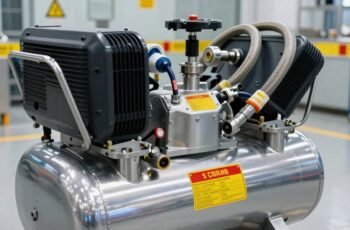
Like a conductor fine-tuning an orchestra, adjusting an air compressor regulator requires precision and understanding. We understand that the right pressure guarantees ideal performance and safety, but the process can seem complex without proper guidance. To achieve consistent results, it’s essential to follow specific steps and precautions. Let’s explore the correct method to adjust your regulator, ensuring it functions effectively and prolongs its service life.
Key Takeaways
- Turn off the compressor and release residual pressure before making adjustments.
- Locate the regulator knob and observe current pressure with a gauge.
- Turn the regulator knob clockwise to increase pressure, counterclockwise to decrease.
- Make small adjustments, then allow the system to stabilize and verify pressure.
- Ensure pressure settings match tool specifications to prevent damage or safety hazards.
How Does an Air Compressor Regulator Work and Why Is It Important?
Although an air compressor regulator may seem simple, it plays a critical role in maintaining ideal system performance. It functions by controlling the output pressure of compressed air, ensuring it remains within a specified range. The regulator contains a sensing element, typically a diaphragm or piston, that responds to downstream pressure. When the pressure exceeds the set point, the regulator decreases airflow by adjusting a valve; when it drops below, it increases airflow. This precise modulation prevents over-pressurization that could damage tools or fittings. The regulator’s importance lies in safeguarding equipment, optimizing efficiency, and maintaining consistent operational pressure. Without proper regulation, fluctuations can cause tool malfunction, increased wear, and safety hazards, emphasizing the regulator’s essential role in a reliable compressed air system.
Identifying the Right Pressure Settings for Your Tools
How do we determine the ideal pressure settings for our tools to guarantee safety and efficiency? First, consult the manufacturer’s specifications for each tool, which list the recommended operating pressure. Using an accurate pressure gauge, set the compressor to match these values, avoiding over-pressurization that can damage tools or cause safety hazards. To optimize performance, understand the tool’s required pressure range:
| Tool Type | Recommended Pressure (PSI) |
|---|---|
| Nail Guns | 70–120 |
| Impact Wrenches | 90–120 |
| Spray Guns | 40–70 |
| Air Sanders | 90–100 |
| Pneumatic Drills | 80–110 |
Matching pressure settings precisely improves efficiency and prolongs tool lifespan.
Step-by-Step Guide to Adjusting Your Air Compressor Regulator
Adjusting the air compressor regulator accurately is vital to maintain ideal pressure levels for your tools. Begin by turning off the compressor and releasing any residual pressure from the tank. Locate the regulator knob, typically positioned on top of the unit. Using a pressure gauge, observe the current pressure setting. To increase pressure, turn the knob clockwise; to decrease, turn it counterclockwise. Adjust in small increments, allowing the system to stabilize for a few seconds after each turn. Continuously monitor the gauge to reach your target pressure, based on the specifications for your tools. Once the desired pressure is achieved, turn the regulator knob clockwise to lock the setting if it has a locking mechanism. Always verify the pressure before resuming work to guarantee precision and safety.
Troubleshooting Common Regulator Adjustment Issues
When troubleshooting common regulator adjustment issues, it’s essential to identify the root cause of pressure inconsistencies or instability. First, verify that the regulator is correctly installed and that the inlet pressure is within the manufacturer’s specified range. Check for leaks around fittings, as leaks can cause fluctuating pressures. If pressure readings are unstable, inspect the internal components, such as the diaphragm and valve, for wear or damage, which may impair regulation accuracy. Also, confirm that the adjustment screw is not stripped or overly tight, as this can hinder proper calibration. Inconsistent pressure could result from dirt or debris obstructing the regulator’s internal passages; cleaning or replacing faulty parts may resolve these issues. Accurate diagnosis prevents further damage and ensures reliable compressor operation.
Tips for Maintaining Optimal Regulator Performance and Longevity
Regular maintenance and proper operation are key to guaranteeing our air compressor regulators function reliably over time. Consistent inspection and timely part replacement prevent performance degradation and extend lifespan. Adjusting pressure settings within manufacturer specifications reduces undue stress on components. Keeping the regulator clean from dust, oil, and debris minimizes blockages and calibration issues. Lubricating moving parts as recommended prevents wear and maintains responsiveness. Monitoring system pressure regularly helps identify anomalies early.
- Conduct routine visual inspections for wear or damage
- Clean or replace filters periodically
- Verify calibration against standard pressure gauges
- Ensure proper drainage to prevent moisture buildup
- Use manufacturer-approved lubricants and parts
Frequently Asked Questions
Can I Adjust the Regulator While the Compressor Is Running?
You shouldn’t adjust the regulator while the compressor runs, as it can cause pressure fluctuations or damage. Always turn off and depressurize the system first, then make precise adjustments safely and accurately for peak operation.
What Safety Precautions Should I Take When Adjusting the Regulator?
We recommend wearing safety goggles and gloves, ensuring the compressor is off before adjustments, releasing pressure from the tank, and avoiding rapid regulator changes. These precautions protect us from potential injuries and equipment damage during regulation.
How Often Should I Check or Recalibrate My Air Compressor Regulator?
We recommend checking and recalibrating your air compressor regulator monthly, or more frequently if you notice pressure inconsistencies. Regular maintenance guarantees peak performance, safety, and prevents potential damage to tools and equipment.
Are There Different Types of Regulators for Various Compressor Models?
Yes, there are different regulator types tailored to specific compressor models, such as single-stage, multi-stage, and specialty regulators. We guarantee compatibility by selecting regulators designed for your compressor’s pressure range, connection type, and intended application.
What Signs Indicate My Regulator Needs Replacement or Repair?
We notice signs like inconsistent pressure, frequent regulator leaks, or difficulty maintaining set pressure, which indicate our regulator needs repair or replacement. Regularly inspecting for these symptoms guarantees ideal compressor performance and prevents potential system failures.
Conclusion
Mastering regulator adjustments balances precision with safety, much like fine-tuning a delicate instrument. While it guarantees ideal tool performance, neglecting proper calibration can lead to inefficiency or damage. We must approach each adjustment methodically, respecting the system’s delicate equilibrium. In this dance of pressure, accuracy safeguards longevity, and care cultivates reliability. Ultimately, understanding the regulator’s role transforms a simple task into a cornerstone of safe, efficient operation.