It’s no coincidence that choosing the right home air compressor often hinges on understanding your specific needs, projects, and budget constraints. We’ve seen many overlook key specifications like CFM and PSI, which can lead to underperforming tools or unnecessary expenses. To make an informed decision, you’ll need to evaluate the compressor’s size, power, and features carefully. Grasping these factors ensures you select a unit that balances performance with longevity—an essential aspect that might surprise you.
Key Takeaways
- Determine your project needs by matching required CFM, PSI, and tank size for tools like nail guns or spray painters.
- Choose the right compressor type (reciprocating, scroll, or rotary screw) based on portability and power requirements.
- Consider key features such as CFM, PSI, tank capacity, and motor horsepower to ensure compatibility with your tasks.
- Budget accordingly, balancing cost with durability and performance, ranging from basic models to professional-grade units.
- Maintain regular upkeep by inspecting filters, draining moisture, and tightening connections for compressor longevity.
What Types of Air Compressors Are Best for Home Use?
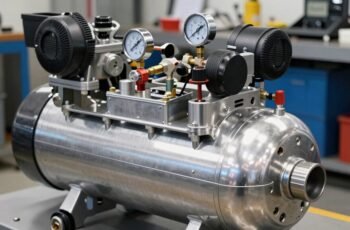
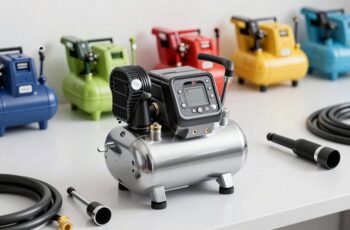
When selecting an air compressor for home use, it’s essential to evaluate units that balance power with portability. For most residential applications, reciprocating piston compressors are ideal due to their reliability and straightforward maintenance. They efficiently handle tasks like inflating tires, powering pneumatic tools, and small-scale spraying. Scroll and rotary screw compressors are typically overpowered and less portable, making them less suitable for home environments. Portable models, such as tank-style reciprocating compressors, offer a compact design with sufficient CFM (cubic feet per minute) output for common household needs. Additionally, oil-free units are preferable for indoor use, reducing maintenance and eliminating oil contamination risks. Ultimately, selecting a type that aligns with your specific projects guarantees optimal performance and ease of use.
How to Determine the Right Size and Power for Your Projects
Selecting the appropriate size and power for your air compressor depends on accurately evaluating the scope of your intended projects. To do this effectively, consider both airflow requirements and power capacity. Larger tools demand higher CFM (cubic feet per minute) and PSI (pounds per square inch). Use the table below to match project types with compressor specifications:
| Project Type | CFM Needed | PSI Needed | Recommended Size |
|---|---|---|---|
| Nail Guns | 2-4 | 90-100 | 6-8 Gallon, 2-4 CFM |
| Spray Painting | 4-6 | 70-90 | 10-20 Gallon, 6-10 CFM |
| Inflating Tires | 0.5-1 | 80-100 | 3-6 Gallon, 1-2 CFM |
| Sanding & Grinding | 6-8 | 90-120 | 20+ Gallon, 8+ CFM |
| General Use | 3-5 | 90-100 | 10 Gallon, 4-6 CFM |
Matching compressor specs to your projects guarantees efficiency and avoids over- or under-powering.
Key Features to Consider When Choosing an Air Compressor
Choosing the right air compressor involves evaluating several key features that directly impact performance, durability, and usability. First, consider CFM (cubic feet per minute) ratings, which determine airflow capacity and influence how efficiently the compressor can operate tools. PSI (pounds per square inch) indicates maximum pressure, essential for matching compressor output with tool requirements. We also assess tank size; larger tanks provide continuous airflow and reduce cycle frequency, extending compressor lifespan. Motor horsepower affects startup power and overall efficiency. Additionally, look at compressor type—reciprocating or rotary—each offering distinct advantages in maintenance and noise levels. Finally, evaluate portability features such as weight and wheels for ease of transport, ensuring the compressor aligns with your specific application and workspace constraints.
Setting a Budget: Finding Quality Within Your Price Range
Establishing a realistic budget is essential for acquiring a high-quality air compressor that satisfies your needs without overspending. To optimize your investment, focus on balancing features and durability within your price range. Prioritize key specifications like CFM (cubic feet per minute) and PSI (pounds per square inch), aligning them with your intended applications. Consider the following table to identify where your budget can meet quality expectations:
| Price Range | Expected Features & Quality |
|---|---|
| $100–$200 | Basic models, limited durability, lower CFM and PSI |
| $200–$400 | Moderate durability, better performance, more features |
| $400–$800 | Higher quality, increased CFM and PSI, longer lifespan |
| $800–$1500 | Professional-grade, advanced features, robust construction |
| $1500+ | Commercial-grade, top-tier performance, extended warranty |
This framework helps guarantee your investment aligns with your project requirements and long-term reliability.
Tips for Maintaining Your Air Compressor to Ensure Longevity
Regular maintenance is essential to guarantee your air compressor operates efficiently and reaches its full lifespan. We recommend regularly inspecting the air filter and replacing it when dirty to prevent dust buildup that hampers performance. Drain moisture from the tank daily to prevent corrosion, which can lead to tank failure. Check and tighten all connections and fasteners to avoid air leaks that reduce efficiency. Lubricate moving parts according to manufacturer specifications to minimize wear and tear. Monitor pressure gauges and safety valves to ensure proper operation and safety. Conduct periodic inspection of belts and pulleys for signs of wear, replacing them as needed. Consistent maintenance not only prolongs your compressor’s life but also optimizes performance and safety.
Frequently Asked Questions
How Loud Are Different Types of Home Air Compressors During Operation?
Different home air compressors produce varying noise levels: piston models often reach 80-90 dB, while scroll and rotary screw compressors tend to operate quieter at around 60-70 dB; we recommend choosing based on noise sensitivity and space.
Can I Use a Portable Air Compressor for Heavy-Duty Projects?
Yes, you can use a portable air compressor for heavy-duty projects if it has sufficient CFM and PSI ratings. We recommend verifying its specifications against your project’s demands, ensuring it can handle continuous high-pressure tasks effectively.
What Safety Precautions Should I Follow When Operating an Air Compressor?
We prioritize safety by wearing protective gear, guaranteeing proper ventilation, checking for leaks, and following manufacturer instructions precisely. Regular maintenance and proper training are essential to prevent accidents and ensure efficient, safe operation of the air compressor.
How Energy-Efficient Are Various Home Air Compressor Models?
Think of energy efficiency as a finely tuned engine—some models sip power like a gentle breeze, while others gulp like a storm. We find that inverter and oil-lubricated compressors often maximize efficiency, reducing operational costs considerably.
Are There Eco-Friendly or Low-Emission Air Compressors Available?
Yes, eco-friendly and low-emission air compressors are available, featuring advanced motor technologies, energy-efficient designs, and reduced emissions, making them suitable for environmentally conscious users seeking sustainable operation in residential settings.
Conclusion
As we navigate the domain of air compressors, remember that choosing the right tool is akin to selecting a trusted steed—precision, reliability, and purpose matter. By understanding your needs and maintaining your equipment diligently, we guarantee it serves us well, much like a craftsman’s enduring legacy. In the end, a well-chosen compressor is not just a purchase but an investment in mastery, echoing the timeless pursuit of craftsmanship and excellence.