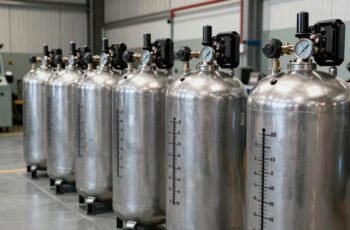
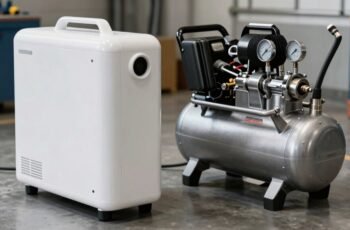
Like a well-tuned engine, selecting the right reciprocating air compressor requires careful analysis of numerous technical factors that directly impact performance and cost-efficiency. We recognize the importance of a precise match between compressor specifications and operational needs, which is why a systematic approach is essential. To navigate this complex landscape, it’s critical to take into account the mechanics, types, and maintenance practices involved—details that can mean the difference between ideal performance and costly oversights.
Key Takeaways
- Understand compressor types (open, hermetic, semi-hermetic) and select based on maintenance, safety, and operational needs.
- Assess pressure (PSI) and flow (CFM) requirements to match your application’s peak and continuous air demands.
- Consider key features like horsepower, tank capacity, and maximum PSI for optimal performance and compatibility.
- Prioritize regular maintenance practices such as oil checks, filter cleaning, and moisture drainage to extend compressor lifespan.
- Evaluate power needs and ease of maintenance access during purchase to ensure long-term efficiency and cost savings.
What Is a Reciprocating Air Compressor and How Does It Work?
A reciprocating air compressor is a mechanical device that uses pistons driven by a crankshaft to compress air. Within its cylinders, pistons move in a reciprocating motion, drawing in atmospheric air during the intake stroke and compressing it during the compression stroke. This process occurs in repeating cycles, regulated by the crankshaft’s rotation, which converts rotary motion into linear piston movement. The compressed air is then discharged through a valve into a storage tank or directly to the application. The device’s efficiency depends on precise piston sealing, cylinder design, and the control of intake and exhaust valves. This mechanism allows for high-pressure output and variable flow rates, making reciprocating compressors suitable for a range of industrial applications requiring reliable, controlled compressed air.
Key Factors to Consider When Choosing a Reciprocating Air Compressor
When selecting a reciprocating air compressor, we must evaluate its power and pressure capabilities to meet specific operational demands. Additionally, size and portability influence setup flexibility, while maintenance requirements and durability determine long-term reliability. These factors collectively guarantee the compressor’s suitability for your application.
Power and Pressure Capabilities
Understanding the power and pressure capabilities of a reciprocating air compressor is essential for selecting the right model for your needs. Power, typically measured in horsepower (HP), determines the compressor’s ability to sustain continuous operation and handle high-demand tasks. Pressure, expressed in pounds per square inch (PSI), indicates the maximum air pressure the unit can generate, directly affecting its suitability for specific applications. To optimize performance, consider the compressor’s duty cycle and the required CFM (cubic feet per minute) at a given PSI, ensuring it meets your operational demands. Precise matching of power and pressure capabilities prevents equipment overload and guarantees consistent air supply. Analyzing these factors allows us to select a compressor that balances efficiency, durability, and capacity for your intended tasks.
Size and Portability
Selecting the appropriate size and ensuring portability are critical factors in choosing a reciprocating air compressor that aligns with your operational needs. Size impacts capacity, runtime, and space requirements, while portability affects deployment flexibility and ease of transport. For stationary applications, larger units with higher CFM ratings are suitable, whereas portable units benefit from compact, lightweight designs. Consider the following:
| Aspect | Details |
|---|---|
| Size | Determines airflow capacity and footprint |
| Portability | Influences mobility and setup efficiency |
Maintenance and Durability
Maintenance and durability are fundamental considerations because they directly influence the compressor’s operational lifespan and total cost of ownership. A robust design minimizes wear on critical components such as pistons, cylinders, and valves, reducing downtime and repair costs. Regular maintenance, including oil changes, filter replacements, and inspection of moving parts, guarantees peak performance and prevents catastrophic failures. Durability also depends on material quality—high-grade cast iron or steel parts resist corrosion and fatigue better over time. Additionally, compressors with accessible maintenance points streamline servicing procedures, saving time and labor costs. Investing in a unit with proven durability and straightforward maintenance protocols enhances reliability, maximizes uptime, and ultimately lowers long-term operational expenses.
Understanding Different Types of Reciprocating Compressors
Reciprocating compressors come in several distinct configurations, each optimized for specific operational requirements. These include open, hermetic, and semi-hermetic designs, which differ primarily in accessibility and containment. Open compressors enable easy maintenance but expose components to ambient conditions, increasing vulnerability. Hermetic models are sealed, enhancing reliability but complicating repairs. Semi-hermetic units strike a balance, allowing maintenance without full disassembly. Selecting the right type impacts efficiency, lifespan, and operational safety. Considerations include:
Choosing the right reciprocating compressor design balances maintenance ease, reliability, and operational safety.
- Ease of maintenance that minimizes downtime
- Operational reliability under demanding conditions
- Cost efficiency in installation and repair
- Suitability for specific industrial applications
Understanding these variations helps optimize performance, reduce costs, and improve longevity, ensuring the compressor aligns with your operational needs.
How to Assess Your Air Pressure and Flow Requirements?
Determining your air pressure and flow requirements is a critical step in selecting the appropriate reciprocating air compressor, as it directly affects operational efficiency and system performance. To do this accurately, we analyze the specific demands of your applications, considering peak pressure needs and continuous airflow rates. Precise measurement of your tools’ or process’s required pressure (measured in PSI or bar) guarantees the compressor can meet those demands without over-pressurizing. Simultaneously, evaluating the CFM (cubic feet per minute) or m³/min flow rate necessary to sustain operations prevents undersizing, which causes pressure drops, or oversizing, which leads to unnecessary energy consumption. This assessment requires reviewing operational cycles, duty cycle, and future scalability to optimize compressor selection and ensure consistent, reliable performance.
Important Features and Specifications to Compare
When comparing reciprocating air compressors, focusing on key features and specifications guarantees we select equipment that aligns with operational demands. Critical parameters include horsepower, which determines overall power capacity, and cylinder size, impacting airflow efficiency. The motor’s RPM influences compressor speed and performance consistency. Additionally, the tank capacity affects runtime and pressure stability, while the maximum pressure (PSI) ensures the compressor meets specific operational thresholds.
- Horsepower: Ensures sufficient power for demanding tasks.
- Cylinder and bore size: Dictate airflow and efficiency.
- Tank capacity: Affects operational duration and pressure consistency.
- Maximum PSI: Confirms suitability for specific applications.
How to Determine the Best Size and Capacity for Your Needs?
Selecting the appropriate size and capacity for your air compressor hinges on accurately evaluating your operational requirements. To determine this, calculate your peak airflow demands in cubic feet per minute (CFM) and consider your maximum pressure needs in pounds per square inch (PSI). Assess the tools and machinery you’ll operate simultaneously, ensuring the compressor can sustain continuous, stable airflow without overloading. Factor in duty cycle—how frequently and for how long the compressor runs—and future expansion plans. Smaller units suffice for intermittent, light-duty tasks, while larger capacities are necessary for continuous, heavy-duty operations. Precise sizing minimizes energy consumption and reduces operational costs, ensuring ideal performance without undersizing or overspending on an underutilized unit.
Maintenance Tips to Ensure Longevity and Performance
Regular maintenance is essential to extending the lifespan and ensuring peak performance of your reciprocating air compressor. Consistent inspections and timely interventions prevent component wear and mitigate unexpected failures. Focus on these critical tasks:
Regular upkeep extends compressor life and maintains optimal performance through proactive inspections and timely repairs.
- Regularly check and replace oil to minimize friction and heat buildup.
- Inspect and clean air filters to maintain ideal airflow and prevent contamination.
- Drain moisture from the tank to avoid corrosion and pressure inconsistencies.
- Monitor and tighten bolts and connections to prevent leaks and mechanical failures.
Adhering strictly to these practices preserves operational efficiency, reduces downtime, and maintains energy efficiency. A disciplined maintenance routine allows early detection of potential issues, ultimately safeguarding your investment and ensuring reliable, long-term compressor performance.
Common Mistakes to Avoid When Buying a Reciprocating Air Compressor
One common mistake is neglecting to accurately assess power requirements, which can lead to underperformance or unnecessary energy costs. Additionally, overlooking maintenance needs during the purchasing process may result in higher long-term expenses and reduced compressor lifespan. Addressing these factors guarantees a more reliable and cost-effective investment.
Overlooking Power Requirements
Missing or underestimating the power requirements is a common mistake that can severely impact compressor performance and longevity. If the compressor is undersized, it will struggle to meet demand, causing frequent cycling and increased wear. Conversely, oversizing results in unnecessary energy consumption and higher operational costs. To avoid this, accurately assess your airflow needs and match them to the compressor’s power rating. Consider peak demand periods and future expansion plans to guarantee the power supply can sustain continuous operation.
- Risk of equipment failure due to insufficient power delivery
- Excess energy costs from oversized units
- Reduced operational efficiency and productivity
- Premature wear and costly downtime
Ignoring Maintenance Needs
Neglecting maintenance needs during the purchasing process can lead to significant operational challenges and increased costs down the line. When evaluating compressors, it’s vital to consider ease of access to wear parts, lubrication requirements, and routine service intervals. Overlooking these factors may result in higher downtime, frequent repairs, and reduced equipment lifespan. Proper maintenance planning ensures reliable performance and helps avoid unexpected failures that could compromise safety or productivity. Analyzing compressor design for maintenance simplicity, availability of spare parts, and manufacturer support is essential. Failing to address these aspects at the outset can escalate operational costs and complicate long-term management. Consequently, understanding maintenance demands upfront enables better decision-making, ensuring the compressor remains efficient and cost-effective throughout its service life.
Frequently Asked Questions
What Is the Typical Lifespan of a Reciprocating Air Compressor?
Reciprocating air compressors typically last between 10 to 15 years with proper maintenance. We recommend regular inspections, timely part replacements, and adhering to manufacturer guidelines to maximize lifespan and guarantee consistent, efficient performance over time.
How Noisy Are Reciprocating Air Compressors During Operation?
Reciprocating air compressors are particularly noisy, typically producing sound levels between 80-100 decibels during operation. Their noise results from piston movement and vibrations, requiring soundproofing or enclosures for environments demanding quieter operation.
Are There Environmental Considerations When Choosing a Compressor?
Environmental considerations are critical; we evaluate energy efficiency, emissions, and noise levels, aiming to minimize our ecological footprint. Choosing eco-friendly lubricants and adhering to regulations guarantees responsible operation, reducing environmental impact and supporting sustainable practices.
What Safety Precautions Should I Follow When Operating One?
We recommend always wearing protective gear, inspecting equipment regularly, ensuring proper ventilation, and following manufacturer guidelines. Keep emergency shut-offs accessible, monitor for leaks, and avoid overloading to prevent accidents and maintain safe operation of reciprocating air compressors.
Can Reciprocating Compressors Be Used for Continuous Industrial Use?
Reciprocating compressors can be used continuously in industrial settings when properly maintained and equipped with cooling systems. They function like well-oiled machines, providing reliable, precise air flow, but require diligent monitoring to prevent overheating and wear.
Conclusion
In summary, selecting the right reciprocating air compressor is essential for optimizing your operations and avoiding costly mistakes. By thoroughly understanding your pressure, flow, and capacity needs, and prioritizing proper maintenance, we guarantee peak performance and longevity. Remember, a well-chosen compressor can be the difference between a minor tool and an unstoppable force of productivity—like a lightning bolt in your workshop. Make informed decisions, and your investment will power your success for years to come.