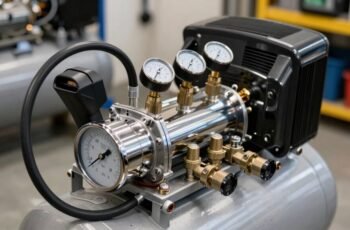
Imagine a stream of compressed air flowing through your system, carrying invisible moisture that can quietly cause corrosion and damage over time. To prevent this, understanding the role of an air compressor moisture filter is essential. These filters are critical in maintaining system integrity, yet selecting and maintaining the right one can be complex. Let’s explore how these devices work and how you can optimize their performance to protect your equipment effectively.
Key Takeaways
- Understand different types of moisture filters (coalescing, desiccant, membrane) and their suitable applications.
- Learn how moisture filters operate to remove water vapor and droplets from compressed air.
- Know key features to consider, such as flow rate, filtration efficiency, and ease of maintenance.
- Follow proper installation, regular inspection, and maintenance practices to extend filter lifespan.
- Recognize signs indicating when to replace or upgrade filters to maintain optimal system performance.
What Is an Air Compressor Moisture Filter and Why Do You Need One?
An air compressor moisture filter is a device designed to remove excess water vapor from compressed air, guaranteeing the air delivered is dry and free of moisture. Moisture in compressed air can cause corrosion, damage equipment, and compromise product quality. These filters typically contain desiccant materials or coalescing elements that trap water droplets and vapor molecules effectively. They are essential in applications requiring high-purity air, such as medical, manufacturing, and pneumatic systems. Without proper filtration, moisture accumulation leads to rust and microbial growth, reducing compressor efficiency and lifespan. Installing a moisture filter helps maintain ideal operating conditions, prevents costly downtime, and ensures consistent, reliable performance. To conclude, these filters are critical components for preserving equipment integrity and ensuring air quality standards.
How Do Moisture Filters Work to Keep Your Air Dry?
Moisture filters operate by employing specialized media to effectively separate water vapor and liquid droplets from compressed air. These filters typically utilize adsorption, absorption, or mechanical filtration processes to remove moisture. Adsorption filters contain desiccant materials—such as silica gel or activated alumina—that attract and hold water molecules on their surface, reducing humidity levels in the air. Mechanical filters, like coalescing filters, utilize dense fibrous media to coalesce fine water droplets into larger ones, which can then be drained away. Absorption filters rely on materials that chemically bind water vapor, trapping moisture within their structure. Each mechanism targets moisture at different stages, ensuring the compressed air remains dry and suitable for sensitive applications, thereby preventing corrosion, equipment damage, and compromised product quality.
Types of Moisture Filters: Which One Is Right for Your Air Compressor?
Choosing the right moisture filter depends on the specific requirements of your compressed air system and the nature of your application. There are several types of moisture filters, each designed for different conditions. Coalescing filters effectively remove aerosols and fine water droplets through centrifugal separation, suitable for general industrial use. Desiccant filters utilize silica gel or molecular sieve materials to absorb moisture, ideal for applications requiring extremely dry air. Membrane filters use selective permeable materials to block water vapor, often employed in specialized environments. Each type varies in capacity, efficiency, and maintenance needs. Selecting the appropriate filter involves evaluating operating pressure, flow rate, and dew point requirements. Proper matching ensures ideal performance, system longevity, and compliance with air quality standards.
Key Features to Consider When Choosing a Moisture Filter
Selecting the right moisture filter requires a careful assessment of several key features that influence performance and suitability. First, consider filtration efficiency—look for filters with high removal rates for water vapor and particulates, ensuring superior air quality. Next, evaluate flow rate capacity to match your compressor’s operating pressure and volume; undersized filters can cause pressure drops and inefficiency. Durability and material quality are also critical; corrosion-resistant housings and reliable sealing prevent leaks and prolong lifespan. Compatibility with existing systems, including connection sizes and pressure ratings, ensures seamless integration. Finally, consider maintenance requirements, favoring filters with easy-to-access elements or visual indicators for service intervals. These features collectively determine the filter’s effectiveness and longevity in maintaining superior compressor operation.
Installing and Maintaining Your Air Compressor Moisture Filter
Proper installation and regular maintenance are essential to guarantee your air compressor moisture filter functions effectively and lasts as long as possible. Begin by ensuring the filter is compatible with your compressor model, then follow the manufacturer’s instructions for mounting, typically involving securing the filter in a vertical orientation to facilitate drainage. Tighten fittings to prevent leaks without overtightening, which could damage components. Regularly inspect the filter for debris buildup and clean or replace it according to the specified schedule—usually after a set number of operating hours or when airflow diminishes. Use appropriate tools to disconnect and service the filter, ensuring seals are intact during reassembly. Consistent maintenance preserves filtration efficiency and prevents moisture-related damage to downstream equipment.
Common Signs That Your Moisture Filter Needs Replacement
Over time, signs may emerge indicating that your moisture filter is no longer performing effectively. Recognizing these indicators helps prevent system damage and guarantees ideal compressor operation.
- Increased moisture in output air, leading to corrosion or equipment malfunction.
- Visible dirt or debris accumulation within the filter element, reducing filtration efficiency.
- Decreased airflow pressure, indicating clogged or saturated filtration media.
- Unusual noise or vibrations from the compressor, often caused by increased backpressure due to filter restriction.
Monitoring these signs allows for timely replacement, maintaining system integrity and performance. Regular inspection of the filter for these symptoms is essential for guaranteeing reliable, high-quality compressed air.
Troubleshooting: What to Do When Your Moisture Filter Isn’t Working Properly?
When your moisture filter isn’t functioning correctly, the first step is to check for blockages that may impede airflow. Next, inspect the filter components for signs of wear or damage, replacing any worn parts to restore proper operation. Addressing these issues promptly guarantees peak moisture removal and compressor performance.
Check For Blockages
Blockages in your moisture filter can substantially impair its ability to remove moisture effectively. To diagnose potential obstructions, follow a systematic inspection process:
- Visual Inspection: Examine the filter element for visible debris, sediment, or mineral deposits that may obstruct airflow.
- Pressure Differential Check: Measure pressure before and after the filter; a significant drop indicates a blockage.
- Flow Rate Assessment: Verify that airflow rates align with manufacturer specifications; reduced flow suggests internal obstructions.
- Disassembly and Cleaning: Carefully disassemble the filter housing; clean or replace components if buildup or debris is detected.
Accurate identification and removal of blockages guarantee maximum moisture separation and prevent compressor damage. Regular checks are essential to maintain filter efficiency and system longevity.
Replace Worn Components
Worn or damaged components within your moisture filter can considerably compromise its ability to remove moisture effectively. To restore peak performance, inspect critical parts such as O-rings, seals, and filter media for signs of deterioration or breakage. Replace any cracked or worn seals to prevent air leaks, which can allow unfiltered moisture to pass through. Similarly, exhausted or clogged filter media should be swapped out with manufacturer-recommended replacements to ensure proper moisture absorption. It’s crucial to follow the specified replacement intervals and use compatible parts to maintain system integrity. Regularly maintaining and replacing these components prevents moisture bypass, reduces pressure drops, and extends the lifespan of your compressor system. Proper component replacement is indispensable for consistent, reliable filtration performance.
Benefits of Using a Moisture Filter for Your Air Tools and Equipment
Using a moisture filter considerably extends the lifespan of air tools and equipment by preventing corrosion and internal damage caused by moisture. It also maintains ideal performance levels by ensuring dry, clean compressed air reaches the tools. Implementing a moisture filter is a critical step in preserving equipment efficiency and reducing maintenance costs.
Protects Equipment Longevity
Implementing a moisture filter in your air compressor system considerably extends the lifespan of your tools and equipment. By removing moisture and contaminants, filters prevent corrosion, rust, and internal damage. This proactive maintenance reduces the risk of sudden failures and costly repairs. Specifically, moisture filters:
- Minimize corrosion of internal components, preserving structural integrity.
- Prevent rust formation on sensitive surfaces, maintaining operational efficiency.
- Limit the accumulation of moisture-induced debris that can clog or impair moving parts.
- Reduce the frequency of maintenance interventions, maximizing operational uptime.
These benefits collectively ensure that your equipment endures longer, operates reliably, and maintains peak performance over time. Proper filtration is a critical component of preventative maintenance strategies for any compressed air system.
Ensures Optimal Performance
By effectively removing moisture from the compressed air supply, a moisture filter guarantees that your air tools and equipment operate at peak performance levels. Moisture in the air can cause corrosion, reduce lubrication efficiency, and lead to inconsistent operation. A high-quality filter ensures dry, clean air reaches your tools, minimizing the risk of internal damage and preventing performance degradation over time. This stability translates to consistent tool output, precise finishes, and reduced maintenance needs. Additionally, eliminating moisture prevents the formation of ice in pneumatic systems, ensuring smooth operation in cold environments. Overall, using a moisture filter optimizes the efficiency, dependability, and lifespan of your air tools and equipment, resulting in improved productivity and reduced downtime.
Tips for Extending the Life of Your Moisture Filter
To maximize the lifespan of your moisture filter, regular maintenance and proper usage are essential. Consistent inspection guarantees early detection of clogging or damage. Proper installation aligned with manufacturer specifications prevents undue stress on components. Controlling inlet pressure within recommended limits reduces strain and prolongs filter efficacy. Additionally, scheduling routine draining of accumulated moisture prevents saturation that can degrade filter media.
- Conduct periodic visual inspections for contamination or damage.
- Make certain correct installation according to manufacturer guidelines.
- Maintain inlet pressure within specified parameters.
- Regularly drain collected moisture to prevent saturation.
When to Upgrade or Replace Your Air Compressor Moisture Filter
Understanding when to upgrade or replace your air compressor moisture filter is essential for maintaining maximum system performance. Typically, replacement is necessary when pressure drop across the filter exceeds manufacturer specifications, indicating clogging or saturation. Visual inspection should reveal accumulated moisture, dirt, or particulate buildup that reduces filtration efficiency. Additionally, if you notice a decline in compressed air quality or increased pressure loss, it’s a clear sign to replace the filter. Manufacturers often recommend replacement intervals; however, operating conditions like humidity levels and usage frequency can necessitate more frequent changes. Using worn or saturated filters risks system damage, reduced compressor lifespan, and compromised air quality. Regular monitoring and adherence to maintenance schedules ensure the filter functions correctly, safeguarding overall system integrity.
Frequently Asked Questions
Can Moisture Filters Eliminate All Humidity From Compressed Air?
Moisture filters can’t eliminate all humidity from compressed air, but they substantially reduce water vapor levels. We recommend combining filters with other drying methods for ideal results, ensuring cleaner, drier air suitable for sensitive equipment and processes.
Are Moisture Filters Compatible With All Types of Air Compressors?
Moisture filters are like universal keys, compatible with most air compressors. However, we recommend verifying specific model requirements, as compatibility depends on connection sizes and pressure ratings, ensuring peak performance and avoiding potential system damage.
How Often Should I Test My Compressed Air for Moisture?
We recommend testing your compressed air for moisture weekly, especially in humid environments. Regular testing guarantees ideal system performance, prevents corrosion, and maintains air quality; use a reliable moisture analyzer or chemical test kits for accurate results.
Do Moisture Filters Affect the Overall Air Pressure?
Moisture filters act like a sieve, gently reducing pressure slightly as air passes through. They’re designed to minimize moisture without substantially impacting overall pressure, ensuring ideal compressor performance and consistent, dry air output.
Can I Use a Moisture Filter With Oil-Lubricated Compressors?
Yes, you can use a moisture filter with oil-lubricated compressors; it helps remove excess moisture effectively. Make sure compatibility with your compressor model, as some filters may require specific installation procedures to maintain ideal performance and prevent oil contamination.
Conclusion
In summary, maintaining a properly functioning moisture filter is essential for preserving your equipment’s longevity and performance. Regular inspections, timely replacements, and choosing the right filter type guarantee ideal results. Remember, an ounce of prevention is worth a pound of cure; staying proactive with your moisture management minimizes costly downtime. By following best practices, we can keep our systems dry, efficient, and reliable—protecting our investment and ensuring smooth operation for years to come.