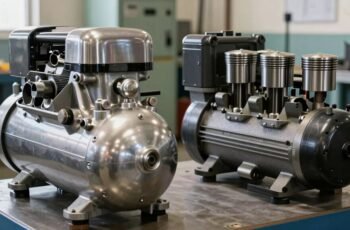
Imagine you’re inflating tires on-site or powering a small construction project—these scenarios highlight the practical differences between portable and stationary air compressors. We recognize that choosing the right type involves analyzing capacity, mobility, and operational costs. With each option offering distinct advantages, it’s critical to evaluate your specific needs. Exploring these differences in detail can help determine which compressor aligns best with your operational demands and long-term efficiency.
Key Takeaways
- Portable compressors are lightweight and mobile, ideal for quick setup and multiple job sites; stationary compressors are larger and fixed for continuous use.
- Portable units rely on electric or small combustion engines, while stationary ones typically use high-capacity electric motors.
- Stationary compressors offer higher CFM and PSI for heavy-duty industrial tasks; portable models are suitable for light, intermittent jobs.
- Portable compressors are more affordable upfront but may have higher maintenance costs; stationary units require larger investments but are more durable long-term.
- Use portable compressors for flexibility and convenience; stationary compressors are best for long-term, high-volume, demanding applications.
What Are Portable and Stationary Air Compressors?
While both portable and stationary air compressors serve the fundamental purpose of generating compressed air, they are designed with distinct structural and functional characteristics. Portable compressors are compact, lightweight, and equipped with wheels or handles for easy mobility, making them ideal for temporary or on-site tasks. They typically feature smaller tanks and lower power outputs, tailored for convenience rather than continuous use. In contrast, stationary compressors are larger, more robust, and permanently installed in a fixed location. They incorporate larger tanks and higher horsepower motors, enabling sustained operation and greater airflow capacity. Stationary units are built for industrial or long-term applications, emphasizing durability and efficiency. Understanding these fundamental differences in design helps clarify their respective roles and best usage scenarios.
Key Differences in Design and Construction
The design and construction of portable and stationary compressors differ considerably in terms of size, structural durability, and power sources. Portable units prioritize lightweight, compact structures with reinforced frames for mobility, while stationary models emphasize robust construction for long-term stability. Additionally, their power sources vary, with portable options often relying on batteries or small engines, whereas stationary compressors typically connect to higher-capacity power supplies.
Portability and Size
Portable air compressors are designed with a focus on compactness and lightweight construction, enabling easy movement and deployment across various job sites. Their small size is achieved through integrated components and minimized framing, reducing overall footprint. This design facilitates quick setup and portability, often incorporating handles or wheels for effortless transportation. In contrast, stationary compressors prioritize structural stability and capacity over size, often featuring larger frames and heavier materials that limit mobility. The size disparity directly impacts operational flexibility: portable units excel in dynamic environments requiring frequent relocation, while stationary models suit fixed locations demanding higher throughput. Hence, the core distinction lies in the balance between size reduction for mobility and structural robustness for sustained heavy-duty use.
Structural Durability Features
Due to their emphasis on mobility, portable air compressors incorporate lightweight materials and simplified structural components that may compromise long-term durability under heavy use. These units often feature thinner metal casings and minimal reinforcement to reduce weight, which can lead to faster wear and potential structural failure when subjected to continuous or high-pressure demands. In contrast, stationary compressors are constructed with more robust materials, such as heavy-gauge steel and reinforced frames, designed to withstand prolonged operational stress. Their structural design prioritizes rigidity and stability, minimizing vibrations and deformation over time. Consequently, while portable models excel in ease of transport, their structural features tend to limit durability under rigorous conditions, whereas stationary compressors are engineered for resilience and long-term reliability in fixed installations.
Power Source Variations
How do the power sources of portable and stationary air compressors influence their design and construction? Portable units typically rely on electric motors or internal combustion engines, making them lightweight and adaptable for various environments. Stationary compressors, however, are usually powered by higher-capacity electric motors or direct-drive systems, emphasizing stability and durability. These differences shape their construction: portability demands compactness and integrated power sources, while stationary units prioritize robust frames and secure mounting.
| Power Source | Design Implication |
|---|---|
| Electric | Lightweight, easy to move, suited for variable sites |
| Internal Combustion | More power, independent of external electricity |
| Stationary Electric | Heavy-duty, fixed installation, high capacity |
When to Choose a Portable Air Compressor for Your Projects
When evaluating the suitability of a portable air compressor for your projects, consider the scope and mobility requirements first. Portable compressors excel in situations demanding frequent movement across different job sites or confined spaces where stationary units are impractical. They are ideal for tasks that require intermittent use, such as inflating tires, powering hand tools, or small-scale spray painting. Additionally, their compact design allows for quick setup and transportation, saving time and reducing logistical complexity. However, they typically have lower CFM (cubic feet per minute) output compared to stationary models, limiting their use for continuous heavy-duty applications. Consequently, if your work involves multiple locations, short-term projects, or space constraints, a portable compressor offers the versatility and convenience necessary for efficient task execution.
Why a Stationary Air Compressor Might Be Better for Your Workshop
While portability is advantageous for job sites and intermittent tasks, a stationary air compressor offers distinct benefits for a workshop environment. Stationary units typically provide higher CFM and PSI ratings, supporting continuous operation and multiple tools simultaneously without performance drops. Their larger tanks enable longer runtime and more stable pressure, reducing the frequency of cycles and wear on the motor. The fixed setup allows for better integration with workshop infrastructure, such as dedicated electrical circuits and ventilation, enhancing reliability and safety. Additionally, stationary compressors tend to have more durable components designed for heavy-duty use, resulting in increased longevity and lower maintenance over time. These factors make stationary compressors a practical, efficient choice for a workshop where consistent, high-capacity air supply is essential.
Comparing Power and Capacity: Which Meets Heavy-Duty Needs?
Choosing the right compressor for heavy-duty applications hinges on understanding the differences in power output and capacity. Stationary compressors generally deliver higher PSI and CFM ratings, making them suitable for demanding tasks. To compare effectively:
Stationary compressors excel in power, capacity, and durability for heavy-duty industrial applications.
- Power Output: Stationary units typically have motors between 5-20 HP, offering sustained high-pressure performance.
- Capacity: They provide greater tank volumes, often exceeding 80 gallons, ensuring longer continuous operation.
- Flow Rate: Stationary compressors deliver higher CFM, supporting multiple tools simultaneously without loss of pressure.
- Durability: Built for continuous use, they incorporate robust components designed for heavy workloads.
These features make stationary compressors more capable of meeting the rigorous demands of industrial or large-scale workshop environments.
Mobility and Convenience: How Portables Keep You Flexible
Portable air compressors excel in mobility, making them easy to transport across various job sites and locations. Their versatility allows for multiple applications, from inflating tires to powering pneumatic tools, especially in remote or off-grid settings. This flexibility enhances operational efficiency by enabling quick deployment where stationary units are impractical.
Easy To Transport
One of the primary advantages of portable air compressors is their ease of transportation, which enhances operational flexibility across various job sites. Their compact design and lightweight construction allow for quick deployment and repositioning. Key factors include:
- Size and Weight – Smaller dimensions facilitate maneuverability through tight spaces and reduce fatigue during handling.
- Wheels and Handles – Integrated features enable effortless mobility over uneven terrain and long distances.
- Power Supply Flexibility – Many portables operate on standard electrical outlets or batteries, eliminating dependency on fixed power sources.
- Quick Setup – Minimal assembly and connection time ensure rapid transition between tasks, maximizing productivity.
This combination of features ensures portables are inherently more adaptable in dynamic work environments, emphasizing their transportability as a core benefit.
Versatile Usage Options
Because of their compact design and lightweight build, portable air compressors offer exceptional versatility in various operational contexts. Their mobility allows for rapid deployment across multiple job sites, reducing setup time and enabling quick adjustments to changing project requirements. The ease of transport facilitates on-demand use in confined or hard-to-reach areas where stationary units would be impractical. Additionally, their straightforward connection to different tools and equipment enhances workflow efficiency, minimizing downtime. This adaptability extends to emergency repairs, construction sites, and maintenance tasks, where immediate access to compressed air is critical. By combining portability with reliable performance, these compressors provide a flexible solution that supports diverse applications, making them indispensable in dynamic work environments that demand operational agility.
Ideal For Remote Sites
When working in remote locations, the mobility and compact design of portable air compressors become essential assets. Their lightweight construction and ease of transport allow for quick deployment in challenging environments. Key advantages include:
- Flexibility: Portable units can be moved easily to different sites, reducing setup time.
- Accessibility: Small size enables operation in confined or uneven spaces where stationary units are impractical.
- Power Independence: Many portable compressors operate on standard electrical outlets or batteries, eliminating reliance on external power sources.
- Rapid Response: Immediate availability ensures minimal downtime, critical for remote operations requiring quick maintenance or repairs.
This combination of features enhances operational efficiency and ensures continuity in remote site tasks, making portables a superior choice for mobile, on-the-go applications.
Operating Costs and Maintenance Differences Between the Two Types
While portable air compressors often appear more cost-effective initially, their operating and maintenance expenses can be higher over time due to factors like limited durability and increased wear from frequent mobility. Portable units typically have smaller components, which may require more frequent repairs or replacements, raising maintenance costs. Additionally, their mobility features—such as wheels and handles—introduce mechanical stress, accelerating component fatigue. In contrast, stationary compressors generally benefit from robust construction and stable operation, resulting in lower maintenance frequency and longer service life. Operating costs for stationary models tend to be lower because of their energy efficiency and reduced wear. However, portable compressors may incur higher labor and repair expenses over time, offsetting their initial cost advantage.
Cost Considerations: Which Compressor Offers Better Value?
When evaluating cost, we consider initial purchase price, ongoing maintenance, and operating expenses to determine overall value. Portable and stationary compressors differ considerably in upfront costs and long-term affordability, impacting their suitability for various applications. Analyzing these factors helps identify which option provides the best return on investment over time.
Initial Purchase Price
The initial purchase price often serves as a primary factor in evaluating the overall value of a compressor, but it doesn’t tell the whole story. When comparing portable and stationary units, several cost considerations emerge:
- Upfront Investment: Portable compressors typically cost 30-50% less, making them accessible for smaller budgets.
- Size and Complexity: Stationary models involve higher initial costs due to larger components and installation requirements.
- Mobility vs. Permanence: Portables offer economic advantages for short-term or intermittent needs, whereas stationaries are a larger initial investment for continuous, heavy-duty use.
- Additional Costs: Stationary units often include installation and setup expenses that inflate the initial price.
Careful assessment of these factors clarifies which option offers better value initially, considering the scope of use and long-term needs.
Maintenance and Operating Costs
Have you considered how maintenance and operating costs impact the overall value of portable versus stationary air compressors? Portable units generally have lower initial costs but can incur higher ongoing expenses due to more frequent maintenance needs, such as filters, oil changes, and wear parts, driven by their frequent movement and exposure to varied environments. Stationary compressors, while often requiring a higher upfront investment, benefit from more robust construction and longer service intervals, reducing long-term maintenance costs. Operating costs for both depend on energy efficiency; stationary models typically feature larger, more efficient motors that consume less power over time. Ultimately, evaluating these costs requires analyzing not just purchase price but also the frequency and complexity of maintenance, as well as energy consumption patterns, to determine which offers better long-term value.
Long-Term Investment Value
Evaluating the long-term investment value of portable versus stationary air compressors involves analyzing more than just initial purchase prices; it requires a thorough evaluation of total cost of ownership over their operational lifespan.
Consider these key factors:
- Initial Cost: Stationary units generally have higher upfront prices due to size and complexity.
- Maintenance Expenses: Stationary compressors often incur lower maintenance costs per hour of operation.
- Operational Efficiency: Stationary models typically offer higher efficiency and longer service intervals, reducing downtime.
- Flexibility and Usage: Portable compressors may incur higher operational costs if frequently moved or used in multiple locations, impacting overall value.
Common Applications for Portable vs Stationary Compressors
When selecting between portable and stationary compressors, understanding their typical applications is crucial for ideal performance. Portable compressors excel in scenarios requiring mobility, such as construction sites, maintenance tasks, and remote repair operations, where quick setup and transport are essential. They are designed to deliver adequate airflow for tasks like pneumatic tool operation, tire inflation, and light manufacturing processes. Conversely, stationary compressors are optimized for continuous, high-demand environments such as manufacturing plants, automotive workshops, and large-scale industrial facilities. They provide higher CFM output and greater durability, supporting prolonged operation of heavy machinery and assembly lines. Recognizing these application differences ensures that users select the appropriate compressor type, maximizing efficiency while minimizing operational downtime and equipment wear.
Tips for Selecting the Right Air Compressor Based on Your Needs
Selecting the appropriate air compressor hinges on a clear understanding of your specific operational requirements and workload demands. To choose effectively, consider these factors:
Choosing the right air compressor depends on understanding your specific operational needs and workload demands.
- Flow Rate (CFM): Evaluate the volume of air needed for your tools and processes to ensure the compressor supplies sufficient airflow without overcapacity.
- Pressure Requirements (PSI): Identify the maximum pressure your applications require, selecting a model that can consistently meet or exceed this level.
- Mobility Needs: Determine if portability is essential—favor portable compressors for on-site tasks or stationary units for fixed workshop setups.
- Power Source Compatibility: Confirm power availability—electricity, gas, or diesel—to match your operational environment and guarantee reliable operation.
Analyzing these parameters ensures a suitable match between your workload and compressor capabilities.
Frequently Asked Questions
How Long Do Portable Air Compressors Typically Last?
Portable air compressors typically last between 3 to 10 years, depending on usage, maintenance, and build quality. Regular servicing and proper care can extend their lifespan, ensuring reliable performance for various tasks over time.
Can Stationary Compressors Be Moved if Needed?
Stationary compressors are generally designed for stability, but about 80% feature mobility options like wheels or casters. We find that, with proper equipment, they can be moved, though it’s often less convenient than portable units.
What Safety Features Are Common in Stationary Models?
Stationary models often include safety features like automatic shutoff, pressure relief valves, thermal overload protection, and grounded electrical systems. These features prevent overpressure, overheating, and electrical hazards, ensuring safe operation in industrial settings.
Are There Noise Level Differences Between Portable and Stationary Units?
Portable air compressors typically produce noise levels around 70-80 decibels, while stationary units often operate quieter at 60-70 decibels. We analyze this difference to optimize safety and comfort in various industrial and DIY applications.
How Do Energy Efficiency Compare Over Long-Term Use?
Over long-term use, stationary compressors generally offer better energy efficiency due to advanced motor designs and consistent operation, whereas portable units often consume more energy relative to their smaller capacity, making them less cost-effective for continuous, high-demand applications.
Conclusion
Choosing between a portable and stationary compressor ultimately depends on your specific application needs. While portable models excel in flexibility and ease of use for short-term tasks, they may not match the capacity of stationary units for demanding, continuous operations. However, for most small to medium projects, the initial investment in a portable compressor offers excellent value and convenience. We believe understanding your workload and operational environment is key to making the right, cost-effective choice.