When it comes to choosing a small gas air compressor, balancing space-saving design with powerful performance is essential. We understand how important it is for professionals and DIYers to find models that are portable yet reliable enough for demanding tasks. There are several top options on the market, each with unique features and advantages. Stay with us as we explore the best small gas air compressors that can meet your needs without taking up too much space.
Key Takeaways
- Compact designs with wheels and handles enhance portability and space-saving for small workspaces.
- Gas-powered models offer mobile, cordless operation suitable for remote or outdoor tasks.
- High performance with efficient CFM and PSI ratings ensures power without bulky equipment.
- Durable construction with cast iron components extends lifespan in demanding environments.
- Features like automatic shutdown and quick disconnects improve safety and ease of maintenance.
VEVOR 7HP Gas Air Compressor with 21-Gallon Tank
If you’re looking for a compact yet powerful gas air compressor that can handle extended tasks without sacrificing mobility, the VEVOR 7HP Gas Air Compressor with a 21-gallon tank is an excellent choice. It provides a steady, reliable air supply with dual outlets, allowing you to run two tools simultaneously and keep your workflow smooth. Its 7HP piston pump delivers 9 CFM at 115 PSI, meaning quick inflation in about three minutes. Built with durable cast iron components and featuring an automatic shutdown for safety, it’s designed for heavy-duty use. Plus, four wheels and a push handle make it easy to move around your worksite.
Best For: DIY enthusiasts, construction professionals, and mobile contractors needing a reliable, portable air compressor for extended use with dual-tool capabilities.
Pros:
- Provides continuous airflow with a 21-gallon tank and dual outlets for simultaneous tool operation
- Delivers powerful performance with a 7HP piston pump, 9 CFM at 115 PSI for quick inflation
- Durable construction with cast iron components and mobility features like wheels and a push handle
Cons:
- Heavier and bulkier compared to smaller portable compressors, which may require more effort to move
- Fuel-powered operation may produce emissions and noise, limiting indoor use
- Regular maintenance is necessary to ensure optimal performance and longevity
13HP Gas Air Compressor with Electric Start
The HPDMC 13HP Gas Air Compressor with Electric Start is ideal for heavy-duty tasks that demand reliable power and durability. It features a robust 13-horsepower gasoline engine with electric start, making it easy to operate in remote locations. The 30-gallon ASME tank provides a steady air supply, supporting up to 35 CFM and a maximum of 125 PSI. Built mainly from cast iron, it’s designed to withstand tough environments and guarantee longevity. Its portable construction allows for easy mounting on trucks or service vehicles. Perfect for industrial, construction, and maintenance applications, this compressor combines power, durability, and convenience.
Best For: contractors, industrial workers, and maintenance professionals needing a durable, portable air compressor for heavy-duty tasks in remote or demanding environments.
Pros:
- Powerful 13HP gasoline engine with electric start for easy operation in remote locations
- Robust 30-gallon ASME tank ensures consistent air supply and high-pressure safety
- Constructed mainly from durable cast iron for long-lasting performance and easy maintenance
Cons:
- Heavier and less portable compared to smaller air compressors, potentially requiring additional mounting or assistance
- May produce higher noise levels due to its heavy-duty design and engine size
- Limited to medium-volume air demand, not ideal for continuous high-volume applications
Metabo HPT Gas Air Compressor with Honda GX Engine
The Metabo HPT Gas Air Compressor with Honda GX engine stands out for its reliable performance and durable construction, making it ideal for professional contractors. Its 8-gallon tank and compression range from 116 to 145 PSI deliver consistent power for pneumatic tools like nailers and framing guns. Powered by a high-quality Honda GX engine, it guarantees dependable, long-lasting operation even under demanding conditions. The cast iron cylinder enhances durability and efficiency, while the integrated control panel protects gauges and regulators for easy use. Backed by a 1-year warranty, this compressor combines power, durability, and user-friendly design perfect for professional tasks.
Best For: professional contractors and tradespeople needing a reliable, durable gas-powered compressor for demanding pneumatic tasks.
Pros:
- Powerful 8-gallon tank with a wide compression range for consistent tool performance
- Powered by a dependable Honda GX engine ensuring long-lasting, efficient operation
- Durable cast iron cylinder enhances longevity and reduces maintenance
Cons:
- Heavier and less portable compared to smaller, electric compressors
- Requires fuel and regular engine maintenance, which may be inconvenient for some users
- Higher initial cost due to high-quality components and engine
DeWalt 4-Gallon Gas-Powered Oil-Free Air Compressor
Designed for portability and efficiency, the DeWalt 4-Gallon Gas-Powered Oil-Free Air Compressor features a robust Honda GX160 engine, making it ideal for construction sites and outdoor tasks where reliable power is vital. It delivers 6.9 SCFM at 40 psi and 5.0 SCFM at 90 psi, suitable for various pneumatic tools. Its low-maintenance, oil-free pump with direct drive simplifies operation and reduces upkeep. Equipped with a 1/4-inch regulator, pressure gauges, and quick coupler, it guarantees easy connections and efficient workflow. Its compact, portable design makes it perfect for rooftops, frameworks, or remote job sites.
Best For: DIY enthusiasts, construction professionals, and outdoor workers needing a portable, reliable air compressor for pneumatic tools on remote or job sites.
Pros:
- Compact and portable design ideal for outdoor and remote use
- Powerful Honda GX160 engine with efficient fuel consumption
- Low-maintenance, oil-free pump simplifies operation and reduces downtime
Cons:
- 4-gallon tank may limit continuous use for high-demand applications
- Slightly heavier than electric models, potentially harder to transport over long distances
- Gas-powered operation produces emissions and noise, which may be a concern in certain environments
Vevor 9-Gallon Gas Air Compressor with Wheels
If you need a portable compressor that combines high airflow with ease of mobility, the Vevor 9-Gallon Gas Air Compressor is an excellent choice. It features a 6.5HP piston pump delivering 9 CFM, quickly building air pressure in about 105 seconds. Twin tanks ensure stable, continuous airflow, supporting demanding tasks with minimal pressure drops. Equipped with large, smooth-rolling wheels and a push handle, it’s easy to move on job sites. Its fuel-efficient design with a 0.95-gallon tank offers extended runtime, making it ideal for outdoor work without power sources. Plus, it supports multiple pneumatic tools for versatile applications like tire inflation, auto repairs, and spray painting.
Best For: DIY enthusiasts, mobile contractors, and outdoor workers needing a reliable, portable air compressor for demanding pneumatic tasks without access to electrical power.
Pros:
- High airflow rate of 9 CFM supports multiple tools simultaneously
- Portable design with large wheels and push handle for easy mobility
- Fuel-efficient with extended runtime, ideal for outdoor use
Cons:
- Gas-powered operation may produce noise and emissions
- Requires regular refueling during prolonged use
- Heavy weight may be challenging to transport over rough terrain
6.5HP Gas Air Compressor with 18CFM and 9 Gal Tank
This 6.5HP gas air compressor is ideal for heavy-duty applications, thanks to its powerful engine and sizable 9-gallon tank. It delivers an impressive airflow of 18 CFM at 1090 rpm and a maximum pressure of around 115 PSI, making it suitable for demanding tasks. Its durable cast iron construction guarantees longevity, while the wheels and compact design enhance portability across job sites. Easy to operate with automatic start/stop controls, it can be mounted on trucks or service vehicles for added flexibility. Whether used in industrial, construction, or maintenance settings, this compressor provides reliable, high-capacity air supply wherever you need it.
Best For: professionals and contractors requiring a portable, high-capacity air compressor for heavy-duty industrial, construction, or maintenance tasks.
Pros:
- Powerful 6.5 HP gasoline engine with an airflow of 18 CFM for demanding applications.
- Durable cast iron construction ensures longevity and reliable performance.
- Portable with wheels and mountable design, ideal for use on trucks or service vehicles.
Cons:
- Heaviest at approximately 220 pounds, which may require assistance for transportation.
- Requires gasoline fuel, which involves additional handling and refueling.
- Larger size may be less suitable for small or indoor workspaces.
Ingersoll-Rand 5.5 HP 8-Gallon Gas Compressor
The Ingersoll-Rand 5.5 HP 8-Gallon Gas Compressor is ideal for those needing reliable, portable power in remote or jobsite locations. Its wheelbarrow-style design makes it easy to maneuver, while the cast iron twin tank guarantees durability. Powered by a 5.5 horsepower Honda engine, it delivers up to 135 psi and supports continuous operation, perfect for tools like nail guns, impact wrenches, and grinders. With features like a pressure switch, regulator, and quick disconnects, it allows multiple tools to run simultaneously. Weighing around 226 pounds, it’s built for demanding environments and offers dependable performance where electric power isn’t available.
Best For: DIY enthusiasts, contractors, and construction professionals needing portable, reliable air power in remote or jobsite locations.
Pros:
- Portable wheelbarrow-style design for easy maneuverability
- Durable cast iron twin tank construction for long-lasting use
- Supports continuous operation at up to 135 psi, suitable for multiple tools
Cons:
- Heavy weight of approximately 226 pounds may require assistance to transport
- Average customer rating of 3.9 out of 5 stars indicates some user dissatisfaction
- Limited to 8-gallon capacity, which may not be sufficient for high-demand applications
Factors to Consider When Choosing Small Gas Air Compressors
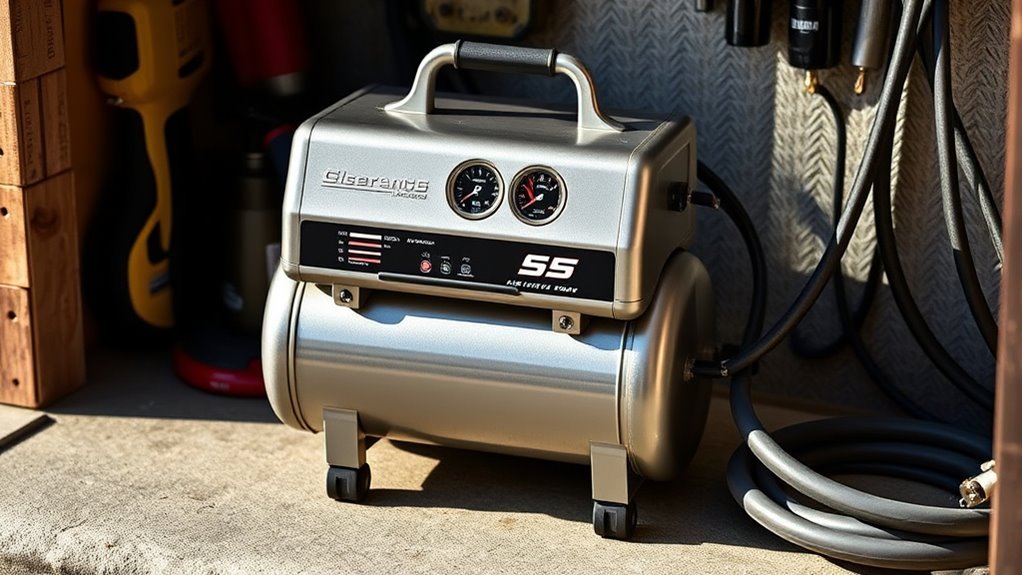
When choosing a small gas air compressor, we need to think about the balance between power and performance to match our tasks. It’s also important to take into account tank capacity for continuous use, along with portability for easy movement. Finally, we should evaluate durability features and noise levels to guarantee the compressor suits our working environment and needs.
Power and Performance
Choosing the right small gas air compressor depends heavily on its power and performance capabilities. The compressor’s horsepower (HP) mainly determines how much airflow and pressure it can generate, with higher HP units delivering more power. Performance metrics like CFM (cubic feet per minute) and PSI (pounds per square inch) are essential for ensuring the compressor can handle your pneumatic tools efficiently. The engine type, such as Honda GX or impact piston pumps, influences both power output and durability over time. Additionally, the operating pressure range, typically between 115 and 145 PSI, must match your specific application needs. While tank size affects continuous airflow, for power and performance, these factors—horsepower, airflow, pressure, and engine quality—are key to selecting a reliable, capable compressor.
Tank Capacity Needs
Selecting the right tank capacity for a small gas air compressor depends largely on your specific project requirements and the tools you’ll be using. Smaller compressors typically have tanks from 4 to 21 gallons, impacting their ability to support continuous operation. For light to moderate tasks like nail gun work or tire inflation, a tank size of around 6 to 9 gallons should suffice. If you’re tackling heavy-duty jobs or longer projects, opting for tanks of 13 gallons or more can help reduce refilling frequency. Keep in mind, larger tanks generally mean less portability, but they provide longer runtime. Ultimately, choosing the right tank capacity hinges on understanding your airflow needs and how long you need your compressor to run without interruption.
Portability and Mobility
Ever wondered how easy it is to move a small gas air compressor around a busy job site? These compressors are built with features like wheels and handles that make transportation straightforward. Their compact size and lightweight design let us position them quickly with minimal effort, saving time and reducing fatigue. Many models include foldable handles and durable wheels, enhancing portability for outdoor or remote work sites. Because they’re gas-powered, they don’t rely on external power sources, giving us the freedom to operate anywhere electricity isn’t available. Plus, sturdy frames and stable bases ensure they can withstand rough handling and movement without damage. Overall, these design elements make small gas air compressors highly portable, ideal for keeping work flowing smoothly across various locations.
Durability Features
When evaluating small gas air compressors, durability is a key factor that can substantially impact their longevity and performance. Durable units typically feature cast iron cylinders and frames, which resist wear and extend the lifespan of the equipment. High-quality materials like cast iron also help the compressor withstand demanding industrial environments and harsh conditions. Automatic shutdown mechanisms are essential, protecting the compressor from damage caused by low oil levels or overheating, ensuring long-term reliability. Reinforced components such as cast iron pump heads and cylinder sleeves provide resistance to corrosion and mechanical stress, maintaining consistent performance over time. Additionally, sturdy wheels and frames enable the compressor to endure frequent transport and rough handling without compromising structural integrity, making durability a fundamental consideration in your selection process.
Noise Levels Consideration
Durability features guarantee that small gas air compressors can withstand tough conditions and last longer, but their noise levels also play a significant role in overall usability. Lower noise levels are essential for maintaining a safe, comfortable work environment, especially indoors or in noise-sensitive areas. Many models incorporate noise reduction technologies like sound-dampening enclosures or mufflers to cut down operational sound. Noise levels are measured in decibels (dB), with quieter models often producing below 80 dB—about the volume of normal conversation. Excessive noise can cause hearing damage and fatigue, making it vital to choose compressors with effective noise control. Considering noise levels helps guarantee safety, comfort, and compliance, particularly in residential or enclosed settings where loud machinery may be problematic.
Maintenance Requirements
Choosing the right small gas air compressor involves understanding its maintenance needs, as proper upkeep guarantees ideal performance and extends its lifespan. Regularly checking and changing the oil or maintaining oil levels are vital for protecting internal components and preventing engine wear. Oil-free compressors require less maintenance but tend to have shorter lifespans and may not handle heavy-duty tasks well. Keeping air filters clean and replacing them periodically helps prevent dust and debris from damaging internal parts. Draining moisture from the tank regularly is essential to avoid rust and corrosion, which can compromise safety and efficiency. Finally, following manufacturer-recommended maintenance schedules and inspecting safety features like pressure relief valves ensures safe operation and longevity for your compressor.
Frequently Asked Questions
What Safety Precautions Are Necessary When Operating Small Gas Air Compressors?
When operating small gas air compressors, we always wear protective gear, guarantee proper ventilation, check for leaks, follow manufacturer instructions, and keep a fire extinguisher nearby. Safety’s essential to prevent accidents and ensure smooth operation.
How Long Can a Small Gas Compressor Run Continuously?
We typically recommend running small gas compressors continuously for about 20 to 30 minutes, allowing for cooling periods. Overuse can cause overheating, so we suggest taking timely breaks to keep your compressor cool and functioning safely.
Are Portable Gas Compressors Suitable for Outdoor Use?
Yes, portable gas compressors are suitable for outdoor use. We find them ideal for jobs in remote locations, construction sites, or camping trips, as they’re designed to handle outdoor conditions and provide reliable power wherever you need it.
What Maintenance Is Required for These Gas Compressors?
Think of maintenance as tuning a finely crafted instrument; we check oil levels, clean filters, inspect hoses, and tighten fittings regularly. This keeps our gas compressors humming smoothly, ensuring reliable performance and extending their lifespan for outdoor tasks.
Can Small Gas Compressors Handle Heavy-Duty Tasks?
Small gas compressors can handle some heavy-duty tasks, but they’re typically best for lighter, intermittent jobs. We recommend checking their specifications and capacity limits to guarantee they meet your specific needs for demanding tasks.
Conclusion
Just like a trusty Swiss Army knife, the right small gas air compressor combines compactness with powerful versatility. We’ve seen firsthand how a reliable compressor can turn a tough job into a smooth operation — no matter the project size. With options like the VEVOR or DeWalt models, you’re equipped to tackle tasks efficiently while saving space. Choosing the right one means you’re always ready, like a well-packed toolbox, for whatever the job throws your way.