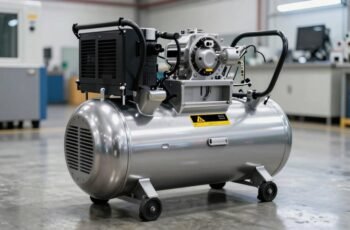
When selecting an oil-free air compressor, understanding the technical distinctions that influence performance and reliability becomes essential. These systems operate without oil in the compression chamber, which affects air quality and maintenance needs. As industry standards evolve and applications become more sensitive, making an informed choice requires analyzing factors like airflow, pressure, and long-term costs. Exploring these details can greatly impact your operational efficiency—so, let’s examine what truly matters when choosing the right compressor.
Key Takeaways
- Understand the working mechanism and benefits of oil-free compressors for clean, contaminant-free air.
- Assess airflow (CFM) and pressure (PSI) needs to select the appropriate size and type.
- Compare features like duty cycle, noise level, and materials to match application requirements.
- Consider initial costs, energy consumption, and maintenance expenses for total ownership.
- Regularly maintain filters, leaks, and cooling systems to ensure optimal performance and longevity.
What Are Oil-Free Air Compressors and How Do They Work?
Oil-free air compressors are specialized devices designed to generate compressed air without the use of lubricating oil in the compression chamber. They operate using a variety of mechanisms, such as diaphragm, scroll, or rotary screw designs, that eliminate the need for oil lubrication. These compressors rely on non-lubricated, sealed compression chambers, often made from corrosion-resistant materials, to prevent oil contamination. The compression process involves mechanically reducing the volume of air, which increases its pressure, without introducing lubricants that could degrade air purity. This design minimizes maintenance requirements related to oil changes and reduces the risk of oil contamination in sensitive applications. Overall, oil-free compressors deliver clean, dry air suitable for environments demanding high air purity and consistent performance.
Key Benefits of Choosing an Oil-Free Air Compressor
Choosing an oil-free air compressor offers several distinct advantages, particularly in applications where air purity and system reliability are paramount. By eliminating oil from the compression process, these units markedly reduce contamination risk, ensuring cleaner, contaminant-free air suitable for sensitive processes like pharmaceutical, food, and electronics manufacturing. They also require less maintenance, as there’s no need for oil changes or related filtration systems, which minimizes downtime and operational costs. Additionally, oil-free compressors tend to operate more quietly and generate fewer emissions, making them environmentally friendly. Their simplified design enhances reliability, reducing the likelihood of mechanical failures associated with oil leaks or sludge buildup. Overall, selecting an oil-free model delivers consistent, high-quality performance critical to precision-dependent industries.
How to Determine the Right Air Flow and Pressure for Your Needs
To select the appropriate air compressor, we must first evaluate the specific requirements of the tools we plan to operate, focusing on their minimum airflow and pressure needs. Understanding pressure units, such as PSI or bar, guarantees accurate specifications, while calculating total airflow requirements helps determine the compressor’s capacity. This analytical approach guarantees that the compressor will meet operational demands efficiently and reliably.
Assess Your Tool Requirements
Understanding the specific air requirements of your tools is essential for selecting the right compressor. To do this effectively, we analyze each tool’s required airflow in CFM (cubic feet per minute) and operating pressure in PSI. Precise measurement guarantees the compressor can sustain continuous operation without underperformance or excessive energy consumption. We consider both peak and average demands, noting that tools with intermittent use may require lower capacity, while continuous operation demands higher flow rates. We also evaluate whether multiple tools will run simultaneously, which influences overall airflow needs. By quantifying these parameters accurately, we avoid over-specifying, which increases costs, or under-specifying, which risks tool malfunction. This analytical approach ensures ideal compressor selection aligned with operational requirements.
Understand Pressure Units
Determining the appropriate air flow and pressure for your compressor begins with a clear understanding of pressure units, primarily PSI (pounds per square inch). PSI measures the force exerted by compressed air within the system. Accurate assessment requires identifying the maximum pressure your tools demand, typically specified by manufacturers. Operating below this threshold can lead to insufficient performance, while exceeding it risks equipment damage. It’s essential to recognize that pressure ratings are static measurements at a given moment, but real-world applications often involve fluctuations. As a result, selecting a compressor that can sustain consistent pressure levels above your tools’ requirements ensures reliability and efficiency. Understanding PSI allows us to match compressor capabilities precisely with operational needs, avoiding underperformance or over-specification.
Calculate Air Flow Needs
How do we accurately calculate the air flow needed to meet our operational demands? First, we identify the maximum air consumption rate of each tool or process, usually specified in CFM (cubic feet per minute). We then sum these values to establish a total airflow requirement, adding a safety margin of 10-20% to accommodate fluctuations and future expansion. Next, we consider the pressure requirements, typically expressed in PSI, ensuring the compressor can sustain these levels continuously. To refine our calculations, we analyze peak versus average consumption, factoring in duty cycles. This precise approach guarantees the selected compressor delivers consistent performance without overcapacity, optimizing efficiency and longevity. Accurate calculations prevent undersizing or oversizing, ultimately aligning our compressor specifications with actual operational needs.
Factors to Consider When Selecting an Oil-Free Compressor Size and Portability
Selecting the appropriate size and portability features of an oil-free air compressor is crucial for guaranteeing it meets the demands of specific applications while maintaining operational efficiency. Proper sizing ensures the compressor can handle the required airflow without overloading, while portability considerations influence ease of transport and setup.
Key factors include:
- Flow Rate Compatibility: Match compressor capacity with operational demands to prevent inefficiencies.
- Physical Dimensions: Ensure size aligns with available installation space.
- Weight Considerations: Heavier units may require additional support or lifting equipment.
- Mobility Features: Wheels, handles, or compact designs facilitate transport within work sites.
- Power Supply Requirements: Compatibility with available electrical outlets minimizes setup issues.
Balancing these factors optimizes performance, reduces downtime, and enhances operational flexibility.
Important Features to Look for in an Oil-Free Air Compressor
When choosing an oil-free air compressor, prioritizing key features guarantees reliable performance and efficiency. Essential features include duty cycle, which indicates continuous operation capacity without overheating, and CFM ratings that specify airflow needs for specific applications. Noise levels are also critical, especially in noise-sensitive environments; look for models with lower decibel ratings. Additionally, the compressor’s pressure regulation system ensures consistent airflow and prevents pressure fluctuations that could damage tools or equipment. Durability features, such as corrosion-resistant materials and high-quality valves, extend operational lifespan. Safety features like thermal overload protection and pressure relief valves safeguard both the user and the equipment. Finally, ease of maintenance—accessible filters and straightforward controls—reduces downtime and operational costs, making these features crucial for ideal compressor performance.
Comparing Different Types of Oil-Free Compressors: Piston, Rotary, and More
Different types of oil-free compressors, such as piston, rotary, and scroll models, are designed to meet various industrial and commercial needs by optimizing performance characteristics and operational efficiencies. Piston compressors deliver high pressure and are suitable for intermittent use; they tend to be more maintenance-intensive due to piston wear. Rotary compressors, including screw and vane types, excel in continuous operation, offering higher efficiency and lower noise levels. Scroll compressors provide quiet, smooth operation, ideal for sensitive environments, but generally have lower pressure outputs.
- Piston: High pressure, suited for intermittent tasks
- Rotary screw: Continuous operation, energy-efficient
- Rotary vane: Compact, reliable, moderate pressure
- Scroll: Quiet, smooth, low maintenance
- Diaphragm: Lightweight, suitable for medical applications
Tips for Estimating Your Budget and Operating Costs
To precisely determine your budget and ongoing expenses, we need to examine initial investment requirements, including compressor type and capacity. Next, calculating energy costs based on power consumption and operational hours is vital for projecting long-term expenses. Finally, considering maintenance costs guarantees a thorough understanding of total ownership costs over the compressor’s lifespan.
Assess Initial Investment Needs
Establishing an accurate initial investment requires a thorough assessment of both purchase costs and ongoing operational expenses. To precisely estimate this, consider the following factors:
- Compressor capacity and size: Larger units with higher capacity typically have higher upfront costs.
- Technological features: Advanced control systems and noise reduction features increase purchase price but may reduce long-term costs.
- Installation and commissioning: Site preparation, connection, and calibration contribute considerably to initial expenses.
- Maintenance and spare parts: Anticipated costs for routine service and replacement components influence total investment.
- Warranty and service agreements: Extended warranties and service packages can elevate initial costs but may offer savings and reliability assurance over time.
A detailed evaluation of these elements ensures an accurate budget aligned with operational requirements.
Calculate Energy Expenses
Accurately estimating energy expenses is essential for developing a thorough budget and understanding ongoing operational costs. To do this, we analyze the compressor’s power consumption, typically measured in kilowatts (kW), and multiply it by the expected hours of operation. We also consider the compressor’s load factor, which indicates its actual energy use relative to its maximum capacity. Additionally, factoring in local energy rates allows us to calculate monthly and annual costs precisely. Using this data, we can compare different models to determine which offers the best efficiency for our specific needs. Monitoring real-time energy usage over initial operation periods can further refine estimates, ensuring our budget reflects actual operational demands. This analytical approach minimizes surprises and supports cost-effective decision-making.
Consider Maintenance Costs
Have you considered how maintenance costs impact your overall budget for an oil-free air compressor? These costs can substantially influence long-term operational expenses and should be factored into your initial planning. To estimate maintenance expenses accurately, evaluate:
- Frequency of routine inspections and part replacements
- Cost of consumables like filters and lubricants
- Labor hours required for servicing and repairs
- Availability and pricing of replacement parts
- Potential downtime costs during maintenance periods
Understanding these elements helps in projecting total ownership costs, ensuring your budget accounts for periodic expenses beyond initial purchase price. Proper planning minimizes unexpected financial burdens and maintains compressor efficiency. Analyzing maintenance demands upfront allows for better decision-making, aligning equipment choice with operational and financial goals.
Common Mistakes to Avoid When Buying an Oil-Free Air Compressor
When selecting an oil-free air compressor, it’s crucial to avoid common pitfalls that can compromise performance and longevity. One frequent mistake is neglecting to assess the compressor’s actual airflow capacity against your specific requirements, leading to underperformance or excessive wear. Overlooking the importance of pressure regulation and control features can result in inconsistent output, affecting downstream tools and processes. Additionally, choosing a model solely based on initial cost without considering long-term operational expenses—such as energy consumption and maintenance—can be detrimental. Ignoring the compressor’s build quality and component durability risks premature failure. Finally, failing to verify manufacturer specifications and certifications may lead to purchasing unreliable equipment, ultimately increasing downtime and costs. Careful evaluation of these factors ensures excellent, reliable operation.
How to Maintain and Extend the Lifespan of Your Oil-Free Compressor
To maximize the lifespan of your oil-free compressor, regular maintenance is vital, as neglecting routine checks can lead to premature wear and costly downtime. Proper upkeep guarantees peak performance and prevents component failure.
Key maintenance tasks include:
- Monitoring and replacing air intake filters to prevent debris ingress
- Regularly inspecting for leaks or pressure drops in the system
- Cleaning or replacing cooling components to prevent overheating
- Checking safety valves and pressure gauges for accuracy
- Lubricating moving parts only if specified, as most oil-free units are maintenance-free
Frequently Asked Questions
What Is the Typical Lifespan of an Oil-Free Air Compressor?
Oil-free air compressors typically last between 10 to 15 years when properly maintained, depending on usage, environment, and maintenance quality. Regular servicing, clean filters, and operating within recommended parameters considerably extend their operational lifespan.
How Noisy Are Oil-Free Air Compressors During Operation?
Oil-free air compressors are generally quiet, like a whisper in a library, producing noise levels around 60-70 decibels. Their operational sound is less disruptive, making them ideal for noise-sensitive environments and precise industrial applications.
Are Oil-Free Compressors Suitable for Industrial Heavy-Duty Use?
Yes, oil-free compressors are suitable for heavy-duty industrial use when equipped with robust components, reliable cooling systems, and sufficient airflow capacity; however, they typically require more frequent maintenance and may have lower durability compared to oil-lubricated counterparts.
Can I Use an Oil-Free Compressor for Painting or Food Processing?
Absolutely, you can use oil-free compressors for painting and food processing because they produce pure, contaminant-free air, ensuring safety and quality. We recommend verifying specific compressor certifications to guarantee compliance with industry standards for these sensitive applications.
What Are the Warranty Options Typically Available?
Warranty options typically include limited coverage ranging from one to five years, often covering parts and labor. We recommend reviewing manufacturer policies carefully, as some offer extended warranties or service plans that provide added protection and maintenance support.
Conclusion
As we wrap up, remember that choosing the right oil-free air compressor isn’t just about specifications—it’s about anticipating future needs and operational efficiency. With careful consideration of airflow, features, and costs, you’re poised to make an informed decision that could redefine your productivity. But the true challenge lies ahead: selecting a unit that not only meets today’s demands but adapts seamlessly to tomorrow’s evolving requirements. The next step could be more impactful than you think.