NorthStar Gas-Powered Air Compressor: Quick Product Overview
A $1649.99 gasoline-powered compressor raises one practical question: does independent air supply justify the extra cost for a jobsite, farm, or workshop without dependable electrical service? The NorthStar Gas-Powered Air Compressor answers that with a Honda GX160 OHV engine, PSI operating pressure, and 13.7 CFM of air delivery. It appears worth considering for mobile, air-hungry work, but less so for an indoor garage where quiet, simple electric operation matters more.
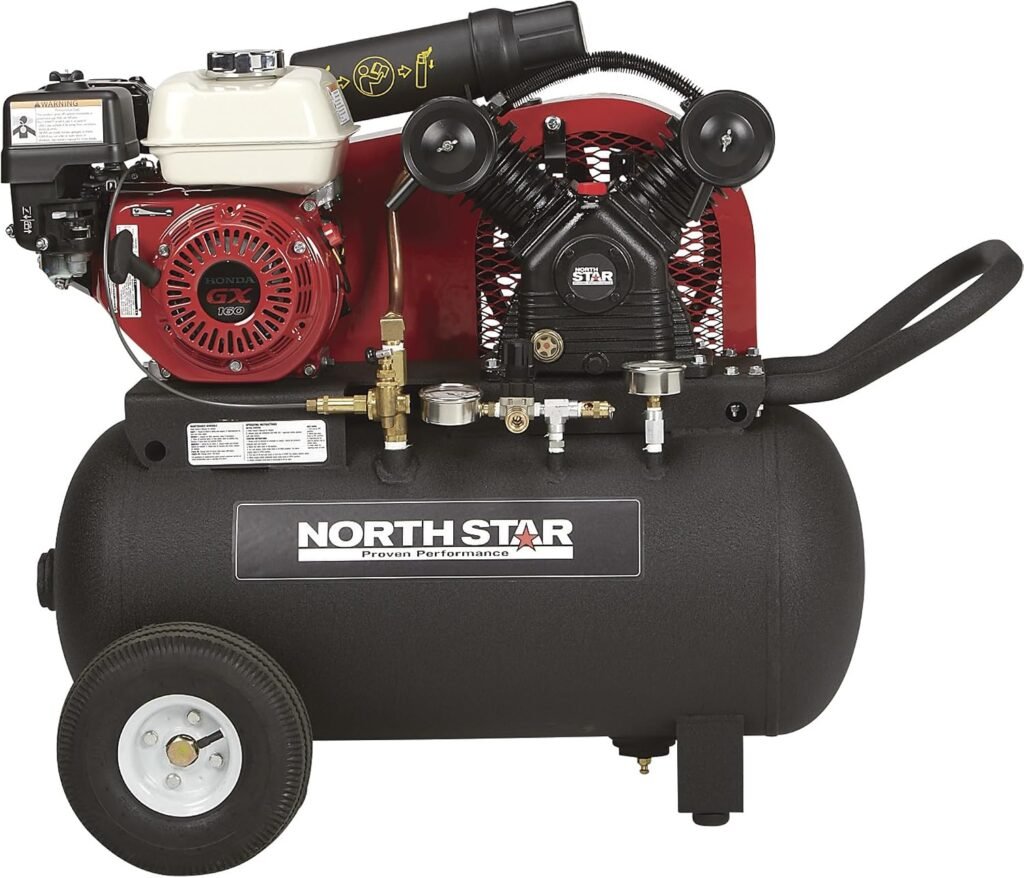
The NorthStar Gas-Powered Air Compressor is built around engine-driven portability rather than plug-in convenience. Compared with common 20- to 30-gallon electric compressors, it should offer greater independence from outlets and extension cords, while bringing fuel storage, engine oil changes, exhaust management, noise, and ventilation into the ownership equation.
The listing currently shows only units left in stock. That isn’t a reason to rush; price and availability can change, so we would verify both at checkout before ordering. The supplied information confirms the Honda engine, pump materials, V-style cooling design, valves, pressure, airflow, and price, but it does not state tank capacity, dimensions, weight, noise rating, duty cycle, warranty, or customer rating.
Our reading of the NorthStar Gas-Powered Air Compressor is therefore fairly clear: it targets buyers who value a self-contained air source and heavy-duty pump materials over quiet operation, low maintenance, or the lowest entry price. The missing physical and ownership details are significant enough that we would confirm them with the live listing or seller before committing.

NorthStar Gas-Powered Air Compressor Specifications and Buying Implications
The most useful confirmed specification is 13.7 CFM at PSI. CFM at a stated working pressure helps us compare a compressor with pneumatic tools; a maximum PSI number on its own says little about whether the pump can keep up once a tool is consuming air.
| Specification | Confirmed detail |
|---|---|
| Listed price | $1649.99 |
| Operating pressure | 90 PSI |
| Air delivery | 13.7 CFM at PSI |
| Engine | Honda GX160 OHV |
| Pump | Full cast iron, V-style cylinder design |
| Pump head | FC35-grade cast iron |
| Valves | Floating-type Swedish steel |
| Protection | Low-oil shutdown |
For perspective, the NorthStar Gas-Powered Air Compressor lists considerably more airflow than smaller electric examples rated around 4.2 to 5.1 CFM at PSI. That advantage can matter with impact tools and other equipment that consumes air quickly, although 13.7 CFM doesn’t automatically guarantee continuous operation of every grinder, sander, or spray gun.
Before purchasing the NorthStar Gas-Powered Air Compressor, we would ask the seller to confirm the tank capacity, overall dimensions, shipping weight, outlet configuration, and whether a regulator or hose is included. The supplied details also don’t identify a two-stage pump, electric-start system, wheel kit, frame style, or tank orientation. Those omissions affect transport and setup just as much as the headline airflow.
- Write down the CFM requirement for every intended tool at its working pressure.
- Allow a sensible operating margin above the highest requirement, especially for tools used continuously.
- Compare that result with 13.7 CFM at PSI rather than selecting by horsepower or PSI alone.
Key Features of the NorthStar Gas-Powered Air Compressor
The Honda GX160 OHV engine is the defining feature of the NorthStar Gas-Powered Air Compressor. It provides a self-contained power source when a suitable circuit, generator, or long extension cord isn’t practical. That makes the configuration relevant to construction crews, farms, mobile repair work, and remote maintenance, although gasoline operation also means starting, fuelling, servicing, and exhaust control become part of the normal routine.
Low-oil shutdown is a useful protective measure. If the engine oil level becomes dangerously low, the system can stop operation and reduce the chance of severe engine damage. It doesn’t replace checking oil before every use or following the Honda maintenance schedule; a safety feature is a backup, not a maintenance plan.
The NorthStar Gas-Powered Air Compressor uses a full cast-iron pump and an FC35-grade cast-iron pump head. Cast iron brings rigidity and heat resistance to repeated compression cycles, which suits demanding use better than a design chosen primarily for minimum weight. It also generally adds mass, and neither cast iron nor the stated materials make the pump maintenance-free.
The V-style cylinder arrangement is described as a cooling aid because spreading cylinders can improve airflow around the pump and help manage heat during sustained operation. Floating-type Swedish steel valves are presented as a route to longer valve life. We would treat that as a design intention rather than a guaranteed service interval, since no tested lifespan is provided.
- Inspect engine oil and check for loose fasteners, fittings, or visible damage.
- Confirm fresh fuel and outdoor or properly ventilated operating conditions.
- Let the engine warm up, then monitor pressure and listen for unusual vibration.
- Drain accumulated moisture according to the manual before storage.
That routine gives the NorthStar Gas-Powered Air Compressor a fair start and helps separate normal engine maintenance from a genuine product fault.
How the NorthStar Gas-Powered Air Compressor Performs for Real Work
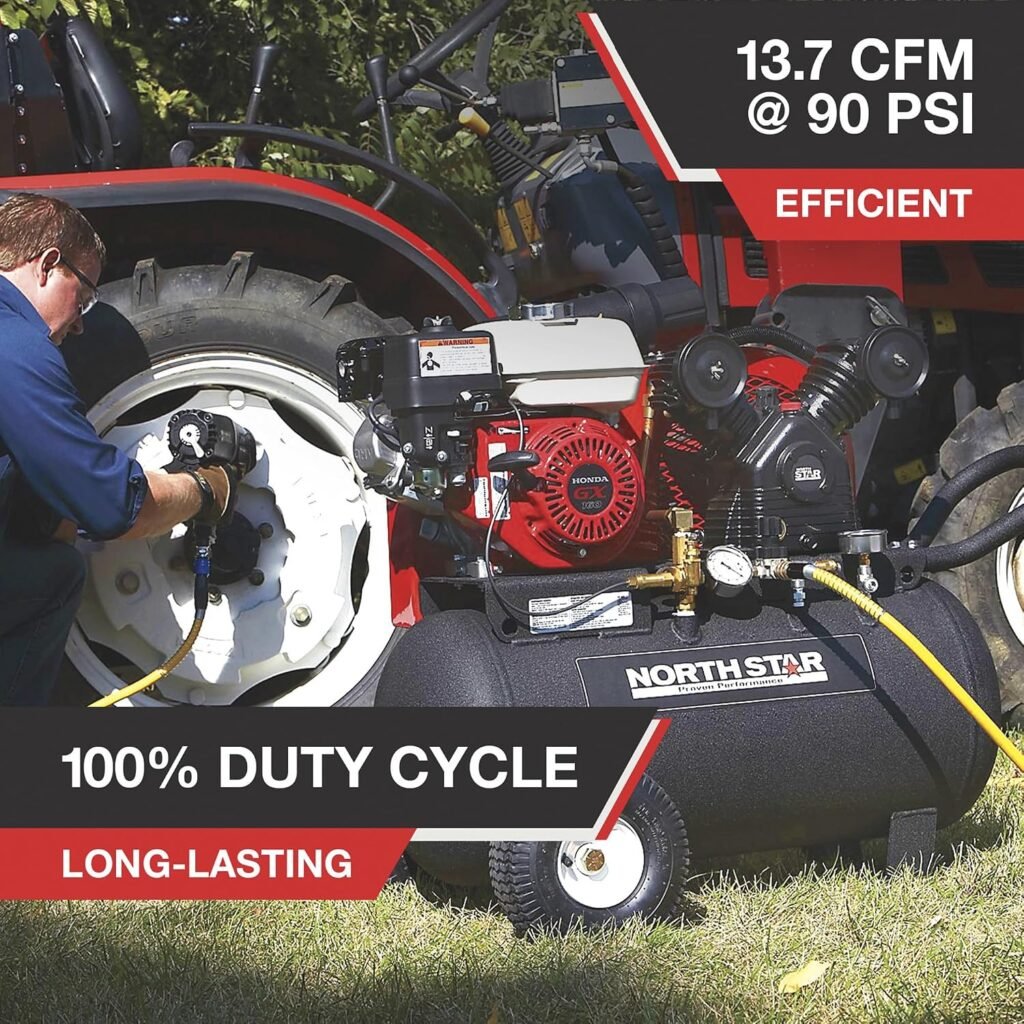
Our performance assessment centers on the confirmed 13.7 CFM at PSI. That is the strongest evidence that the NorthStar Gas-Powered Air Compressor is intended for more demanding pneumatic work than compact electric units in the 4.2- to 5.1-CFM range. It should be more comfortable for intermittent framing, roofing, impact work, blow-off, and some automotive tasks than a small shop compressor.
Continuous-use tools need closer examination. Grinders, sanders, and paint sprayers can consume air steadily, so we would check each tool’s stated CFM, working pressure, and duty cycle before assuming compatibility. A compressor may handle short bursts well while struggling when the trigger remains open for several minutes.
The NorthStar Gas-Powered Air Compressor has no supplied recovery-time figure, and we shouldn’t invent one. Recovery depends on the unconfirmed tank size, actual pump output, pressure-switch settings, hose diameter, leaks, and the tool’s demand. The PSI rating may suit many air tools, but it provides less pressure headroom than models rated at PSI; pressure numbers must be matched to the tool’s real requirement.
For a post-purchase suitability test, connect the intended tool with correctly rated fittings, set its recommended pressure, and observe the gauge during sustained use. If pressure falls continuously, the pump cycles excessively, or recovery becomes difficult, stop and investigate hose restrictions, leaks, settings, and tool demand rather than forcing the equipment to continue.
Use the NorthStar Gas-Powered Air Compressor outdoors or in a properly ventilated area. Keep exhaust away from doors, windows, and other openings, and never run gasoline-powered equipment inside a garage, shed, or other enclosed space because carbon monoxide can accumulate rapidly.

What Customers Are Saying About the NorthStar Gas-Powered Air Compressor
There is no verified star rating, review count, or quoted buyer feedback in the supplied listing information. Accordingly, we cannot honestly claim that customers praise its starting reliability, durability, or noise level. The physical design claims are documented specifications, while real-world impressions of the NorthStar Gas-Powered Air Compressor still require consistent buyer reports or independent testing.
When checking the live listing, the most useful review patterns would concern cold starts, sustained airflow at PSI, oil consumption, pump temperature, valve life, shipping damage, assembly quality, and whether the delivered configuration matches the description. A comment posted immediately after unboxing can reveal packaging or setup problems, but it says little about how the cast-iron pump or engine behaves after months of use.
Longer-term reports are more valuable for the NorthStar Gas-Powered Air Compressor. We would give extra weight to reviews describing several months of jobsite or workshop operation, scheduled oil changes, valve performance, repeated pressure cycles, and the practical maintenance burden. One dramatic complaint or one enthusiastic first impression shouldn’t outweigh a repeated pattern from buyers using the same configuration.
- Confirm the live star rating and total review count.
- Read the newest critical reviews, not only the headline rating.
- Search within reviews for “GX160,” “13.7 CFM,” “90 PSI,” “oil,” “valve,” and “shipping.”
- Check whether complaints involve setup mistakes, a product defect, or a different seller and configuration.
- Review the return policy before ordering.
That process gives the NorthStar Gas-Powered Air Compressor a fairer evaluation than relying on an unsupported anecdote or an unverified rating.
NorthStar Gas-Powered Air Compressor Compared With Alternatives
The closest higher-output comparison is the NorthStar Gas Air Compressor, 30-Gallon, PSI, 24.4 CFM at PSI. It uses a Honda GX390 OHV engine and lists substantially more airflow than the NorthStar Gas-Powered Air Compressor reviewed here. That makes the larger model the more logical candidate for simultaneous tools or highly air-intensive work, while 13.7 CFM may be easier to justify for moderate demand.
We would not choose between those two NorthStar models by airflow alone. Price, tank size, dimensions, shipping weight, frame design, and portability need confirmation for both. The larger engine may bring greater capability, but it can also affect transport and ownership cost.
The Klutch 29-Gallon Air Compressor, 2.5 HP, 120V, PSI, 5.1 CFM at PSI takes a different approach. Its electric, oil-free design may suit an outlet-equipped garage, routine nailing, and light air-tool use, but its listed airflow is far below 13.7 CFM at PSI. The Klutch 20-Gallon Air Compressor, HP, 120V, PSI, 4.2 CFM at PSI, is another option for buyers who prefer vertical storage, a stated 75% duty cycle, and simpler electric operation.
Use conditions matter more than brand names. Choose gas power when remote work and outlet independence are central; choose electric when indoor convenience and easier starting matter most; choose higher CFM when the tool’s demand, rather than tank size, sets the requirement.
For the NorthStar Gas-Powered Air Compressor, the ownership comparison should include fuel, engine oil, air-filter and spark-plug service, pump maintenance, transport, electrical installation avoided or required, and accessories. Comparing only the $1649.99 purchase price can produce a misleading result.
Who Should Buy the NorthStar Gas-Powered Air Compressor?
The strongest fit for the NorthStar Gas-Powered Air Compressor is a contractor, mobile repair technician, farm or ranch operator, construction crew, or serious DIY owner who regularly needs compressed air away from a dependable outlet. Its 13.7 CFM at PSI favors people using demanding air tools more often than someone inflating tires or occasionally operating a brad nailer.
The construction also appeals to buyers who value a full cast-iron pump, FC35-grade cast-iron pump head, V-style cooling, and floating Swedish steel valves. Those features suggest a durability-focused design, but the buyer must be comfortable maintaining a gasoline engine, checking oil, managing fuel, and working around exhaust.
We would look elsewhere if the intended setting is an apartment, enclosed workshop, or quiet residential garage. The same applies to shoppers seeking oil-free ownership, very low maintenance, or only a few CFM. Gasoline portability has little value if every job takes place beside a suitable electrical outlet.
- List every pneumatic tool and record its CFM requirement at working pressure.
- Identify whether the compressor will run outdoors, on a farm, in a vehicle, or in a workshop.
- Confirm ventilation, transport, storage, and fuel-handling arrangements.
- Calculate whether fuel and engine maintenance fit the budget.
- Ask the seller about the unconfirmed specifications before checkout.
We also wouldn’t assume easy one-person movement. The listing does not provide weight, wheels, handles, or frame design, so the NorthStar Gas-Powered Air Compressor may require suitable transport equipment or a two-person lift. Confirming that detail is essential for mobile users.
Price, Availability, and Long-Term Value
At $1649.99, the NorthStar Gas-Powered Air Compressor is a substantial equipment purchase rather than a casual household tool. Its value depends mainly on whether we can use the 13.7 CFM airflow and gasoline-powered independence often enough to justify the price. If the unit replaces repeated rentals or solves a genuine lack of electrical service, the calculation looks stronger.
The value case rests on a Honda GX160 OHV engine with low-oil shutdown, a full cast-iron pump, FC35-grade cast-iron pump head, V-style cylinder cooling, and floating Swedish steel valves. These are meaningful design details for buyers prioritizing service life and mechanical construction, although the supplied information does not include a warranty, service history, expected lifespan, or verified review record.
Ownership costs deserve equal attention. We should budget for gasoline, engine oil, periodic air-filter and spark-plug service, pump maintenance, transport, and potentially greater noise and exhaust-management requirements than an electric compressor.
A simple break-even exercise helps: compare this purchase with renting equivalent jobsite equipment, buying a generator plus electric compressor, or selecting a lower-output electric model that could restrict tool choice. Count how often the equipment will be used, how much downtime a rental creates, and whether the electric alternative already meets the tool list.
The listing shows only units left in stock, but that should prompt specification verification rather than an impulsive order. In 2026, we would check the live price and availability at checkout, then confirm tank size, warranty, accessories, return terms, shipping arrangements, and seller support. The NorthStar Gas-Powered Air Compressor earns its price only when its extra capability solves a real operating problem.
Maintenance, Safety, and Setup Questions to Resolve Before Buying
Before ordering the NorthStar Gas-Powered Air Compressor, we would ask the seller or consult the manual for the tank capacity, maximum pressure versus normal operating pressure, pressure-switch range, starting method, pump-oil type, service intervals, noise level, warranty, and replacement-part availability. These details determine whether the machine fits a particular workshop or transport plan.
Basic controls are straightforward but non-negotiable. Check engine oil before every use, use fresh fuel as recommended by the manual, inspect the air filter, and examine hoses, couplers, and fittings before pressurizing the system. Allow the engine and pump to cool before transport or storage, and keep the unit stable while operating.
Carbon-monoxide safety comes first: never run gasoline-powered equipment indoors, in a garage, or near doors and windows where exhaust can accumulate. A partially open door does not make an enclosed space safe. Keep clothing, debris, and hands away from moving parts and hot exhaust components.
Use a hose size and fittings rated for the PSI operating pressure, and inspect for leaks, unusual vibration, overheating, or pressure loss before placing the NorthStar Gas-Powered Air Compressor into demanding service. Drain tank moisture at the interval specified by the manual rather than waiting for visible corrosion or water at the outlet.
Our decision framework is simple. Purchase when remote power, 13.7 CFM airflow, and cast-iron construction outweigh gasoline upkeep and ventilation demands. Choose an electric alternative when indoor simplicity, lower noise, easier starting, or lighter maintenance matters more; the right choice depends on the working environment as much as the compressor’s headline specification.
Pros and Cons
Pros
- Gas-powered independence where dependable electrical service is unavailable
- 13.7 CFM air delivery at PSI for more demanding pneumatic work
- Honda GX160 OHV engine with low-oil shutdown
- Full cast-iron pump and FC35-grade cast-iron pump head
- V-style cylinder design and floating-type Swedish steel valves
Cons
- Listed price of $1649.99 is high for buyers with modest air needs
- Gasoline engine requires fuel, oil, scheduled maintenance, ventilation, and exhaust management
- No tank capacity, weight, dimensions, noise rating, duty cycle, or warranty is supplied
- 90 PSI provides less pressure headroom than PSI alternatives
- No verified star rating, review count, or quoted customer feedback is available
Final Verdict
Key Takeaways
- The $1649.99 gasoline-powered unit delivers a confirmed 13.7 CFM at PSI and uses a Honda GX160 OHV engine.
- Its cast-iron pump, FC35-grade cast-iron head, V-style cylinders, and Swedish steel valves favor durability, but engine maintenance remains necessary.
- It is best suited to remote jobsites, farms, mobile repairs, and demanding intermittent pneumatic work rather than quiet indoor use.
- Tank capacity, weight, dimensions, noise, warranty, duty cycle, and several portability details require confirmation before purchase.
- Compare each tool’s CFM requirement and total ownership cost instead of choosing by PSI, horsepower, or purchase price alone.
Frequently Asked Questions
How much does a 30-gallon air compressor cost?
Prices vary by engine type, airflow, pressure, pump construction, and included equipment. The reviewed product is listed at $1649.99, but its tank capacity is not confirmed in the supplied details, so we would not assume it is a 30-gallon model without checking the live listing.
Who makes the best gallon air compressor?
There is no single best manufacturer for every buyer. Honda-powered NorthStar models may suit remote or jobsite use, while Klutch electric models can be more practical for an outlet-equipped workshop; compare CFM at working pressure, service needs, noise, warranty, and tool requirements.
What is a gallon air compressor good for?
A 30-gallon compressor can provide useful reserve air for intermittent tasks such as nailing, framing, inflation, blow-off, and some impact-tool work. Continuous tools still require a careful comparison of their CFM demand with the compressor’s delivered airflow, because tank size alone doesn’t determine sustained performance.
What is the quietest 30-gallon air compressor available?
The supplied information does not identify a verified noise rating for the reviewed product or establish which 30-gallon model is quietest. Buyers who prioritize low noise should compare measured decibel ratings, oil-free or belt-drive designs, customer comments, and the intended indoor operating environment.
Disclosure: As an Amazon Associate, I earn from qualifying purchases.